Landscaping Insurance: Coverage, Costs, and Best Providers 2026
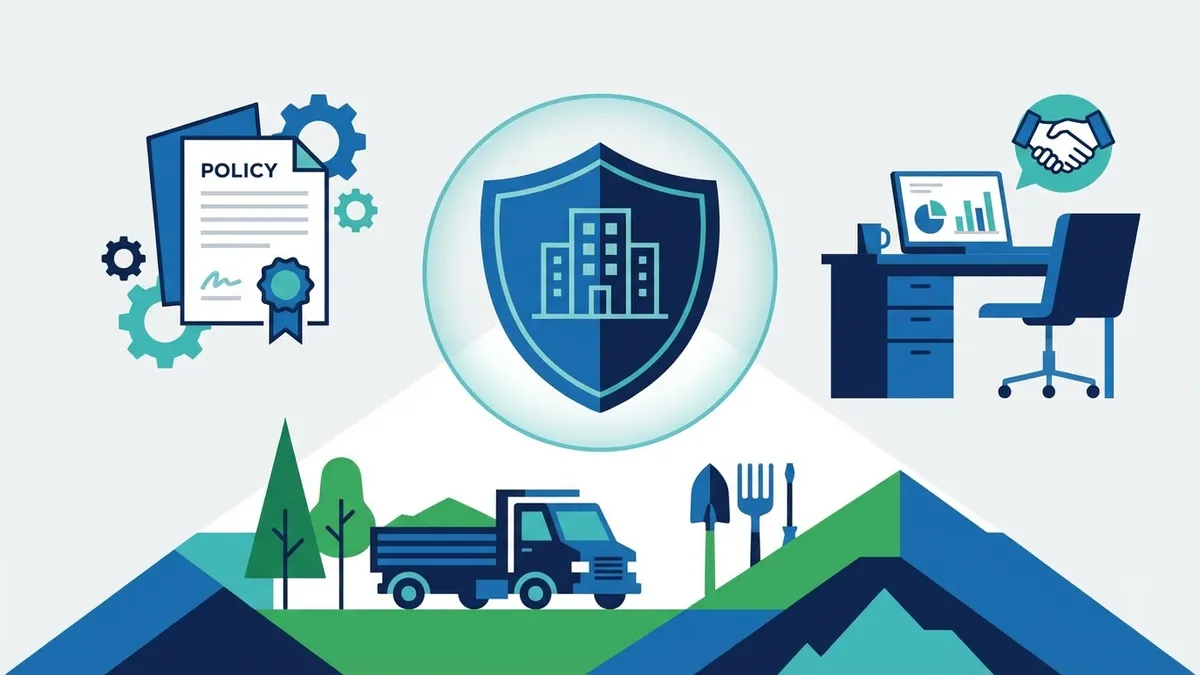
Running a landscaping business means working with heavy equipment, sharp tools, and unpredictable outdoor conditions every single day. One accident — a rock launched by a mower into a client's window, an employee injured by a chainsaw, or a truck backing into a parked car — can cost thousands of dollars or more.
Landscaping insurance protects your business from these financial disasters. But with so many coverage types and providers, figuring out exactly what you need (and what you can skip) isn't always straightforward.
This guide breaks down the coverage types landscaping businesses actually need, what they cost in 2026, and which insurance providers offer the best value for lawn care and landscaping professionals.
Why Landscaping Businesses Need Insurance
Landscaping consistently ranks among the higher-risk industries for small businesses. The combination of physical labor, power equipment, vehicle use, and work on other people's property creates multiple exposure points.
Here's what's at stake without proper coverage:
- Property damage claims: A mower throws a rock through a $2,000 window. You're paying out of pocket.
- Bodily injury lawsuits: A client trips over equipment you left on their walkway. Medical bills and legal fees add up fast.
- Employee injuries: A worker falls from a tree or gets heat stroke. Workers' comp isn't optional in most states.
- Vehicle accidents: Your crew truck rear-ends someone on the way to a job site. Personal auto insurance won't cover commercial use.
- Equipment theft: $15,000 in mowers and trimmers stolen from your trailer overnight. Without inland marine coverage, that's your loss.
Beyond risk management, many clients — especially commercial properties and HOAs — require proof of insurance before they'll sign a contract. No insurance often means no work.
Types of Insurance Coverage for Landscapers
General Liability Insurance
This is the foundation of any landscaping insurance policy. General liability covers third-party bodily injury and property damage claims that happen during your work.
What it covers:
- Damage to client property (broken windows, damaged sprinkler systems, chemical burns on lawns)
- Injuries to non-employees on job sites
- Completed operations claims (damage discovered after you leave)
- Legal defense costs
Typical limits: $1 million per occurrence / $2 million aggregate
Cost: $400–$1,200 per year for a solo landscaper; $800–$3,000+ for a crew of 5–10 employees.
Commercial Auto Insurance
If you drive any vehicle for business purposes — even your personal truck with a trailer — you need commercial auto insurance. Personal auto policies exclude business use in their fine print.
What it covers:
- Accidents involving business vehicles
- Damage to your trucks, vans, and trailers
- Liability for injuries or property damage caused by your vehicles
- Hired and non-owned auto (for employees using their own vehicles)
Cost: $1,200–$3,500 per vehicle per year, depending on driving records and vehicle type.
Workers' Compensation Insurance
Workers' comp is legally required in almost every state once you have employees. Even in states where it's technically optional for small crews, carrying it protects you from devastating lawsuits if an employee gets injured.
What it covers:
- Medical expenses for work-related injuries
- Lost wages during recovery
- Disability benefits
- Death benefits for fatal accidents
Cost: Landscaping typically falls under class code 0042 (lawn care) or 0016 (tree trimming). Rates vary by state but generally run $5–$15 per $100 of payroll. A landscaping business with $200,000 in annual payroll might pay $10,000–$30,000 per year for workers' comp.
Commercial Property Insurance
If you own or rent an office, shop, or storage facility, commercial property insurance protects the building and its contents.
What it covers:
- Building damage from fire, storms, vandalism
- Office equipment and furniture
- Business personal property
Cost: $500–$2,000 per year depending on location and property value.
Inland Marine Insurance (Equipment Coverage)
Standard property insurance often doesn't cover equipment in transit or at job sites. Inland marine insurance fills this gap — and for landscapers with $20,000–$100,000+ in mobile equipment, it's essential.
What it covers:
- Mowers, trimmers, blowers, chainsaws
- Trailers and attachments
- Equipment in transit or at job sites
- Theft from vehicles or trailers
Cost: Typically 1%–3% of total equipment value per year. $50,000 in equipment might cost $500–$1,500 to insure.
Commercial Umbrella Insurance
An umbrella policy kicks in when your other policies hit their limits. For landscapers doing commercial work or high-value residential projects, this extra layer can be critical.
Cost: $300–$800 per year for $1 million in additional coverage.
Professional Liability (Errors & Omissions)
Relevant for landscape designers and architects who provide plans and specifications. Covers claims of faulty design, incorrect plant selection, or drainage issues caused by your professional advice.
Cost: $500–$1,500 per year.
How Much Does Landscaping Insurance Cost in 2026?
Total insurance costs depend on your business size, services offered, location, and claims history. Here's a realistic breakdown:
| Business Size | General Liability | Commercial Auto | Workers' Comp | Equipment | Total Estimate |
|---|---|---|---|---|---|
| Solo operator, mowing only | $400–$700 | $1,200–$1,800 | N/A | $300–$600 | $1,900–$3,100/yr |
| 2–3 person crew | $700–$1,500 | $1,500–$3,000 | $3,000–$8,000 | $500–$1,200 | $5,700–$13,700/yr |
| 5–10 employees, full service | $1,200–$3,000 | $3,000–$7,000 | $10,000–$30,000 | $1,000–$3,000 | $15,200–$43,000/yr |
| Large operation (10+) | $2,500–$5,000 | $5,000–$12,000 | $25,000–$75,000 | $2,000–$5,000 | $34,500–$97,000/yr |
Factors That Affect Your Premiums
- Services offered: Tree trimming and removal cost significantly more to insure than basic lawn mowing
- Revenue and payroll: Higher revenue = higher premiums
- Claims history: Previous claims can increase rates 20%–50%
- Location: States like California, New York, and Florida tend to have higher premiums
- Experience: Newer businesses pay more than established ones with clean records
- Equipment value: More equipment means higher inland marine costs
Best Landscaping Insurance Providers in 2026
1. Next Insurance
Best for: Solo operators and small crews
Next Insurance has become one of the most popular options for small landscaping businesses. Their entirely online application process takes about 10 minutes, and you can get a certificate of insurance immediately.
- Policies start as low as $25/month for general liability
- Online certificate management (send COIs to clients instantly)
- Bundle discounts for combining general liability + commercial auto
- No brokers or agents needed
Pros:
- Fast online quotes and instant coverage
- Affordable for small operations
- Easy certificate management
Cons:
- Limited customization for complex needs
- Not ideal for large operations
- Claims process can be slow for complex claims
2. The Hartford
Best for: Established businesses with employees
The Hartford has decades of experience insuring small businesses and offers comprehensive Business Owner's Policies (BOPs) that bundle general liability with commercial property insurance at a discount.
- Strong workers' comp program
- Dedicated small business team
- BOP discounts of 10%–15%
- Payroll integration for workers' comp
Pros:
- Comprehensive coverage options
- Strong financial ratings (A+ AM Best)
- Good claims handling reputation
Cons:
- Higher premiums than online-only providers
- Requires working with an agent for most policies
- Quotes take longer to process
3. Progressive Commercial
Best for: Commercial auto coverage
Progressive is well-known for personal auto insurance, but their commercial auto division offers competitive rates for landscaping fleets.
- Competitive commercial auto rates
- Multi-vehicle discounts
- Telematics discounts available
- Bundle with general liability for savings
Pros:
- Strong commercial auto pricing
- Easy to add/remove vehicles
- Good online management tools
Cons:
- General liability pricing isn't always competitive
- Workers' comp not available in all states
- Customer service can be inconsistent
4. Thimble
Best for: Part-time landscapers and seasonal work
Thimble offers on-demand insurance that you can buy by the hour, day, or month. Perfect for part-time landscapers or those who only need coverage during peak season.
- Coverage by the hour, day, or month
- Instant COIs from your phone
- Add additional insureds on the fly
Pros:
- Maximum flexibility
- Great for seasonal or part-time work
- Instant certificates
Cons:
- More expensive per-day than annual policies if used frequently
- Limited coverage options
- Not suitable for year-round full-time operations
5. Nationwide
Best for: Full-service landscaping companies
Nationwide offers a complete suite of commercial insurance products and has specific experience with landscaping and lawn care businesses.
- Comprehensive BOP packages
- Strong workers' comp programs
- Equipment breakdown coverage available
- Local agents for personalized service
Pros:
- Wide range of coverage options
- Strong financial stability
- Good bundling discounts
Cons:
- Not the cheapest option for basic coverage
- Requires agent interaction for most quotes
- Application process is slower than online providers
How to Lower Your Landscaping Insurance Costs
- Bundle policies: Combining general liability, commercial auto, and property insurance with one carrier typically saves 10%–20%.
- Increase deductibles: Raising your deductible from $500 to $2,500 can lower premiums by 10%–25%.
- Maintain a clean claims history: Even one claim can raise premiums for 3–5 years.
- Invest in safety training: Documented safety programs can earn discounts of 5%–15% on workers' comp.
- Shop around annually: Rates can vary 30%–50% between providers.
- Pay annually instead of monthly: Most carriers charge 5%–15% more for monthly payment plans.
- Classify employees correctly: Make sure workers' comp class codes match actual duties.
- Install GPS and cameras on vehicles: Some commercial auto insurers offer discounts for fleet tracking and dash cameras.
Common Mistakes Landscapers Make with Insurance
- Using personal auto insurance for business vehicles: If you're in an accident during business use, your personal policy will deny the claim.
- Skipping inland marine coverage: Standard policies don't cover equipment at job sites. One theft can wipe out your season's profit.
- Underreporting payroll: Audits will catch it — and you'll owe back premiums plus penalties.
- Not requiring subcontractor insurance: If a subcontractor causes damage and they're uninsured, you're liable.
- Waiting until something happens: Insurance companies won't cover pre-existing claims.
Landscaping Insurance Requirements by State
Most states require workers' compensation insurance once you have employees:
| State | Workers' Comp Required | Threshold |
|---|---|---|
| California | Yes | 1+ employees |
| Texas | No (but recommended) | Optional |
| Florida | Yes | 1+ employees (construction/landscaping) |
| New York | Yes | 1+ employees |
| Illinois | Yes | 1+ employees |
| Ohio | Yes | 1+ employees |
| Pennsylvania | Yes | 1+ employees |
| Georgia | Yes | 3+ employees |
Check your specific state requirements, as landscaping is sometimes classified under construction codes with stricter rules.
Frequently Asked Questions
How much does landscaping insurance cost per month?
Basic general liability for a solo landscaper starts at $30–$60 per month. A full insurance package for a small crew (general liability, commercial auto, workers' comp, equipment) typically runs $500–$1,500 per month depending on business size and location.
Do I need insurance to mow lawns?
Most states don't require insurance for a solo lawn mowing operation with no employees. However, going without insurance is extremely risky. One property damage claim or injury lawsuit could bankrupt a small operation. Many clients also require proof of insurance before hiring you.
What type of insurance does a landscaping company need most?
General liability insurance is the most essential coverage. It covers property damage and bodily injury claims, which are the most common risks in landscaping. If you have employees, workers' compensation is legally required in most states and equally critical.
Does general liability cover my landscaping equipment?
No. General liability only covers damage to other people's property and injuries to non-employees. To cover your own equipment, you need inland marine insurance or a commercial property policy with equipment coverage.
Can I get landscaping insurance with no experience?
Yes. Most providers will cover new landscaping businesses, though premiums may be 10%–30% higher than for established companies. Online providers like Next Insurance and Thimble are especially accessible for new businesses.
Is landscaping insurance tax deductible?
Yes. Business insurance premiums are a deductible business expense. You can deduct the cost of general liability, commercial auto, workers' comp, and all other business-related insurance policies on your tax return.
What happens if a subcontractor damages a client's property?
If your subcontractor is uninsured and causes damage, your general liability policy may have to cover the claim. Always require subcontractors to carry their own insurance and provide certificates of insurance before they start work.
How quickly can I get landscaping insurance?
Online providers like Next Insurance and Thimble can issue policies within minutes. Traditional carriers like The Hartford and Nationwide typically take 1–3 business days.
Final Thoughts
Landscaping insurance isn't optional — it's the cost of doing business professionally. The right coverage protects your equipment, your employees, your clients, and ultimately your livelihood.
Start with general liability and commercial auto at minimum. Add workers' comp when you hire employees, and inland marine coverage once your equipment inventory grows beyond what you can afford to replace out of pocket.
Get at least three quotes, bundle when possible, and review your coverage annually as your business grows. The $100–$300 per month you spend on insurance is a fraction of what a single uninsured claim could cost you.