Equipment Financing: How to Finance Business Equipment in 2026
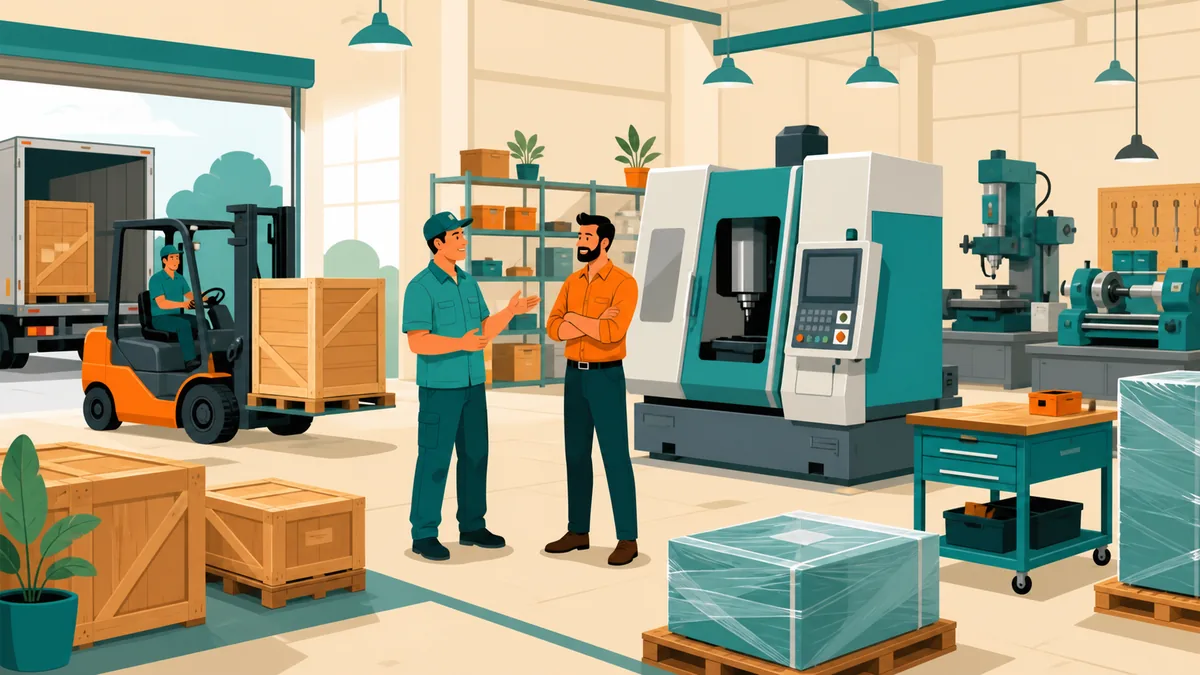
Equipment is the lifeblood of most small businesses. A restaurant without commercial refrigeration doesn't serve food. A construction company without a reliable truck can't get to job sites. A dental practice without proper chairs and imaging equipment can't see patients.
Equipment financing lets businesses acquire the tools they need without depleting cash reserves — spreading the cost over 2–7 years while the equipment generates revenue. When done right, the equipment pays for itself through the income it produces. When paired with the Section 179 tax deduction, it can also meaningfully reduce your tax bill.
This guide covers the full picture: equipment loans vs. leases, rates, top lenders for 2026, the types of equipment that qualify, and when each approach makes the most sense.
Equipment Loan vs. Equipment Lease: Core Comparison
| Feature | Equipment Loan | Equipment Lease |
|---|---|---|
| Ownership | You own the equipment immediately | Lessor owns; you get use rights |
| Down payment | 10–20% typical; 0% available | First + last payment typically |
| Monthly payments | Fixed principal + interest | Fixed lease payments (lower than loan) |
| End of term | Equipment is yours, fully paid | Return, renew, or buy out at FMV |
| Tax treatment | Section 179 deduction or depreciation | Operating expense deduction (true lease) |
| Balance sheet | Asset + liability recorded | Operating lease: off-balance-sheet |
| Flexibility | Less — you own the asset | More — upgrade at lease end |
| Total cost | Lower (you build equity) | Higher (you pay for use, not ownership) |
| Best for | Long-lived, stable equipment | Equipment that becomes obsolete quickly |
Types of Equipment That Can Be Financed
Commercial Vehicles and Transportation
Trucks, vans, trailers, box trucks, refrigerated vehicles, and fleet vehicles are among the most commonly financed assets. Commercial auto lenders typically offer rates from 5–15% with terms of 3–7 years. Fleet financing programs from manufacturers (Ford Commercial Vehicles, Ram Commercial) and specialized lenders can bundle multiple vehicles.
Manufacturing and Industrial Machinery
CNC machines, lathes, injection molding equipment, production lines, welding equipment, and packaging machinery. Rates vary based on equipment age (new vs. used) and resale value. Financing terms of 5–7 years are common for large industrial equipment.
Restaurant and Food Service Equipment
Commercial refrigerators, walk-in coolers, commercial ranges, fryers, dishwashers, prep tables, and espresso machines. Restaurant equipment financing is widely available from specialty lenders and can cover full kitchen buildouts. Rates typically run 6–18% for qualified borrowers.
Medical and Dental Equipment
Diagnostic imaging (MRI, CT, X-ray), dental chairs, exam tables, surgical equipment, and lab instruments. Medical equipment lenders understand the reimbursement cycle of healthcare practices and often offer competitive rates (5–15%) given the strong cash flow predictability of established medical practices.
Technology and Computers
Servers, workstations, POS systems, networking equipment, and industry-specific software platforms. Technology becomes obsolete quickly — leasing is often smarter than financing for tech. Most technology leases run 24–36 months.
Construction Equipment
Excavators, forklifts, cranes, compactors, bulldozers, and skid steers. Heavy equipment often commands the most favorable financing terms because resale markets are deep — lenders have confidence in their collateral. Terms of 5–7 years at 6–15%.
Agricultural Equipment
Tractors, combines, harvesters, irrigation systems. Farm Credit Services, AgDirect, and CNH Industrial Capital specialize in agricultural equipment financing with programs tailored to seasonal cash flow (annual or semi-annual payment structures).
Top Equipment Financing Lenders (2026)
| Lender | Max Loan Amount | Rate Range | Terms | Min Credit Score | Funding Speed |
|---|---|---|---|---|---|
| Crest Capital | Up to $1M | 5.5–14% | 24–84 months | 650 | 2–4 business days |
| National Funding | Up to $150K | 4.99–35.99% | 24–60 months | 600 | 24–48 hours |
| Balboa Capital | Up to $500K | 6–24% | 24–72 months | 620 | 24–48 hours |
| Currency (Ascentium Capital) | Up to $5M | 5–20% | 24–84 months | 650 | 2–5 business days |
| US Business Funding | Up to $10M | 5.9–30% | Up to 84 months | 600 | 24–72 hours |
| SBA 504 (via CDC) | Up to $5.5M | ~5.5–6.5% (fixed) | 10–25 years | 680 | 45–90 days |
| Farm Credit Services | Varies | 4.5–8.5% | Up to 10 years | 650 | 2–6 weeks |
| Wells Fargo Equipment Express | Up to $100K | 6–18% | 12–60 months | 680 | 1–2 weeks |
Crest Capital: Best for Established Businesses
Crest Capital is a direct lender (not a broker) specializing in business equipment financing from $5,000 to $1 million. They offer competitive rates starting around 5.5% for well-qualified borrowers, with no hidden fees and a straightforward application process. Their niche focus on equipment means faster decisions than general-purpose lenders.
National Funding: Most Accessible
National Funding requires only a 600 credit score and 6 months in business — making them the most accessible option for younger businesses or those with imperfect credit. The tradeoff is that rates can run significantly higher than bank or specialty lenders for weaker profiles. For businesses that genuinely can't qualify elsewhere, it's a viable option for essential equipment.
Currency (formerly Ascentium Capital)
Ascentium Capital rebranded as Currency after its acquisition. It remains one of the largest equipment financing companies in the U.S. — working with businesses from small retailers to mid-size manufacturers. They finance new and used equipment across all industries, with limits up to $5 million for larger transactions and fast approval for smaller deals.
SBA 504: Best for Major Equipment Purchases
For equipment purchases over $250,000, the SBA 504 program offers fixed rates around 5.5–6.5% with 10-year terms — significantly cheaper than any commercial alternative. The 10% down payment (vs. 20% for conventional equipment loans) preserves more cash. The drawback: the 45–90 day timeline and documentation requirements are substantial. Worth it for six- and seven-figure equipment purchases.
Section 179 Tax Deduction: How It Works in 2026
Section 179 allows businesses to deduct the full purchase price of qualifying equipment in the year the equipment is placed in service — instead of depreciating it over 5–7 years under normal MACRS depreciation rules.
2026 Section 179 Limits:
- Maximum deduction: $1,220,000
- Phase-out threshold: $3,050,000 in total equipment purchases (deduction begins to phase out dollar-for-dollar above this amount)
- Bonus depreciation (separate): 60% first-year bonus depreciation for new equipment not covered by Section 179
Why This Matters for Equipment Financing
The Section 179 deduction applies to financed equipment, not just cash purchases. You can take the full deduction in year one even though you're paying for the equipment over 5 years. This effectively makes the government a partial partner in the purchase.
Example: You finance a $200,000 CNC machine. Your business is in the 25% federal tax bracket. Section 179 deduction: $200,000 × 25% = $50,000 in tax savings. Net equipment cost before Section 179: $200,000. Net cost after Section 179: $150,000.
The deduction must be taken in the tax year the equipment is placed in service. Equipment ordered in December must be operational before December 31 to qualify for that tax year's deduction.
Understanding Equipment Lease Types
Operating Lease (True Lease)
An operating lease is a pure use agreement — you make payments for the use of the equipment and return it at the end. Payments are treated as operating expenses (fully deductible). The equipment doesn't appear as an asset on your balance sheet (under some accounting frameworks), which can improve financial ratios. Best for equipment with high obsolescence risk: computers, copiers, technology, medical imaging equipment.
Finance Lease (Capital Lease)
A finance lease is structured more like financing — you gain the economic benefits of ownership (depreciation deduction, potential purchase at end of term for $1 or nominal value). The equipment appears on your balance sheet as an asset. Best for equipment you intend to own long-term but want the cash flow flexibility of payments.
$1 Buyout Lease
A specialized finance lease where you pay a nominal $1 at lease end to take ownership. Payments are slightly higher than a fair-market-value lease to account for the guaranteed buyout. Effectively the same economics as a loan — good when a lender structures financing as a lease for administrative or legal reasons.
Fair Market Value (FMV) Lease
At lease end, you have options: return the equipment, renew the lease, or purchase at fair market value. Lower monthly payments than $1 buyout leases. Makes sense for equipment you may not want long-term.
Equipment Financing: The Application Process
Step 1: Know what you're buying. Get a formal quote from the equipment vendor (new or dealer, used equipment auction quote, or manufacturer invoice). Lenders need the equipment details: make, model, year, condition, price.
Step 2: Identify how much you're financing. Plan your down payment (if any). A larger down payment improves approval odds and lowers rates.
Step 3: Apply online or directly. Most equipment lenders have 1-2 page applications for loans under $150K. For larger transactions, you'll need full business financials.
Step 4: Documents needed:
- Business bank statements (3–6 months)
- Personal tax returns (1–2 years) for loans under $150K; more for larger transactions
- Business tax returns for larger loans
- Equipment quote/invoice
- Business license or formation documents
Step 5: Review and accept offer. Unlike a line of credit or term loan, equipment financing offers are tied to the specific asset. Review the rate, term, total cost, and any balloon payments.
Step 6: Fund and take delivery. Lender pays the equipment vendor directly (or reimburses you in some cases). Equipment is delivered and placed in service.
When to Lease vs. Buy: Decision Framework
Finance (buy) the equipment when:
- You'll use it for the full useful life (10+ years for heavy machinery)
- The equipment is unlikely to become obsolete
- You want to maximize the Section 179 deduction
- Building equity in assets matters to your business strategy
- You can make a 10–20% down payment
Lease the equipment when:
- You operate in a technology-intensive industry where equipment needs replacement every 3–5 years
- Minimizing monthly cash outflow is the priority
- You want to preserve working capital lines for operational flexibility
- You don't want to deal with selling or disposing of the equipment at end of useful life
- Your business is in a growth phase and wants to preserve the balance sheet
For most small businesses — restaurants, contractors, healthcare practices, manufacturers — equipment financing (buying) makes more sense than leasing. You build an asset, capture the tax deduction, and own something of value at the end.
Frequently asked questions
What types of equipment can I finance for my business?
Virtually any business equipment can be financed: commercial vehicles and trucks, manufacturing and production machinery, restaurant and food service equipment, medical and dental equipment, computers and servers, construction equipment (excavators, cranes, bulldozers), agricultural equipment, HVAC and refrigeration systems, fitness equipment, printing and finishing equipment, and office furniture and fixtures. If it has a useful business life of 3+ years and holds some resale value, most lenders will finance it.
What credit score is needed for equipment financing?
Equipment financing is more accessible than most business loans because the equipment itself serves as collateral. Many lenders work with credit scores as low as 600. Lenders like Crest Capital and National Funding approve borrowers with 620+ scores. For the best rates (under 7%), you'll typically need 700+. Startups and newer businesses can often qualify through lenders that emphasize the equipment's value over business history.
How much is the down payment for equipment financing?
Down payments typically range from 10–20% of the equipment cost. Some lenders offer 100% financing with no down payment, particularly for well-qualified borrowers or equipment that retains strong resale value (e.g., commercial vehicles). The SBA 504 program requires a 10% down payment. Leases often require only a first and last payment upfront rather than a traditional down payment.
What is Section 179 and how does it affect equipment financing?
Section 179 of the IRS tax code lets businesses deduct the full purchase price of qualifying equipment in the year it's placed in service, rather than depreciating it over multiple years. The 2026 deduction limit is $1.22 million, with a phase-out beginning at $3.05 million in total equipment purchases. This deduction applies to financed equipment — you can deduct the full value even if you're still making loan payments, making equipment financing a strong tax-planning tool.
Should I lease or buy business equipment?
Buy (finance) if: you'll use the equipment for its full useful life, you want to build equity, the equipment is not expected to become obsolete quickly, and tax deductions via Section 179 are important to you. Lease if: cash flow preservation is the priority, you need equipment that will be replaced in 3–5 years (especially technology), you want operating expense treatment rather than capitalization, or you want the option to upgrade at lease end. For most small businesses buying trucks, restaurant equipment, or manufacturing machinery, purchasing via equipment financing makes more financial sense long-term.