Restaurant Marketing: 20 Ideas to Fill Tables Every Night
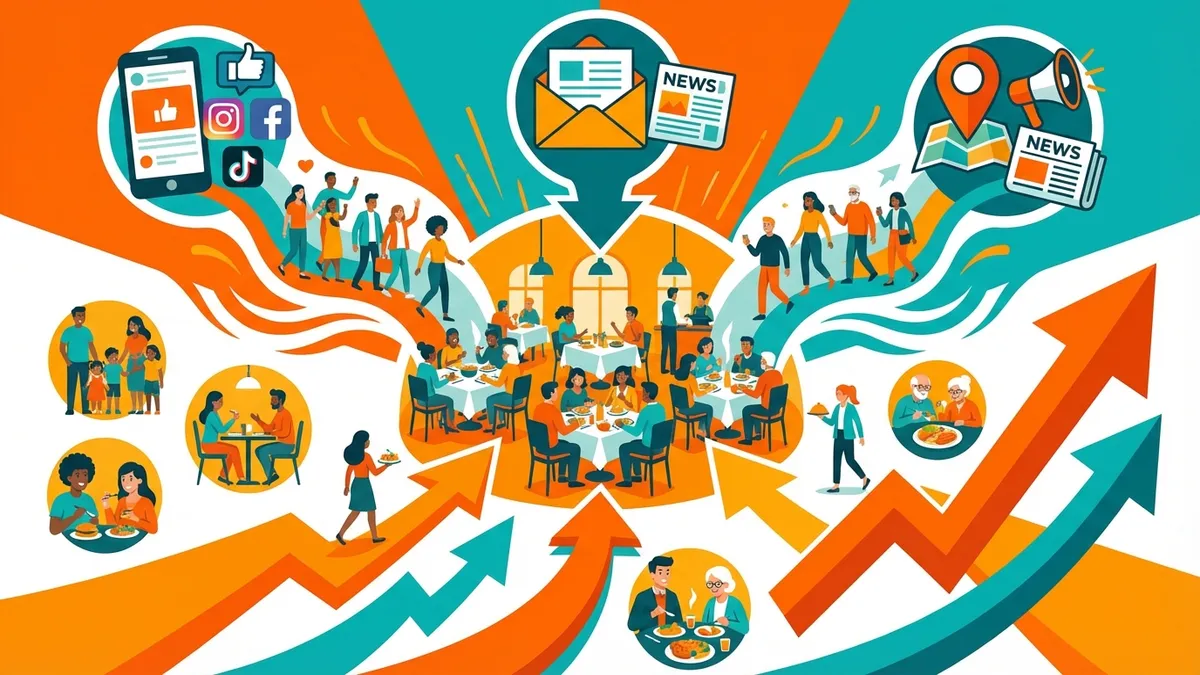
Empty tables on a Tuesday night. A packed house on Saturday but dead the rest of the week. Sound familiar?
Most restaurant owners know how to cook incredible food. Marketing? That's a different skill set entirely. But here's the truth: the restaurants that thrive aren't always the best ones — they're the ones people remember when they're deciding where to eat.
These 20 marketing ideas are built for real restaurant owners, not marketing agencies. They range from free to affordable, and every single one has been used by restaurants that went from struggling to standing-room-only.
1. Make Instagram Your Digital Storefront
For restaurants, Instagram isn't optional — it's where people decide where to eat. 69% of millennials photograph their food before eating it. Use that to your advantage.
What actually works:
- Post 4–5 times per week (consistency matters more than perfection)
- Film 15-second Reels of food being plated, sizzling on the grill, or poured tableside
- Use location tags and food-related hashtags (#[YourCity]Eats, #FoodPorn)
- Repost customer photos and tag them (free content + they'll share it with their audience)
Real example: A ramen shop in Portland started posting daily Reels of their noodle pull. Within 3 months, they had 22K followers and a consistent 45-minute wait on weekdays.
2. Claim and Optimize Google Business Profile
When someone searches "restaurants near me" or "best Thai food in [city]," Google decides who shows up. Your Google Business Profile is the ticket.
Must-do optimizations:
- Upload 20+ high-quality food photos
- Update hours for holidays and special events
- List your full menu with prices
- Respond to every review within 24 hours
- Post weekly specials and events
3. Build a Loyalty Program That's Dead Simple
Complex point systems with tiers and exclusions confuse customers. The best restaurant loyalty programs are brain-dead simple.
What works:
- Digital punch card: Buy 10 entrees, get 1 free (use an app like Square Loyalty or Stamp Me)
- Birthday rewards: Free dessert or appetizer during their birthday month
- VIP text list: "Show this text for 15% off tonight" (creates urgency)
The math: If your average ticket is $40 and a loyalty program brings a customer back just 2 extra times per year, that's $80 in additional revenue per customer. With 500 loyalty members, that's $40,000.
4. Partner with Local Food Influencers
You don't need celebrities. Micro-influencers with 2,000–20,000 local followers drive more restaurant traffic than accounts with millions.
How to do it right:
- Search "[your city] food blogger" on Instagram and TikTok
- Invite them for a complimentary meal (cost: $50–100)
- Let them create content organically — don't script it
- Ask permission to repost their content on your channels
What to avoid: Paying for a single post from a massive account. The ROI is almost always terrible for restaurants.
5. Launch a "Secret Menu" or Limited-Time Items
Scarcity and exclusivity drive demand. A secret menu creates buzz and gives people a reason to come back.
How to execute:
- Create 2–3 off-menu items available only to those "in the know"
- Promote them exclusively through your email list or social media
- Rotate monthly to keep things fresh
- Let staff mention it: "Have you tried our secret menu item?"
6. Run Targeted Facebook and Instagram Ads
Social media ads for restaurants should be hyper-local and visually stunning. You're competing for attention against cat videos — your food needs to stop the scroll.
Campaign framework:
- Radius targeting: 5–10 miles around your restaurant
- Interest targeting: Foodies, dining out, specific cuisines
- Creative: Video of your best dish being prepared (15 seconds max)
- Offer: "Show this ad for a free appetizer with any entree"
- Budget: $15–25/day
7. Host Events and Theme Nights
Events give people a specific reason to visit on otherwise slow nights.
Proven event ideas:
- Monday: Industry night (discounts for restaurant/bar workers)
- Tuesday: Trivia night (partner with a local trivia company)
- Wednesday: Wine/beer pairing dinners
- Thursday: Live music (acoustic acts are affordable and atmospheric)
- Sunday: Brunch with bottomless mimosas
The key is consistency. "Taco Tuesday" works because everyone knows it happens every week.
8. Build an Email List and Actually Use It
Email marketing for restaurants has an average ROI of $36 for every $1 spent. Yet most restaurants collect zero emails.
How to build your list:
- Collect emails through online ordering, reservations, and WiFi login
- Add a simple sign-up form to your website: "Get weekly specials + a free appetizer on your birthday"
- Never spam. Send 1–2 emails per week maximum
Email content that works:
- Weekly specials with mouth-watering photos
- Event announcements
- Behind-the-scenes stories (new menu development, staff spotlights)
- Exclusive subscriber-only offers
9. Get on Every Delivery Platform (Strategically)
Love them or hate them, delivery apps are where a huge segment of customers discover new restaurants.
Smart approach:
- Be on DoorDash, Uber Eats, and Grubhub (discoverability)
- Create delivery-specific menu items that travel well
- Use delivery as a customer acquisition tool, then convert them to direct orders
- Promote direct ordering on your website with lower prices or perks
10. Use User-Generated Content (UGC)
Your customers are already photographing your food. Use it.
How to encourage UGC:
- Create an Instagram-worthy moment: a signature dish presentation, a neon sign, a photo wall
- Add your Instagram handle to menus and table tents
- Run a monthly contest: "Tag us in your photo for a chance to win a $50 gift card"
- Repost customer content daily (with credit)
11. Optimize Your Online Menu
Your menu is the most visited page on your website. If it's a blurry PDF from 2019, you're losing customers.
Menu best practices:
- HTML text (not a PDF) — searchable by Google and accessible on mobile
- Include photos of at least your top 10 items
- Add descriptions that sell: "slow-braised for 8 hours" > "beef stew"
- Make online ordering one click away from every item
12. Send SMS Marketing Messages
Text messages have a 98% open rate (email averages 20%). For time-sensitive promotions, SMS is unbeatable.
How to use it:
- Build your SMS list through in-restaurant signups and online ordering
- Send 1–2 texts per week maximum
- Keep messages short and actionable: "🔥 Tonight only: Half-price wings after 8pm. Show this text. Reply STOP to unsubscribe"
- Best for: slow night promotions, event reminders, last-minute specials
13. Create a Signature Dish Worth Talking About
Every legendary restaurant has one: the dish people drive across town for. If you don't have one, create it.
What makes a signature dish:
- Visually stunning (Instagram-ready without trying)
- A story behind it (family recipe, unique ingredient, creative origin)
- Consistent quality every single time
- Slightly indulgent — this is the dish people treat themselves to
14. Manage Online Reviews Like Your Rent Depends on It
Because it kind of does. A one-star increase on Yelp can lead to a 5–9% increase in revenue.
Review management system:
- Respond to every review within 24 hours
- Thank positive reviewers specifically (mention what they ordered)
- Address negative reviews professionally — apologize, offer to make it right, take it offline
- Never argue, be defensive, or fake reviews
15. Run a PR Campaign (It's Easier Than You Think)
Getting featured in local media, food blogs, and "best of" lists is free advertising that builds massive credibility.
How to pitch:
- Email local food writers and bloggers directly
- Lead with a story, not "please review us" — "We're a Syrian refugee family sharing our grandmother's recipes"
- Offer an exclusive first taste of a new menu or concept
- Submit for every "Best Of" list in your city
16. Cater to Dietary Trends
Vegan, gluten-free, keto — these aren't fads anymore. Restaurants that accommodate dietary needs win groups where even one person has restrictions (because the group goes where everyone can eat).
- Add clear allergen and dietary labels to your menu
- Create dedicated vegan/GF sections (not just "we can modify")
- Promote dietary options on social media
17. Offer Gift Cards Year-Round
Gift cards are pure profit upfront, and roughly 10–20% are never redeemed. Promote them beyond the holiday season.
- Sell digital and physical gift cards on your website
- Run promotions: "Buy $50, get $10 bonus card"
- Display them prominently at the register
- Push them for Mother's Day, Father's Day, graduations, and Valentine's Day
18. Use Window and Sidewalk Marketing
Your physical location is a marketing asset. Use it.
- A-frame sidewalk signs with daily specials and witty messages
- Window displays showing your best dishes or seasonal decor
- Outdoor seating (even a few tables) creates visibility and social proof
- Chalkboard menus visible from the street
19. Create a Branded Hashtag
A branded hashtag aggregates all customer content in one place and builds community.
- Keep it short and memorable: #EatAt[YourName] or #[YourName]Eats
- Print it on menus, receipts, table tents, and your Instagram bio
- Feature the best tagged posts on a screen in your restaurant
20. Collaborate with Other Local Restaurants
This seems counterintuitive, but collaboration beats competition in restaurant marketing.
Ideas:
- "Restaurant Row" crawls with neighboring spots
- Collaborative dinner events (each chef prepares a course)
- Cross-promote on social media
- Joint loyalty programs across complementary restaurants
FAQ
How much should a restaurant spend on marketing?
Most successful restaurants allocate 3–6% of revenue to marketing. For a restaurant doing $1M per year, that's $30K–$60K. Start smaller and scale what works.
What is the most effective marketing for restaurants?
Instagram and Google Business Profile optimization consistently deliver the best results for the lowest cost. They work because they're visual platforms, and food is inherently visual.
How do I market my restaurant with no budget?
Focus on free channels: optimize your Google Business Profile, post daily on Instagram, encourage customer reviews, and partner with local micro-influencers for complimentary meals instead of cash.
How do I get more customers on slow nights?
Theme nights, SMS promotions, happy hour specials, and industry discounts all work well for slow nights. The key is giving people a specific reason to come on that particular night.
Should restaurants be on TikTok?
Absolutely. Food content dominates TikTok. Short videos of cooking, plating, and "making your order" content consistently go viral. A single TikTok can put a restaurant on the map overnight.
How important are online reviews for restaurants?
Critical. 94% of diners check reviews before choosing a restaurant. Your review profile on Google and Yelp is often the deciding factor between you and a competitor.
The One Thing That Matters Most
Consistency. The restaurants that fill tables every night aren't running one campaign and hoping for the best. They're posting on Instagram daily, responding to reviews promptly, sending weekly emails, and running events on slow nights — every single week. Pick 5 of these strategies, commit to them for 90 days, and watch what happens.