HubSpot pushes CRM and GTM operations toward an agent-ready stack
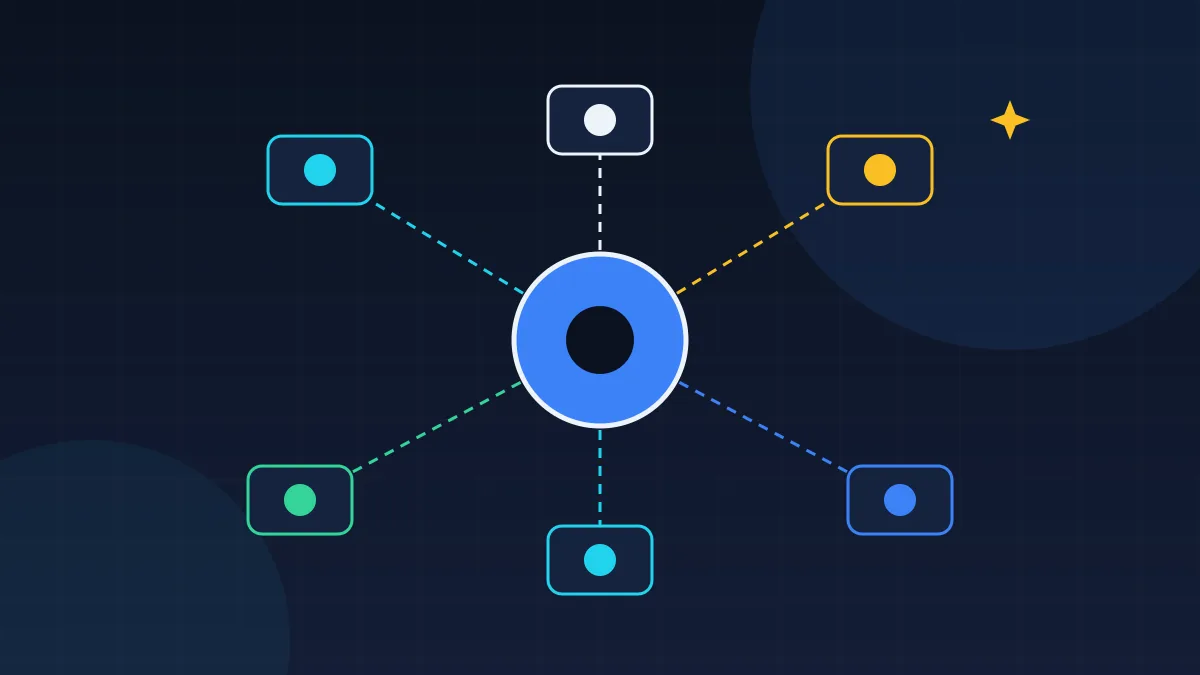
HubSpot made an important GTM infrastructure move on May 22, 2026 when it introduced what it calls an "agentic customer platform" and paired that announcement with a second post on the same date laying out how agents will connect to HubSpot data and actions through APIs, an MCP server, and broader platform access. For marketers, founders, and operators, the practical shift is that HubSpot is trying to make the CRM itself usable by external agents and AI workflows, not just by humans in dashboards.
What changed
The first announcement, published by CEO Yamini Rangan on May 22, 2026, says HubSpot is organizing its AI product strategy around three layers: a context layer in Smart CRM, an action layer across its Hubs and Breeze tools, and a coordination layer for human-agent collaboration. HubSpot says that context includes not only structured CRM records but also business context, team context, and industry intelligence drawn from more than 250,000 companies.
The second announcement, published the same day by Duncan Lennox, makes the more operational point: agents need APIs, structured outputs, and action paths, not only dashboards. HubSpot says in its open ecosystem post that agents can run on HubSpot and run HubSpot through APIs, its MCP server, CLI, and future access methods.
HubSpot's developer docs add two practical implementation signals. Its MCP server page says the remote HubSpot MCP server already provides secure read and write access for CRM objects and engagements, plus read-only access to items such as campaigns, campaign metrics, landing pages, website pages, and blog posts. Its 2026-03 API reference overview says HubSpot has shifted to date-versioned APIs, with new integrations expected to use the latest version.
| Confirmed signal | Official source | Why operators should care |
|---|---|---|
| HubSpot is framing CRM, AI tools, and governance as one "agentic customer platform" | HubSpot product announcement | AI work is moving from isolated assistants toward connected GTM operations. |
| HubSpot says agents should be able to run on and run HubSpot | Open ecosystem announcement | External agent workflows can become part of daily marketing, sales, and service execution. |
| The remote MCP server supports CRM read/write and some marketing/content read access | HubSpot MCP docs | Teams can connect AI tools to live account context without building everything from scratch. |
| HubSpot introduced date-versioned APIs in the 2026-03 release | API reference overview | Developers and RevOps teams need to treat integration maintenance as an active roadmap item. |
| HubSpot AEO is already positioned as a way to track AI-search visibility | HubSpot AEO launch | The platform is linking CRM context with both workflow automation and answer-engine visibility. |
Why it matters
The reason this matters is that GTM AI adoption has been bottlenecked by context and permissions more than by model quality. If an agent can securely access contacts, companies, deals, tickets, notes, campaign metrics, pages, and blog content through HubSpot's MCP server, then AI stops being only a sidecar for ideation and becomes more useful for execution, QA, reporting, and routing work.
There is also a search and visibility angle. HubSpot's AEO announcement from April 14, 2026 positions AI discovery as a measurable channel, not a vague branding effect. Combined with the May 22 platform vision, the direction is clear: HubSpot wants one system to support CRM context, agent workflows, and visibility in tools like ChatGPT, Gemini, and Perplexity. That overlaps directly with Slogan.website resources such as the GEO Visibility Checklist, the guide to tracking brand mentions and visibility, and our review of AI search analytics tools for marketing teams.
Who is affected
The most immediate impact falls on teams that already operate in HubSpot and are experimenting with AI beyond content generation.
- Demand generation and lifecycle teams that want agents to summarize performance, flag risks, or prepare campaign actions.
- RevOps and CRM admins who now need to evaluate scopes, governance, and API versioning as part of AI rollout.
- Agencies and consultants building automations for clients across marketing, sales, and service workflows.
- Content and SEO teams that increasingly need CRM context tied to AI-search visibility, citations, and brand mention tracking.
- Founders and operators who need to decide whether to centralize AI workflows in HubSpot or keep them spread across point tools.
What to do next
Use this workflow before turning HubSpot-connected agents loose in production:
- Inventory the workflows where AI already creates value but fails on handoff, such as campaign reporting, lead qualification, content updates, or deal-risk summaries.
- Decide which tasks need read-only context first and which truly need write access into CRM records, notes, tasks, or campaigns.
- Review HubSpot app scopes and permissions before connecting any MCP-compatible client, because the MCP docs make scope control the main security boundary.
- Audit existing integrations against HubSpot's date-versioned API model so your team does not add new AI dependencies on top of aging endpoints.
- Separate workflow automation from visibility strategy. Use HubSpot or other systems to improve execution, then measure AI-surface presence with the GEO Visibility Checklist and Marketing ROI Calculator.
- Build one narrow pilot first, such as weekly pipeline summaries, citation-gap monitoring, or content refresh recommendations tied to CRM demand signals.
What remains uncertain
HubSpot's direction is clear, but several operational details are still open. The company says in its open ecosystem post that full API parity is still coming, which means not every useful UI action is guaranteed to be available programmatically today. The MCP docs also say the accessible data types and tools will increase over time, so current coverage should not be treated as final.
There is also a governance question. HubSpot emphasizes trust, scopes, and user-level app control, but organizations still need their own rules for who can trigger agents, what those agents can edit, and how outputs get reviewed. And while the AEO story is strategically attractive, HubSpot's AI-search positioning should still be checked against a team's broader analytics stack.
The practical takeaway on June 1, 2026 is that HubSpot is redesigning the platform so agents can read the system, act inside the system, and eventually operate more of the GTM workflow. Teams that prepare governance, API maintenance, and visibility measurement now will be in a better position than teams that keep AI isolated from revenue operations.