How to Start a Cleaning Business in 2026: Complete Guide
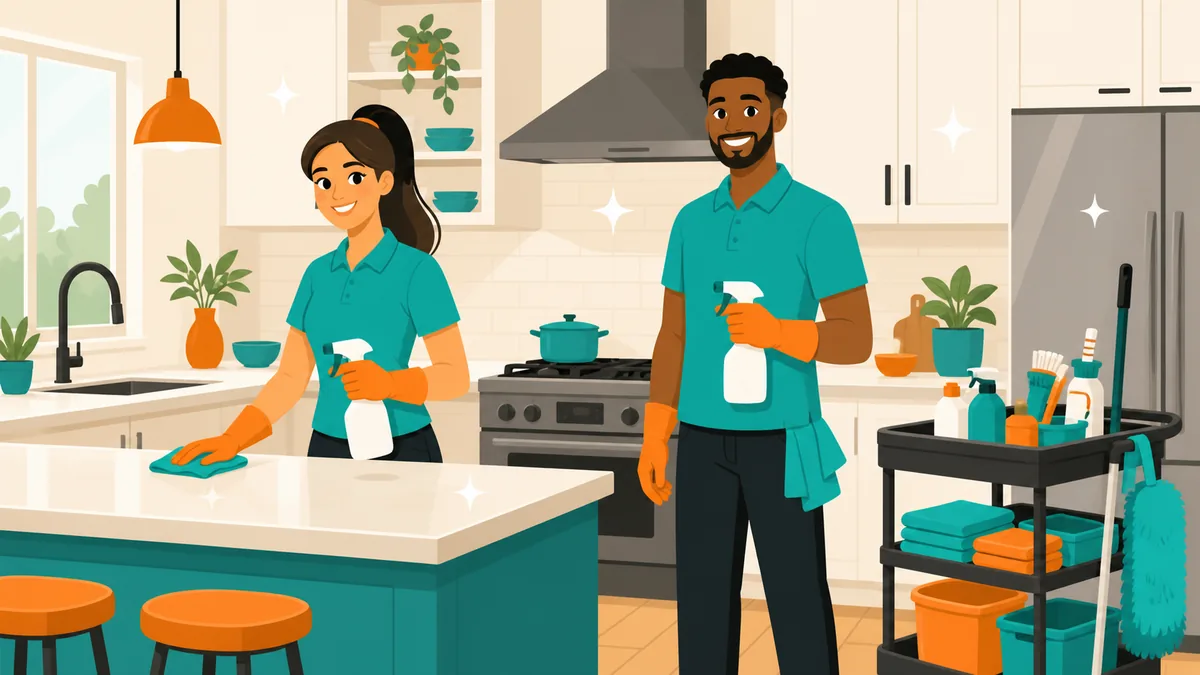
The cleaning industry generates over $90 billion annually in the US, and it remains one of the most accessible businesses to start. Low startup costs, no degree required, immediate demand, and steady repeat business make it an ideal entry point for first-time entrepreneurs.
The challenge isn't learning to clean — it's building a business. This guide covers the complete path from deciding on your niche to landing your first paying clients and scaling to a team.
Residential vs. Commercial Cleaning: Which Is Right for You?
Before buying a single bottle of cleaner, decide which market you're entering. They require different strategies, different clients, and different equipment.
| Factor | Residential | Commercial |
|---|---|---|
| Startup costs | $1,500–$5,000 | $3,000–$10,000+ |
| Hourly rate | $25–$50/hour per cleaner | $30–$70/hour (or per sq ft) |
| Schedule | Daytime, weekdays | Evenings/nights, weekends |
| Client finding | Nextdoor, Google, referrals | Cold outreach, property managers |
| Contract size | $100–$250/visit | $500–$5,000/month |
| Competition | Moderate (many solo cleaners) | Moderate (established companies) |
| Pros | Easy entry, flexible hours | Stable contracts, predictable income |
| Cons | Client churn, seasonal dips | Evening work, harder to land first clients |
Recommendation for beginners: Start residential. You can get your first client this week. Build a client base, learn operations, then add commercial clients once you have systems and credibility.
Startup Cost Breakdown
| Item | Cost |
|---|---|
| Cleaning supplies & chemicals | $200–$600 |
| Equipment (vacuums, mops, etc.) | $500–$2,000 |
| Business registration (LLC) | $50–$500 |
| Insurance (general liability) | $400–$800/year |
| Vehicle (or use personal car) | $0–$10,000 |
| Website & marketing | $200–$500 |
| Uniforms & branded materials | $100–$500 |
| **Total** | **$1,450–$14,900** |
Most solo cleaners starting residential work need $2,000–$4,000 to launch properly. The wide range on vehicle costs is the biggest variable — if you already own a reliable car, your startup costs are on the low end.
Essential Equipment for a Solo Cleaner
| Item | Budget Choice | Professional Choice |
|---|---|---|
| Vacuum (upright or canister) | Shark ($150) | Miele ($400–$600) |
| Microfiber cloths (24-pack) | $15–$25 | $30–$50 |
| Mop system | Swiffer WetJet ($40) | Rubbermaid Pulse ($80) |
| Cleaning caddy | $15–$25 | $30–$50 |
| All-purpose cleaner (concentrate) | $10–$20 | $20–$40 |
| Bathroom cleaner, glass cleaner | $15–$25 | $25–$40 |
| Rubber gloves (multiple pairs) | $10–$15 | $20–$30 |
| Trash bags, paper towels | $20–$30 | $30–$50 |
Buy professional-grade microfiber cloths from the start — cheap ones leave streaks and fall apart. For vacuums, the Shark HV390 is a good entry-level investment; the Miele C3 is the workhorse of cleaning professionals.
Step 1: Legal Structure and Registration
Form an LLC
An LLC (Limited Liability Company) is strongly recommended for cleaning businesses. You're working in people's homes and handling their belongings. If something breaks, gets damaged, or someone claims an injury, an LLC separates your personal assets from business liability.
Formation costs $50–$500 depending on your state (Delaware: $90, California: $70 + $800 annual fee, Texas: $300). File online through your state's Secretary of State website — no lawyer needed for a basic single-member LLC.
Get an EIN
Your Employer Identification Number is free from the IRS at irs.gov. Takes 5 minutes. You need it to open a business bank account.
Local Business License
Most cities require a general business license ($25–$100/year). Check your city's business licensing portal or call the city clerk's office.
Sales Tax
Some states (like Ohio, Texas, and New York) apply sales tax to cleaning services. Check your state's revenue department website to determine if you need to collect and remit sales tax.
Step 2: Get the Right Insurance
Insurance is not optional for a cleaning business. One broken item, one slip-and-fall, one theft accusation, and you're out of business without it.
General Liability Insurance
Covers property damage (you knock over a vase, you scratch a hardwood floor), bodily injury (a client trips over your equipment), and completed operations (damage discovered after you leave). Cost: $400–$800/year for $1M in coverage.
Get quotes from Next Insurance, NEXT, Hiscox, or through your local independent insurance agent. For full details on coverage options, read our general liability insurance guide.
Janitorial Bond
A surety bond protects clients if an employee steals from them. Clients are often unwilling to give access to their home without it. Cost: $100–$300/year for a $10,000–$25,000 bond.
Workers' Compensation
Required by most states once you hire employees. Covers medical costs and lost wages for on-the-job injuries. Cost varies significantly by state; budget $800–$2,000/year per employee.
Step 3: Set Your Pricing
Residential Pricing
Per-visit flat rate (most common):
- Studio/1-bedroom: $80–$130 standard clean
- 2-bedroom home: $110–$170 standard clean
- 3-bedroom home: $130–$200 standard clean
- 4-bedroom home: $160–$250 standard clean
- Deep clean: 1.5–2x the standard rate
Hourly rate: $25–$50/hour. Works for irregular jobs or unusual situations.
Per-square-foot: $0.05–$0.15/sq ft for standard clean; works well for quoting without visiting the property first.
Commercial Pricing
- Standard office cleaning: $0.10–$0.20/sq ft (monthly)
- Medical facilities: $0.20–$0.30/sq ft (higher standards required)
- Post-construction cleanup: $0.25–$0.50/sq ft
Example: A 3,000 sq ft office at $0.12/sq ft = $360/clean. Three times per week = $4,320/month from one client.
Common Pricing Mistakes
- Pricing too low to win clients: Race-to-the-bottom pricing attracts bad clients and burns you out. Price fairly from day one.
- Not accounting for drive time: If a job is 45 minutes away each way, that affects your hourly earnings.
- Free re-cleans without limits: Offer a satisfaction guarantee but define what it covers.
Step 4: Build Your Client Base
Online Platforms (Start Here)
Google Business Profile: Create a free listing. Add photos of your work, list your services and service area, and ask every client for a Google review. This is your most powerful free marketing tool — local searches like "house cleaning near me" show Google Business results first.
Nextdoor: Post a business introduction in your neighborhood and nearby neighborhoods. Cleaning businesses consistently get strong response on Nextdoor because trust matters and neighbors vouch for you.
Thumbtack: Pay per lead ($5–$30/lead). Set your preferences to match the types of jobs you want and only pay when you're matched with interested customers.
Angi (formerly Angie's List): Free listing, with paid advertising options. High-quality leads for home services.
HomeAdvisor: Similar to Angi. Expect $20–$50/lead for cleaning. Can be profitable once you close enough leads to know your conversion rate.
Yelp: Claim your free business listing and keep it updated. Yelp drives discovery for cleaning businesses, especially in urban areas.
Offline Marketing (Works Surprisingly Well)
Door-to-door flyer distribution: Walk neighborhoods you want to work in and leave door hangers. Print 500 flyers ($60–$100 at Canva + Vistaprint) and distribute in your target area. Expect 0.5–2% response rate — that's 3–10 calls from 500 flyers.
Yard signs: $50–$150 for a set of 10–20 signs. Place them (with permission) in yards of completed jobs. Neighbors notice.
Referral program: Tell every client: "If you refer someone who books a cleaning, I'll give you $25 off your next clean." Word-of-mouth referrals have the highest close rate of any lead source and zero marketing cost.
Apartment complex managers: One relationship with a property manager can produce 10–50 move-out cleans per year.
Step 5: Hire Employees vs. Stay Solo
The Solo Model
Keep 100% of revenue, zero management overhead, and full control over quality. Realistic income: $40,000–$70,000/year working full-time (30–40 clients).
Ceiling: You can only clean so many homes per week. Once you're full, you either turn away work or hire.
When to Hire Your First Employee
Hire when:
- You're consistently turning away work
- You want to stop cleaning and focus on operations/sales
- You have 30+ recurring clients and are booked 35+ hours per week
1099 Contractor vs. W-2 Employee
1099 contractors: Cheaper on paper (no payroll taxes, no benefits), but legally risky. The IRS has strict rules about what constitutes an independent contractor. If your "contractors" work exclusively for you, on your schedule, with your equipment — they're employees by law. Getting this wrong means back taxes, penalties, and lawsuits.
W-2 employees: More overhead (payroll taxes ~15%, workers' comp, possibly benefits), but legally safe and allows you to set schedules, require uniforms, and control quality standards. Use W-2 employees once you commit to building a team.
Step 6: Cleaning Business Software
As you grow beyond 10–15 clients, scheduling, invoicing, and client management in a spreadsheet becomes unworkable. Invest in purpose-built software.
| Software | Monthly Cost | Best For |
|---|---|---|
| Jobber | $49–$149/month | Growing teams, client management |
| HouseCall Pro | $65–$169/month | Automation, online booking |
| ZenMaid | $49–$99/month | Cleaning-specific, recurring scheduling |
| ServiceM8 | $29–$99/month | Field service, mobile-first |
| Wave (accounting) | Free | Invoicing and accounting |
ZenMaid is purpose-built for cleaning businesses and handles recurring client scheduling especially well. Jobber is the most feature-complete for growing businesses. Both offer free trials.
Step 7: Tax Deductions for Your Cleaning Business
Running a cleaning business as an LLC means tracking deductions carefully. Common deductible expenses include:
- Cleaning supplies and equipment: 100% deductible
- Vehicle mileage: $0.67/mile (2025 standard mileage rate) or actual vehicle expenses
- Phone: Business-use percentage is deductible
- Software subscriptions: Scheduling software, accounting software
- Insurance premiums: General liability, bond, workers' comp
- Uniforms and branded materials: If not suitable for everyday wear
- Advertising and marketing: All costs
- Home office: If you have a dedicated workspace (use the simplified method: $5/sq ft, up to 300 sq ft)
- Training: Cleaning certifications, business courses
Keep receipts for everything and use accounting software (Wave is free; QuickBooks Self-Employed is $15/month) to track expenses from day one.
Step 8: Green Cleaning as a Differentiator
Eco-friendly cleaning services command a 10–20% premium and attract a loyal, higher-income client base. The shift requires using plant-based, non-toxic cleaning products (Seventh Generation, Method, Branch Basics, Force of Nature).
How to market it:
- Include "eco-friendly" and "non-toxic" in your business name or tagline
- List green products on your website
- Target neighborhoods with high concentrations of families with young children and pets — they actively seek non-toxic options
- Charge a slight premium and explain why (safer for children, pets, and the environment)
The cost difference between conventional and green products is modest ($20–$50/month for a small operation). The marketing advantage is significant.
Create Your Cleaning Business Brand
Your business name and tagline are the first things potential clients see. A professional name builds trust instantly; a forgettable one costs you clients. Use our Business Name Generator to brainstorm strong, available names, and our Slogan Generator to craft a tagline that communicates your value — whether that's spotless results, eco-friendly products, or trustworthy service.
Get professional uniforms (polo shirts with your logo), magnetic car door signs, and a basic website. These signal legitimacy to clients who are trusting you with access to their home.
Marketing Ideas to Scale Your Cleaning Business
Beyond the basics, explore these strategies as you grow:
- Google Local Services Ads: Pay-per-lead ads that appear at the top of Google for searches like "house cleaning near me." Leads are pre-screened and exclusive.
- Before/after photos: Instagram content showing dramatic cleaning transformations drives followers and inquiries.
- Email newsletters: Monthly emails to your client list with seasonal cleaning tips and promotions.
- Partnerships: Partner with real estate agents for move-in/move-out cleans. One agent relationship can generate 20–40 cleans per year.
For more ideas, read our small business marketing guide.
Frequently asked questions
How much does it cost to start a cleaning business?
Starting a cleaning business costs $1,450–$14,900 depending on whether you need a vehicle and how much you spend on initial supplies and marketing. A solo residential cleaner using their own car can launch for under $2,000.
Do I need a license to start a cleaning business?
Most states don't require a specific cleaning license, but you typically need a general business license from your city or county ($25–$100), a sales tax permit if your state taxes cleaning services, and a home occupation permit if operating from home. You should also form an LLC and carry liability insurance.
How much can I charge for cleaning services?
Residential cleaners typically charge $100–$200 per visit for a standard home clean, or $25–$50 per hour. Commercial cleaning is usually priced at $0.10–$0.20 per square foot. Deep cleans, move-out cleans, and specialty services command premium rates of $200–$500+.
How do I get my first cleaning clients?
Your fastest paths to first clients are: posting on Nextdoor, door-to-door flyer distribution in target neighborhoods, creating a Google Business Profile, and listing on Thumbtack and Angi. Referral discounts (offer $25 off for each referral) are extremely effective once you have a few clients.
Should I start residential or commercial cleaning?
Residential cleaning is easier to start: lower competition for individual homes, you can start immediately, and clients are easier to find. Commercial cleaning offers larger, more stable contracts but requires evening work, more equipment, and relationships with property managers. Most beginners start residential and expand into commercial.