How to Start a Drone Photography Business in 2026
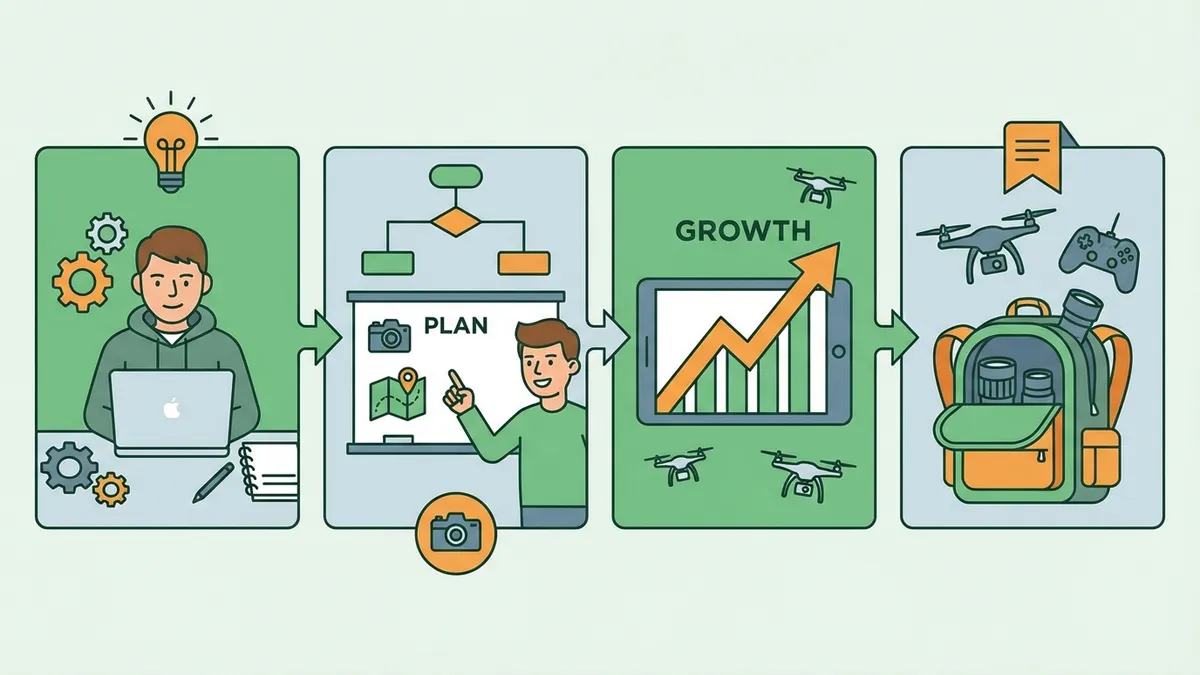
The commercial drone industry is projected to reach $58.4 billion by 2028, and drone photography remains one of the most accessible entry points for entrepreneurs. Real estate agents, construction firms, event planners, and marketing agencies all need aerial imagery — and most are willing to pay $150–$500 per session for it.
Starting a drone photography business requires relatively low upfront investment ($2,000–$8,000), no formal degree, and can generate $50,000–$120,000 annually once established. This guide walks you through every step, from getting your FAA certification to landing your first paying client.
Table of Contents
- Is a Drone Photography Business Profitable?
- Step 1: Get Your FAA Part 107 Certificate
- Step 2: Choose Your Niche
- Step 3: Buy the Right Equipment
- Step 4: Register Your Business
- Step 5: Get Drone Business Insurance
- Step 6: Build Your Portfolio
- Step 7: Set Your Pricing
- Step 8: Find Clients
- Step 9: Deliver Professional Results
- Step 10: Scale Your Business
- Startup Cost Breakdown
- Common Mistakes to Avoid
- FAQ
Is a Drone Photography Business Profitable?
Short answer: yes, if you pick the right niche and market consistently.
Here's what the numbers look like for a solo drone photographer in 2026:
- Average session fee: $200–$500 (real estate), $500–$2,000 (commercial/construction)
- Monthly expenses: $300–$600 (insurance, software, cloud storage, marketing)
- Break-even point: Most operators break even within 3–4 months
- Annual revenue (solo, part-time): $30,000–$60,000
- Annual revenue (solo, full-time): $70,000–$120,000
The key advantage: overhead stays low. No storefront, no inventory, minimal staff. Your biggest recurring costs are insurance ($800–$1,500/year) and equipment maintenance.
Step 1: Get Your FAA Part 107 Certificate
You cannot legally fly a drone for commercial purposes in the United States without an FAA Part 107 Remote Pilot Certificate. No exceptions.
What Part 107 Requires
- Be at least 16 years old
- Read, speak, and understand English
- Be in physical and mental condition to safely operate a drone
- Pass the FAA Aeronautical Knowledge Test (60 questions, 70% to pass)
How to Prepare
- Study time: 15–25 hours over 2–4 weeks
- Study resources: FAA's free Pilot Handbook, paid courses from Pilot Institute ($149) or DARTdrones ($299)
- Schedule your exam at an FAA-approved testing center (PSI Exams) — costs $175
- Pass rate: Approximately 92% for first-time test takers who use a structured course
After You Pass
You'll receive a temporary certificate immediately. Your permanent plastic card arrives by mail in 6–8 weeks. The certificate is valid for 24 months — you'll need to pass a recurrent knowledge test to renew.
Pro tip: Don't skip this step or "fly under the radar." The FAA actively monitors commercial drone operations, and fines start at $1,437 per violation. Getting caught without Part 107 can also void your insurance.
Step 2: Choose Your Niche
Generalist drone photographers struggle. Specialists thrive. Pick one or two niches to start:
Highest-Paying Niches
| Niche | Avg. Per Session | Demand Level | Competition |
|---|---|---|---|
| Real Estate | $150–$400 | Very High | High |
| Construction Progress | $500–$2,000 | High | Medium |
| Roof/Property Inspections | $200–$500 | High | Medium |
| Wedding/Events | $300–$800 | Medium | Medium |
| Agriculture/Mapping | $500–$3,000 | Growing | Low |
| Tourism/Hospitality | $300–$1,500 | Medium | Low |
| Insurance Claims | $200–$600 | Growing | Low |
| Commercial Video | $1,000–$5,000 | Medium | Medium |
Best Niche for Beginners
Real estate photography is the easiest entry point. Agents constantly need listings photographed, the work is repetitive (which means efficient), and you can build volume fast. Start here, then expand into higher-ticket niches.
Step 3: Buy the Right Equipment
You don't need a $10,000 rig to start. Here's a practical equipment list for 2026:
Essential Equipment
- Drone: DJI Air 3S or DJI Mini 4 Pro ($759–$1,099). Both shoot 4K video and 48MP photos, weigh under 249g (Mini 4 Pro), and have obstacle avoidance.
- Extra batteries: 2–3 additional batteries ($55–$65 each). Each battery gives 30–46 minutes of flight time.
- MicroSD cards: 2x 256GB V30 cards ($25 each)
- Landing pad: Portable 30" pad ($20)
- ND filter set: Freewell or PolarPro ($49–$89)
- Carrying case: Hard shell backpack ($60–$120)
Nice to Have (Add Later)
- DJI Mavic 3 Pro ($2,199) — for clients who need higher-end deliverables
- iPad mini — better screen for monitoring shots
- Editing software: Adobe Lightroom + Premiere Pro ($54.99/month) or DaVinci Resolve (free)
- Litchi or Dronelink app — automated flight paths for consistent results
Total Starter Investment: $1,200–$2,500
Resist the urge to buy the most expensive drone first. The DJI Mini 4 Pro produces results that 90% of clients cannot distinguish from a $2,000+ drone.
Step 4: Register Your Business
Business Structure
Form an LLC. It separates your personal assets from business liability and looks professional to clients. Cost varies by state:
- State filing fee: $50–$500 (average $125)
- Registered agent: $0–$125/year (you can be your own in most states)
- EIN (Tax ID): Free from IRS.gov
Additional Registrations
- Register your drone with the FAA: $5 per drone (valid 3 years) at faadronezone.faa.gov
- Business bank account: Open a separate checking account (many banks offer free business checking)
- Accounting software: Wave (free) or QuickBooks Self-Employed ($15/month)
Step 5: Get Drone Business Insurance
This is non-negotiable. One crash into a car, person, or building without insurance could end your business and drain your personal savings.
Types of Insurance You Need
- Drone liability insurance: Covers damage to third-party property and bodily injury. Minimum $1 million coverage. Cost: $500–$1,200/year.
- Hull insurance: Covers damage to your own drone. Cost: $75–$300/year depending on drone value.
- General liability insurance: Broader business protection. Cost: $300–$700/year.
Top Drone Insurance Providers (2026)
- SkyWatch.AI — Pay-per-flight ($10–$25/flight) or annual ($800–$1,500). Most popular among part-time operators.
- Verifly — On-demand hourly coverage starting at $10/hour
- BWI Fly — Annual policies from $650/year, preferred by full-time professionals
- State Farm / Progressive — Some traditional insurers now offer commercial drone riders
Important: Many commercial clients (especially construction firms and real estate agencies) require proof of insurance before hiring you. Having a Certificate of Insurance (COI) ready to send makes you look professional and closes deals faster.
Step 6: Build Your Portfolio
No client hires a drone photographer without seeing samples. Here's how to build a portfolio from zero:
Free/Low-Cost Portfolio Building
- Offer free shoots to 3–5 local businesses — restaurants, car dealerships, churches, parks. You get portfolio content; they get free photos.
- Photograph local landmarks — downtown areas, waterfronts, parks, stadiums
- Contact real estate agents directly — offer to shoot one listing free in exchange for a testimonial
- Document construction sites — with permission, shoot progress photos for a local builder
Portfolio Presentation
- Website: A simple one-page site with 15–20 of your best shots. Use Squarespace ($16/month), WordPress, or a free Carrd site.
- Google Business Profile: Free, gets you on Google Maps, critical for local SEO
- Instagram: Post 3–4 times per week with local hashtags
- YouTube/TikTok: Behind-the-scenes content drives organic leads
What Clients Want to See
- Smooth, cinematic video (no jerky movements)
- Properly exposed photos (no blown-out skies)
- Variety: overhead shots, orbits, reveal shots, detail shots
- Edited, color-corrected final products — not raw footage
Step 7: Set Your Pricing
Pricing too low is the #1 mistake new drone operators make. Underpricing attracts bad clients and makes it impossible to sustain the business.
Recommended Pricing (2026)
Real Estate Photography:
- Basic (5–10 aerial photos): $150–$250
- Standard (10–20 photos + 60-sec video): $250–$400
- Premium (photos + video + virtual tour): $400–$700
Construction/Industrial:
- Single site visit: $300–$500
- Monthly progress documentation: $500–$1,500/month per site
- 3D mapping/orthomosaic: $800–$2,500 per project
Events:
- 1–2 hours coverage: $300–$600
- Half-day (4 hours): $600–$1,200
- Full day: $1,200–$2,500
Commercial/Marketing Video:
- Raw aerial footage (2–4 hours): $500–$1,000
- Edited promotional video (30–90 sec): $1,000–$3,000
- Full production with ground + aerial: $2,500–$5,000+
Pricing Tips
- Always quote project rates, not hourly. Clients perceive more value.
- Include editing time in your price. A 1-hour shoot often requires 2–3 hours of editing.
- Charge for travel beyond 20 miles from your base ($0.65/mile or flat fee)
- Require 50% deposit before every shoot
Step 8: Find Clients
Fastest Client Acquisition Methods
-
Door-to-door real estate offices. Walk in with a tablet showing your portfolio. Offer to shoot one listing at half price. This method alone has launched thousands of drone businesses.
-
Google Business Profile + Local SEO. Optimize for "[city] drone photography." Collect reviews aggressively — even 5–10 five-star reviews put you ahead of most competitors.
-
Facebook groups. Join local realtor groups, contractor groups, and event planning groups. Don't spam — answer questions, share knowledge, and let people come to you.
-
Cold email construction companies. Find general contractors on Google Maps. Send a short email with 3 sample images and your pricing. Response rate: 5–10%, but these are high-ticket clients.
-
Partner with ground photographers. Many traditional photographers don't offer drone services. Offer them a referral fee (10–15%) for sending aerial work your way.
-
Wedding vendor networks. Get listed on The Knot and WeddingWire if you do events.
Client Retention
Repeat business is where the money is. A single construction company can generate $6,000–$18,000/year in recurring revenue. Always follow up 30 days after delivery, ask for referrals, and send a thank-you email after every project.
Step 9: Deliver Professional Results
Workflow for Every Shoot
- Pre-flight: Check weather, airspace (use B4UFLY app), charge batteries, clean lens
- On-site: Arrive 15 minutes early, brief the client, plan your shots
- Flight: Shoot more than you need — overshoot by 2x
- Post-production: Cull, color correct, export at full resolution
- Delivery: Send via cloud link (Google Drive, Dropbox, or Pixieset) within 24–48 hours
- Follow-up: Ask for a review, request referrals
Editing Standards
- Correct white balance and exposure
- Remove lens distortion
- Add subtle color grading (warm tones for real estate, high contrast for commercial)
- Stabilize video in post if needed
- Export photos at full resolution (JPEG, 90% quality minimum)
- Export video at 4K/30fps or 1080p/60fps depending on client needs
Step 10: Scale Your Business
Once you're consistently booking 8–12 sessions per month, it's time to grow:
- Add services: 3D mapping (Pix4D, DroneDeploy), thermal inspections, FPV cinematography
- Hire subcontractors: Other Part 107 pilots who shoot under your brand. Pay them 40–50% of the project fee.
- Productize packages: Create fixed-price packages with clear deliverables — easier to sell, easier to deliver
- Raise prices 10–15% annually. Your improving skills and growing portfolio justify it.
- Invest in SEO and content marketing. A blog with 20–30 articles targeting local search terms can generate 5–10 leads per month passively.
Startup Cost Breakdown
| Item | Cost |
|---|---|
| FAA Part 107 Exam | $175 |
| Study Course | $0–$299 |
| Drone + Accessories | $1,000–$2,500 |
| LLC Formation | $50–$500 |
| Drone Insurance (Annual) | $500–$1,500 |
| Website | $0–$200 |
| Editing Software | $0–$55/month |
| Marketing (first 3 months) | $200–$500 |
| **Total** | **$1,925–$5,729** |
Most operators start for under $3,000 and are profitable within 90 days.
Common Mistakes to Avoid
- Flying without Part 107. Fines, lawsuits, and voided insurance. Just get the certificate.
- Buying the most expensive drone first. Master flying and business fundamentals on a mid-range drone.
- Pricing too low. $50 drone shoots attract nightmare clients and burn you out.
- Ignoring airspace rules. Flying in restricted airspace near airports can result in criminal charges.
- No insurance. One incident without coverage can cost you $50,000+.
- Skipping contracts. Always use a written service agreement covering scope, payment terms, and liability.
- Over-editing. Real estate agents want accurate colors, not Instagram filters.
- Not following up. 80% of your revenue will come from repeat clients and referrals.
FAQ
How much does it cost to start a drone photography business?
Most operators launch for $2,000–$5,000, covering a mid-range drone ($800–$1,100), FAA certification ($175), insurance ($500–$1,200/year), and basic business setup ($100–$500). You can start even leaner at around $1,500 if you choose a sub-250g drone and handle your own website.
Do I need a license to fly drones commercially?
Yes. The FAA requires a Part 107 Remote Pilot Certificate for all commercial drone operations in the United States. The exam costs $175 and most people pass after 2–4 weeks of studying. Flying commercially without it is illegal and can result in fines up to $32,666 per violation.
How much can drone photographers earn?
Part-time drone photographers typically earn $30,000–$60,000 per year working 15–20 hours per week. Full-time operators focused on high-ticket niches like construction documentation or commercial video production earn $70,000–$120,000+. Top operators with multiple pilots and established client bases can exceed $200,000 annually.
What is the best drone for starting a photography business in 2026?
The DJI Mini 4 Pro ($759) is the best value for new operators — it weighs under 249g (simpler regulations in some scenarios), shoots 4K/60fps video and 48MP photos, and has tri-directional obstacle avoidance. The DJI Air 3S ($1,099) is the step-up choice with a larger sensor and dual cameras. Avoid spending over $1,500 on your first drone.
Do I need drone insurance?
Absolutely. Drone liability insurance (minimum $1 million coverage) is essential and costs $500–$1,500/year. Many commercial clients require proof of insurance before hiring you. Beyond liability, hull insurance ($75–$300/year) covers damage to your own equipment. Providers like SkyWatch.AI also offer pay-per-flight plans starting at $10 if you fly infrequently.
Can I fly my drone anywhere?
No. You must comply with FAA airspace regulations. Controlled airspace near airports requires LAANC authorization (usually obtained through apps like AirMap or Aloft in minutes). National parks, military installations, and certain government buildings are no-fly zones. Always check airspace before every flight using the B4UFLY app or sectional charts.
How do I find my first drone photography clients?
The fastest method is visiting local real estate offices in person with a tablet showing sample work. Offer to shoot one listing at a reduced rate. Other effective strategies include optimizing your Google Business Profile for local searches, joining local business Facebook groups, cold emailing construction companies, and partnering with ground-based photographers who don't offer aerial services.