How to Start a Food Truck Business (2026)
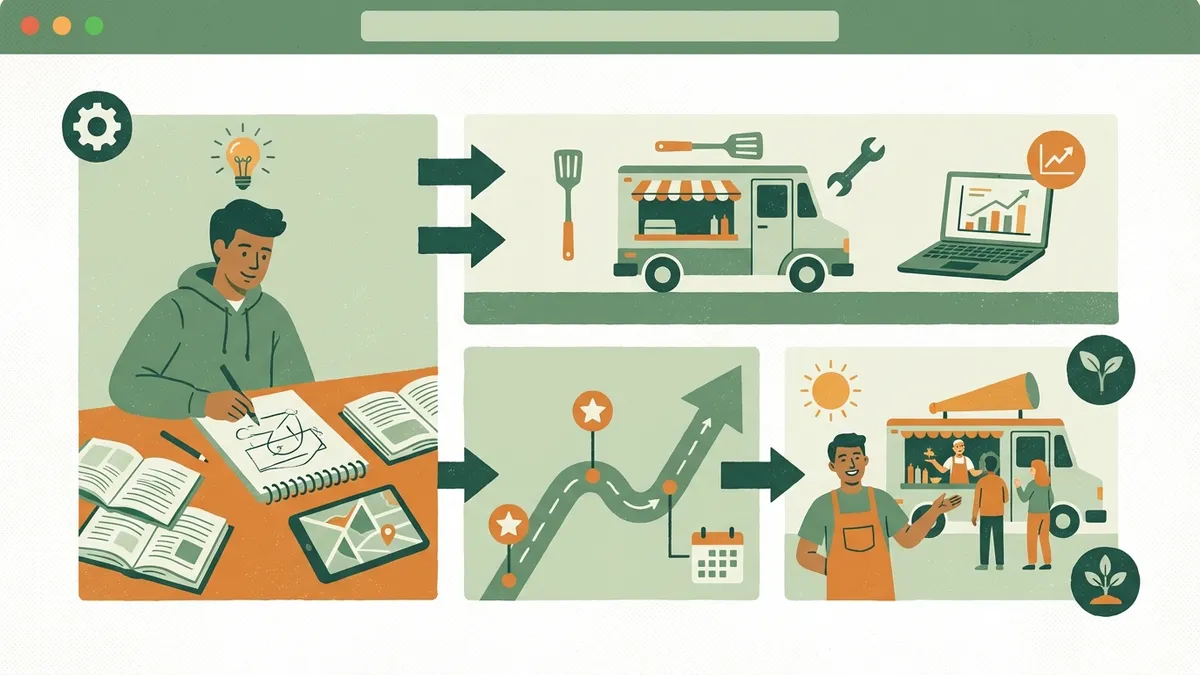
Food trucks generate an estimated $1.4 billion in revenue annually in the US, and the industry grows about 6-7% every year. The appeal is obvious: lower startup costs than a restaurant, the ability to go where the customers are, and the freedom to build a brand around a focused menu.
But food trucks aren't just "cheap restaurants on wheels." They come with unique challenges — permits that vary by city block, commissary kitchen requirements, weather dependency, and mechanical breakdowns that can shut you down for days. This guide covers the real costs, actual permit requirements, and honest profit expectations.
How Much Does It Cost to Start a Food Truck?
| Expense | Low Estimate | High Estimate | Notes |
|---|---|---|---|
| Truck (used, built-out) | $40,000 | $80,000 | Includes basic kitchen equipment |
| Truck (new, custom) | $80,000 | $200,000 | Fully custom build |
| Kitchen equipment | $10,000 | $30,000 | If buying a shell truck |
| Permits & licenses | $1,000 | $5,000 | Varies dramatically by city |
| Insurance | $2,000 | $6,000/year | Commercial auto + GL + workers' comp |
| Initial food inventory | $1,000 | $3,000 | First two weeks of supplies |
| POS system | $0 | $500 | Square is free for hardware basics |
| Generator (if needed) | $3,000 | $8,000 | Some trucks have built-in |
| Branding & wrap | $2,500 | $5,000 | Vehicle wrap design and installation |
| Commissary kitchen deposit | $500 | $2,000 | Monthly rental for prep space |
| Marketing & website | $500 | $2,000 | Social media, website, business cards |
| Working capital | $5,000 | $15,000 | 2-3 months of operating expenses |
| **Total** | **$65,500** | **$156,500** |
Financing Options
- SBA microloans: Up to $50,000 at favorable rates
- Equipment financing: The truck itself serves as collateral
- Personal savings: The most common funding source
- Small business loans: Banks and online lenders
- Investors: Some food truck owners bring on partners
Step-by-Step: Launching Your Food Truck
Step 1: Develop Your Concept and Menu
The most successful food trucks do one thing exceptionally well. Don't try to have a 30-item menu — that's what restaurants are for.
Winning food truck concepts:
- Focus on 5-8 menu items maximum
- Every item should be servable in under 5 minutes
- Items should travel well (no delicate plating)
- Offer 1-2 vegetarian/vegan options (you'll lose sales without them)
- Price between $8–$16 per item (sweet spot for lunch crowds)
Test your concept by catering a few small events or selling at a farmers market before committing to a truck.
Step 2: Write Your Business Plan
Your food truck business plan should include:
- Concept and menu with food costs per item
- Target market (office workers, event-goers, late-night crowds)
- Location strategy (where will you park and why)
- Financial projections (realistic monthly revenue and expenses)
- Marketing plan (social media, events, catering)
- Competition analysis (other food trucks and restaurants in your area)
Step 3: Get Your Permits and Licenses
This is where food trucks get complicated. Requirements vary wildly by state, county, and city.
Common requirements:
- Business license — From your city/county ($50–$400)
- Food handler's permit — Required for all food handlers ($10–$35)
- Food service establishment permit — From your county health department ($100–$1,000)
- Mobile food vendor permit — Specific to food trucks ($200–$2,000)
- Fire department permit — For cooking equipment ($100–$500)
- Commissary agreement — Proof you have a licensed commercial kitchen for prep/storage
- Health department inspection — Must pass before operating
- Vehicle registration — Commercial vehicle registration
- Sales tax permit — If your state collects sales tax on food
- Parking permits — Some cities require permits for specific locations
Pro tip: Contact your local health department and small business development center (SBDC) before buying a truck. They'll tell you exactly what's required in your jurisdiction.
Step 4: Buy or Build Your Truck
Option A: Buy a used, built-out truck ($40,000–$80,000) This is how most food truck owners start. You get a truck that's already equipped with cooking equipment, ventilation, and plumbing. Inspect carefully — have a mechanic check the engine and a health department official check the kitchen setup before you buy.
Where to find used food trucks:
- Roaming Hunger marketplace
- UsedVending.com
- eBay Motors
- Craigslist and Facebook Marketplace (be cautious)
- Local restaurant equipment auctions
Option B: Custom build ($80,000–$200,000+) Start with a cargo truck or van and build out a custom kitchen. More expensive and time-consuming (3-6 months typically) but you get exactly what you need.
Option C: Lease a truck ($2,000–$4,000/month) Lower upfront cost but more expensive long-term. Good for testing your concept before committing to a purchase.
Step 5: Set Up Your Commissary Kitchen
Most cities require food trucks to operate out of a licensed commissary kitchen — a shared commercial kitchen where you prep food, store inventory, and clean your truck.
Monthly commissary costs: $500–$2,000/month depending on your city and the hours you need.
What to look for:
- Health department approved and inspected
- Adequate cold and dry storage
- Parking for your truck
- Water hookups for cleaning
- Convenient location to your operating areas
Step 6: Get Insurance
| Insurance Type | Annual Cost | Why You Need It |
|---|---|---|
| Commercial auto | $2,000–$4,000 | Required for commercial vehicles |
| General liability | $1,000–$3,000 | Covers customer injuries and property damage |
| Workers' comp | $500–$2,000 | Required if you have employees |
| Product liability | Often included in GL | Covers foodborne illness claims |
| Property/equipment | $500–$1,500 | Covers your truck and equipment |
| **Total** | **$4,000–$10,500** |
Step 7: Set Up Operations
POS System: Square for Restaurants (free plan) works perfectly for food trucks. Get the $49 contactless reader.
Accounting: QuickBooks Self-Employed ($15/month) or Wave (free).
Social media: Instagram and TikTok are essential for food trucks. Post your location daily. Share behind-the-scenes content. Engage with followers.
Menu boards: Invest in a clear, readable menu board. Customers shouldn't have to squint or ask questions.
Step 8: Find Your Locations
Lunch spots:
- Office parks and business districts
- Hospital and university campuses
- Farmers markets
- Brewery taprooms (many welcome food trucks)
Evening/weekend:
- Events and festivals
- Sports venues
- Bar districts (late-night food is lucrative)
- Private events and catering
How to secure locations:
- Apply for city-designated food truck zones
- Contact property managers about parking on private lots
- Join food truck associations for event access
- Build relationships with event organizers
- Use apps like Roaming Hunger to connect with opportunities
Food Truck Financials: A Realistic Breakdown
Monthly Revenue Expectations
| Scenario | Daily Revenue | Monthly Revenue (22 days) |
|---|---|---|
| Starting out | $500–$800 | $11,000–$17,600 |
| Established (1-2 years) | $800–$1,500 | $17,600–$33,000 |
| Top performer | $1,500–$3,000+ | $33,000–$66,000+ |
Monthly Expenses
| Expense | Amount |
|---|---|
| Food costs (28-35% of revenue) | $3,500–$8,000 |
| Labor (if you have employees) | $2,000–$6,000 |
| Commissary kitchen | $500–$2,000 |
| Fuel (truck + generator) | $500–$1,000 |
| Insurance | $350–$800 |
| Permits and fees | $100–$500 |
| Supplies (packaging, utensils) | $300–$600 |
| POS/software | $0–$100 |
| Marketing | $100–$300 |
| Maintenance/repairs | $200–$500 |
| **Total Monthly Expenses** | **$7,550–$19,800** |
Profit Expectations
- Year 1: Most food trucks break even or earn a modest profit ($20,000–$40,000)
- Year 2-3: Established trucks with good locations and loyal customers earn $50,000–$80,000
- Top performers: $100,000+ (often through a mix of daily operations and catering)
Common Mistakes to Avoid
- Buying a truck before getting permits — You might discover your city's regulations make your concept impractical
- Too many menu items — Complexity kills speed and increases waste
- Ignoring food costs — Track every ingredient cost; target 28-35% food cost ratio
- No social media presence — Your customers need to know where you are every day
- Underestimating maintenance — Budget $200–$500/month for truck and equipment repairs
- Skipping the business plan — Even a simple plan forces you to think through the math
- Bad locations — One great spot beats five mediocre ones
FAQ
Do I need culinary experience to start a food truck?
Not formally, but you need to be able to cook your menu items quickly and consistently. Many successful food truck owners are home cooks who perfected a few dishes. You do need a food handler's permit, which requires completing a food safety course ($10–$35).
How long does it take to start a food truck?
From concept to opening day, expect 3-6 months. The biggest time sinks are buying/building the truck (1-3 months), getting permits (1-2 months), and the health department inspection and approval process.
Can I operate a food truck from home?
Not usually for food prep — most health departments require a licensed commercial kitchen (commissary). However, you can park your truck at home overnight and manage the business from home. Check your city's zoning laws regarding commercial vehicle parking in residential areas.
What's the best food truck cuisine for making money?
The highest-margin food truck concepts typically involve: tacos and burritos (low food cost, high volume), grilled cheese and sandwiches, pizza, BBQ (premium pricing), and specialty coffee/beverages. The best cuisine is one you can execute consistently at high quality with food costs under 35%.
How many employees do I need for a food truck?
Most food trucks operate with 2-3 people during service: one taking orders and handling payments, and one or two cooking. Many owners start solo or with one helper to keep labor costs low.
Is a food trailer cheaper than a food truck?
Yes. Food trailers cost $20,000–$50,000 compared to $40,000–$200,000 for trucks. They also tend to have more kitchen space. The trade-off: you need a vehicle to tow them, setup/breakdown takes longer, and you're less mobile during service.