Start a Landscaping Business with No Experience
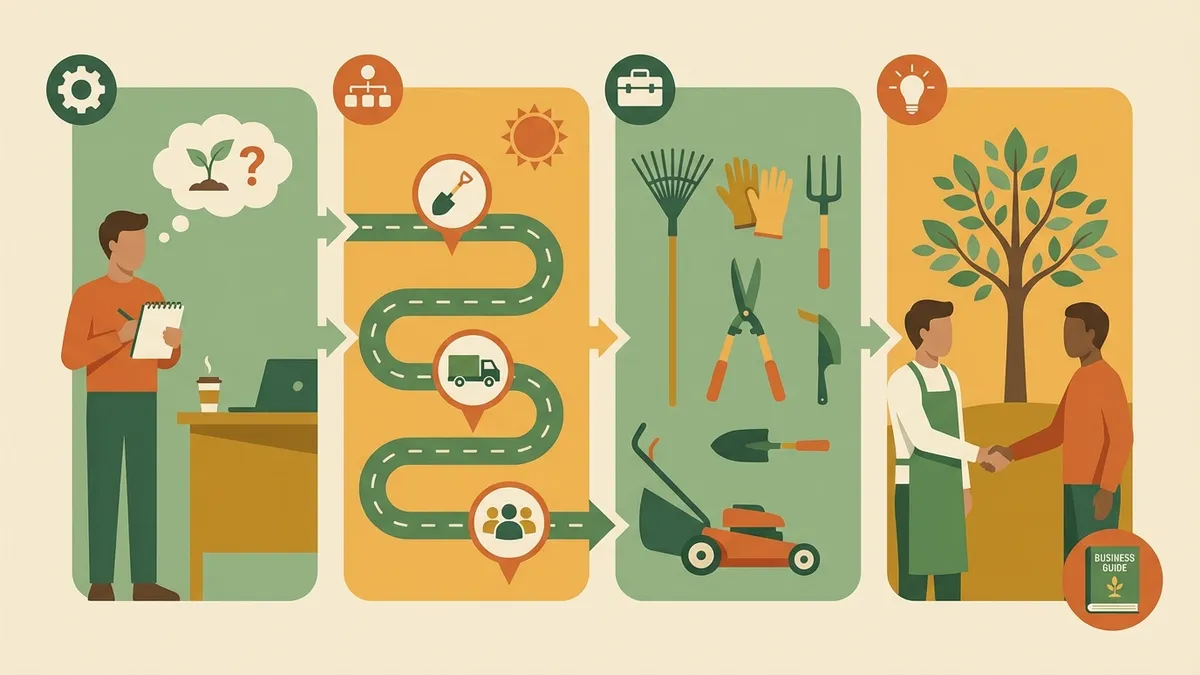
The landscaping industry generates over $130 billion per year in the United States. Lawns don't stop growing because the economy is down, and homeowners who can afford professional landscaping rarely go back to doing it themselves. It's a resilient, recession-resistant business.
And yes — you can start one without experience. The barrier to entry is a lawnmower, a truck, and the willingness to learn. What separates the landscapers who fail from the ones who build six-figure businesses isn't experience — it's treating it like a business from day one.
Start With Lawn Care, Then Expand
If you have no experience, don't offer full landscaping services on day one. Start with basic lawn maintenance:
- Mowing
- Edging and trimming
- Leaf removal
- Basic mulching
These services require minimal training, affordable equipment, and have immediate demand. As you build skills and capital, add higher-value services:
- Landscape design and installation (plants, trees, flower beds)
- Hardscaping (patios, walkways, retaining walls)
- Irrigation installation and repair
- Seasonal services (snow removal, holiday lighting)
- Tree and shrub care
Startup Costs
Basic Lawn Care Setup
| Equipment | Cost | Notes |
|---|---|---|
| Commercial push mower | $300–$600 | Honda HRX or Toro Recycler recommended |
| String trimmer | $150–$300 | Echo or Stihl — commercial grade |
| Backpack blower | $200–$400 | Echo PB-580T is a workhorse |
| Edger | $150–$250 | Stick edger or use trimmer attachment |
| Hand tools | $100–$200 | Rakes, shovels, pruning shears |
| Trailer (used) | $800–$2,000 | To transport equipment |
| Safety gear | $50–$100 | Eye protection, ear protection, gloves |
| Gas cans and oil | $50 | |
| **Equipment Total** | **$1,800–$3,900** |
Full Startup Budget
| Category | Low | High |
|---|---|---|
| Equipment | $1,800 | $3,900 |
| Truck (if you don't have one) | $5,000 | $15,000 |
| LLC registration | $50 | $500 |
| Insurance | $500 | $1,500 |
| Marketing (initial) | $200 | $500 |
| Fuel (first month) | $200 | $400 |
| **Total (with truck)** | **$7,750** | **$21,800** |
| **Total (already have truck)** | **$2,750** | **$6,800** |
When to Upgrade to Commercial Equipment
Once you're mowing 15-20+ lawns per week, upgrade to a commercial zero-turn mower ($3,000–$8,000). A zero-turn cuts mowing time by 40-50% on medium to large properties — it pays for itself quickly.
Legal Setup
Business Registration
- Choose a structure — LLC recommended ($50–$500 to register)
- Get an EIN — Free from IRS.gov, takes 5 minutes
- Business license — Check your city/county requirements ($25–$200)
- Register for state taxes — If your state requires it
Insurance
- General liability: $50–$90/month — covers property damage (critical when you're near windows, cars, and flower beds with a mower)
- Commercial auto: $100–$200/month if using a truck for business
- Workers' comp: Required when you hire employees
Licensing
Most states don't require a landscaping license for basic lawn care. However:
- Pesticide/herbicide application requires a license in every state (if you plan to offer this)
- Some states require a landscape contractor license for installation work over a certain dollar amount
- Check your state's Department of Agriculture and contractor licensing board
Pricing Your Services
Lawn Mowing
| Lot Size | Price Per Mow | Time Per Lawn |
|---|---|---|
| Small (under 5,000 sq ft) | $30–$45 | 20–30 min |
| Medium (5,000–10,000 sq ft) | $40–$65 | 30–45 min |
| Large (10,000–20,000 sq ft) | $55–$90 | 45–75 min |
| Over 20,000 sq ft | $80–$150+ | 60–120 min |
How to Quote Jobs
- Drive by or visit the property before quoting
- Estimate time — How long will this take you?
- Target $40–$60/hour as a solo operator (including drive time)
- Factor in difficulty — Slopes, obstacles, gates, and tight spaces add time
- Quote flat rates — Clients prefer knowing the total price
Additional Service Pricing
- Edging (add-on): $10–$25
- Bush/hedge trimming: $25–$75 per hour
- Mulch installation: $45–$65 per cubic yard (installed)
- Leaf cleanup: $150–$400 per visit (depending on property)
- Spring/fall cleanup: $200–$500
- Aeration: $75–$200 per lawn
Getting Your First Clients
The First 10 Clients
Week 1-2: Your immediate network
- Tell everyone you know you're starting a landscaping business
- Post on your personal social media
- Offer a "launch special" — first mow free or 20% off the first month
- Knock on doors in your neighborhood
Week 3-4: Online presence
- Set up a Google Business Profile (free — this is essential)
- Post on Nextdoor and local Facebook groups
- Create a simple Facebook business page
- List on Thumbtack and TaskRabbit
Month 2+: Build momentum
- Ask every satisfied client for a Google review
- Offer a $25 referral bonus for new clients
- Door hangers in neighborhoods where you're already working
- Partner with real estate agents for move-in cleanups
Marketing That Works for Landscaping
- Door hangers — When you finish a job, leave door hangers on 5-10 neighboring houses. The lawn you just mowed is your best advertisement.
- Yard signs — "Lawn care by [Your Business] — Call XXX-XXX-XXXX" — place in your client's yard while you're working.
- Before/after photos — Post on social media. Transformations get engagement.
- Google Business Profile — 70% of your new clients will find you through Google search. Optimize your profile and collect reviews.
Building Skills Without Experience
Free and Low-Cost Learning
- YouTube — Channels like Lawn Care Nut, Brian's Lawn Maintenance, and Augusta Lawn Care offer thousands of hours of free training
- Local extension office — Your county extension office offers free or cheap classes on turf management, plants, and landscaping
- Supplier clinics — SiteOne Landscape Supply and local nurseries often host free workshops
- On the job — You'll learn more in your first month of actual work than in any course
Building Toward Full Landscaping
As you gain experience with lawn maintenance:
- Learn plant identification — Know what grows in your zone
- Study landscape design basics — Take a community college course or online program
- Practice hardscaping — Start with small patio installations on your own property or for friends
- Get certified — NALP (National Association of Landscape Professionals) certifications add credibility
Scaling Beyond Solo
When to Hire Your First Employee
Hire when you're consistently turning away work. Most solo landscapers can handle 20-30 residential accounts. Beyond that, you need help.
First hire options:
- Part-time helper ($12–$18/hour) — helps with mowing and cleanup
- Subcontractor — pays their own taxes and insurance (be careful with classification rules)
Revenue Growth Path
| Stage | Accounts | Annual Revenue | Annual Profit |
|---|---|---|---|
| Solo (Year 1) | 15–25 | $30,000–$60,000 | $20,000–$40,000 |
| Solo + helper (Year 2) | 30–50 | $60,000–$120,000 | $35,000–$70,000 |
| Small crew (Year 3+) | 50–100 | $120,000–$250,000 | $50,000–$100,000 |
| Multiple crews (Year 5+) | 100–250+ | $250,000–$750,000+ | $75,000–$200,000+ |
Systems You'll Need
- Scheduling: Jobber ($49/mo) or LawnPro (free for small operations)
- Invoicing: Jobber, QuickBooks, or Wave
- Route optimization: Jobber or OptimoRoute to minimize drive time
- Client communication: Text/email reminders for upcoming service
FAQ
How much can I make my first year with no experience?
A solo operator mowing 15-20 lawns per week at an average of $45 per lawn can earn $35,000–$45,000 during a typical 8-9 month season. In warmer climates with year-round service, $50,000–$65,000 is realistic.
What's the best time of year to start a landscaping business?
Late winter or early spring — about 4-6 weeks before your area's growing season begins. This gives you time to line up clients before the rush. However, you can also start in fall with cleanup services.
Do I need a truck or trailer?
At minimum, you need a vehicle that can transport a mower, trimmer, and blower. Many beginners start by fitting everything in an SUV or truck bed. As you add equipment, a small open trailer ($800–$1,500 used) is essential.
How do I deal with difficult clients?
Set expectations upfront with a written service agreement that covers what's included, pricing, payment terms, and cancellation policy. For chronically difficult clients who complain constantly or pay late — fire them. Your time is worth more than the headache.
Should I offer fertilization and weed control?
Only if you get the proper pesticide applicator license from your state. Applying chemicals without a license is illegal and risky. Many landscapers subcontract chemical applications to licensed companies and earn a referral fee.
What happens during winter?
In cold climates, offer snow removal services (plowing, shoveling, salting). Many landscaping businesses earn 20-30% of their annual revenue from snow removal. In warm climates, you may see a slowdown but can typically work year-round.