How to Start a Vending Machine Business: Complete Guide 2026
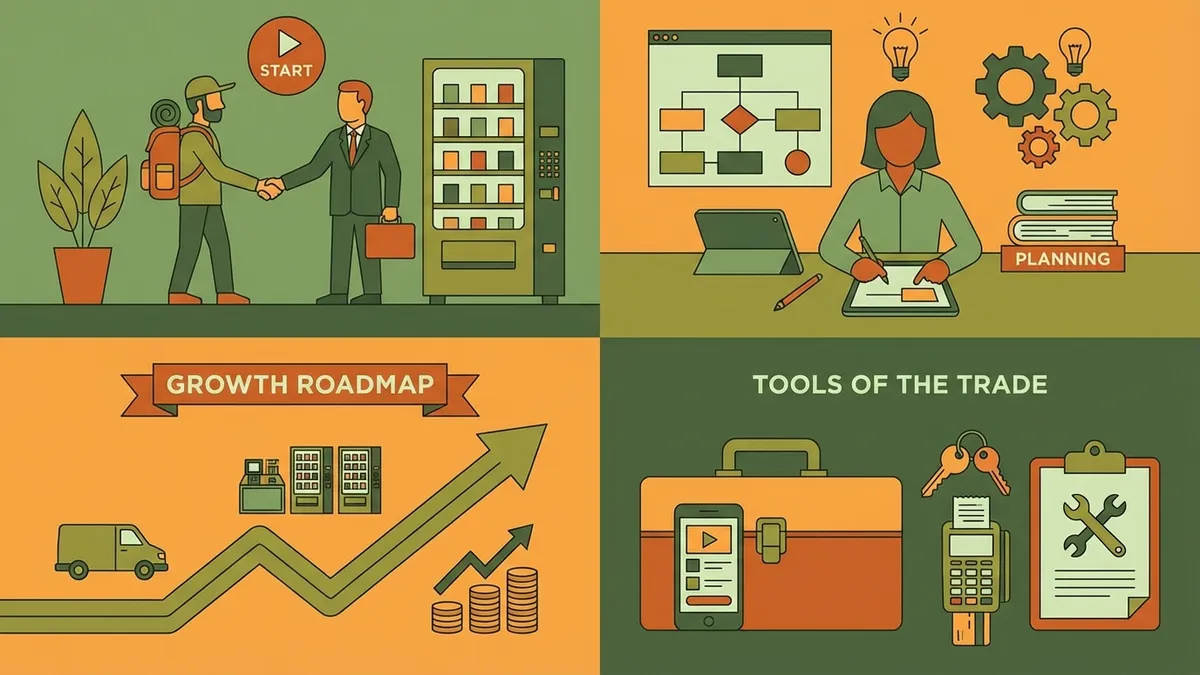
Starting a vending machine business is one of the most accessible paths to semi-passive income. With startup costs as low as $2,000 per machine and profit margins between 20–50%, it's no surprise that the U.S. vending industry generates over $9 billion annually.
This guide covers everything: choosing machines, finding locations, stocking products, handling permits, and scaling from one machine to a full route.
Table of Contents
- Why Start a Vending Machine Business?
- How Much Does It Cost to Start?
- Types of Vending Machines
- How to Find Profitable Locations
- Legal Requirements and Permits
- Choosing What to Sell
- Setting Up Payment Systems
- How Much Can You Earn?
- Step-by-Step Launch Plan
- Scaling Your Vending Business
- Common Mistakes to Avoid
- FAQ
Why Start a Vending Machine Business?
Vending machines check several boxes that other small businesses don't:
- Low barrier to entry. You don't need a degree, storefront, or employees to get started.
- Flexible schedule. Most operators restock 1–2 times per week per machine. You keep your day job.
- Scalable. One machine can become 50. Each new placement adds incremental income without proportional time increases.
- Cash flow positive quickly. A well-placed machine can pay for itself in 6–12 months.
- Recession-resistant. People still buy snacks and drinks regardless of economic conditions. The industry grew 3.2% year-over-year even through inflationary periods in 2023–2025.
The business works especially well as a side hustle. Many full-time operators started with a single machine placed at a friend's business.
How Much Does It Cost to Start?
Your startup costs depend on whether you buy new, refurbished, or used machines.
Startup Cost Breakdown
| Expense | Low End | High End |
|---|---|---|
| Vending machine (used) | $1,200 | $3,000 |
| Vending machine (new) | $3,000 | $8,000 |
| Initial inventory | $200 | $500 |
| Business registration/LLC | $50 | $500 |
| Insurance (annual) | $300 | $1,200 |
| Card reader (if not built-in) | $150 | $400 |
| Dolly/transport equipment | $100 | $300 |
| **Total (used machine)** | **$2,000** | **$5,900** |
| **Total (new machine)** | **$3,800** | **$10,900** |
Pro tip: Start with one quality refurbished combo machine (snacks + drinks) for around $2,500. Test your location before investing in new equipment.
Financing Options
- Cash. Best option — no interest, full ownership from day one.
- Equipment financing. Companies like Crest Capital and ClickLease offer vending-specific loans. Expect 8–15% APR with terms of 24–60 months.
- Vending machine leasing. $50–$200/month per machine. Good for testing but eats into margins long-term.
- SBA Microloans. Up to $50,000 for qualifying small businesses, with rates around 8–13%.
Avoid anyone selling a "vending machine business in a box" for $10,000+. These packages are almost always overpriced.
Types of Vending Machines
Snack Machines
The classic choice. Chips, candy bars, granola bars, cookies. Average sale price: $1.50–$2.50. Profit margin: 40–50%.
Best for: offices, break rooms, waiting areas.
Beverage Machines
Canned and bottled drinks. Average sale price: $1.75–$3.00. Profit margin: 30–45%.
Best for: gyms, auto shops, outdoor locations.
Combo Machines
Snacks and drinks in one unit. These are the most versatile and the best starting point for new operators. They maximize revenue per location without requiring two placement agreements.
Recommended models in 2026: Crane Merchant Media 6, AMS 39 Combo, Seaga INF5C.
Specialty Machines
- Healthy vending. Premium snacks, protein bars, organic drinks. Higher price points ($3–$6) but slower velocity. Best near gyms, hospitals, corporate offices.
- Coffee machines. High margin (70%+) but require more maintenance. Bean-to-cup machines cost $5,000–$15,000.
- Ice cream machines. Seasonal in most markets but extremely profitable in summer.
- Electronics/PPE. Phone chargers, earbuds, masks. High margin, low velocity. Good for airports and hotels.
New vs. Used
| Factor | New | Used/Refurbished |
|---|---|---|
| Cost | $3,000–$8,000 | $1,200–$3,000 |
| Warranty | 1–2 years | Usually none |
| Card readers | Built-in | May need retrofit |
| Reliability | High | Moderate |
| Best for | Scaling operators | First-time buyers |
Buy used for your first 1–3 machines. Upgrade to new when you've validated your locations and have steady cash flow.
How to Find Profitable Locations
Location is everything. A $2,000 machine in a great spot outearns a $7,000 machine in a bad one.
Best Location Types
- Manufacturing plants and warehouses — Captive audience, limited food options, 200+ employees ideal. Revenue: $300–$800/month per machine.
- Auto dealerships and repair shops — Customers wait 1–3 hours. Revenue: $150–$400/month.
- Laundromats — People wait 45–90 minutes with nothing to do. Revenue: $100–$300/month.
- Hotels and motels — Late-night impulse purchases at premium prices. Revenue: $150–$500/month.
- Apartment complexes (200+ units) — 24/7 foot traffic. Revenue: $200–$500/month.
- Office buildings — Consistent weekday traffic. Revenue: $200–$600/month.
- Gyms and fitness centers — Protein bars and sports drinks sell at premium. Revenue: $150–$400/month.
How to Pitch Location Owners
Walk in, ask for the manager or owner, and keep it simple:
"I place vending machines in businesses like yours at no cost to you. I handle everything — the machine, stocking, maintenance. I can also offer you a monthly commission. Would you be open to that?"
Commission structures:
- Small locations (under 100 people): Offer 5–10% of gross sales or a flat $25–$50/month.
- Medium locations (100–300 people): 10–15% or $50–$100/month.
- Large locations (300+): 15–20% or negotiate flat rate.
Some locations won't ask for any commission — they just want the convenience for their customers or employees.
Red Flags for Locations
- Foot traffic under 50 people per day
- Already has a vending machine (unless the current one is neglected)
- Owner wants 25%+ commission before you've proven sales
- No electrical outlet near the placement area
- Restricted access (locked after 5 PM, limited hours)
The 30-Location Rule
Pitch 30 locations. Expect 3–5 to say yes. That's normal. Rejection is part of the process.
Legal Requirements and Permits
Business Structure
Register as an LLC. It separates your personal assets from business liability and costs $50–$500 depending on your state. File through your state's Secretary of State website — don't pay a "formation service" $300 for a 10-minute filing.
Licenses and Permits
Requirements vary by state and city:
- Business license — Required in most jurisdictions. $50–$200 annually.
- Sales tax permit — Required in 45 states. Free to obtain.
- Vending machine license — Some cities require a specific vending permit. Check your city clerk's office.
- Health department permit — Required if selling perishable food. $100–$300 annually.
- EIN (Employer Identification Number) — Free from IRS.gov. Get this before opening a business bank account.
Insurance
You need general liability insurance at minimum. This covers property damage, slip-and-fall claims, and product liability.
- General liability: $300–$600/year for 1–5 machines.
- Product liability: Often bundled with general liability.
- Commercial auto: Required if you use a dedicated vehicle for restocking. $1,200–$2,400/year.
Many location owners require proof of insurance (a Certificate of Insurance) before allowing placement. Get coverage before you start pitching.
Providers to compare: NEXT Insurance, Hiscox, The Hartford, and State Farm commercial.
Choosing What to Sell
Stock based on your location demographics, not your personal preferences.
Universal Best Sellers
Snacks: Lay's chips, Doritos, Snickers, M&M's, Reese's, Nature Valley granola bars, Pop-Tarts, Cheez-Its.
Drinks: Coca-Cola, Pepsi, Dr Pepper, water bottles, Gatorade, Monster Energy.
These 12–15 SKUs should fill 60–70% of your machine. Use the remaining slots to test niche products.
Pricing Strategy
- Snacks: $1.50–$2.50 (buy at $0.50–$1.00 from Sam's Club or Costco)
- Drinks (cans): $1.25–$1.75 (buy at $0.30–$0.50)
- Drinks (bottles): $2.00–$3.00 (buy at $0.50–$1.00)
- Premium/healthy items: $2.50–$4.00
Price 10–15% below the nearest convenience store. You're selling convenience, but people still compare.
Where to Buy Inventory
- Sam's Club / Costco — Best prices for the first 1–10 machines.
- Vistar / McLane — Wholesale distributors. Better per-unit pricing at scale (20+ machines).
- Amazon Subscribe & Save — Good for specialty items in small quantities.
- Dollar stores — Secret weapon for candy and snack variety at low cost.
Track which products sell fastest per location. Drop slow movers after 2 weeks and replace them.
Setting Up Payment Systems
Cash-only machines leave money on the table. In 2026, 55–65% of vending transactions are cashless.
Card Reader Options
- Nayax VPOS Touch — Industry standard. $250–$350 per unit + ~5.5% transaction fee. Includes telemetry and remote monitoring.
- Cantaloupe (USA Technologies) — Similar pricing to Nayax. Strong reporting dashboard.
- PayRange — Bluetooth-based, cheapest option at $150 per unit. No monthly fee, 5% transaction fee. Works via app only (no tap-to-pay).
Apple Pay and Google Pay
Both Nayax and Cantaloupe readers accept NFC payments (Apple Pay, Google Pay, tap-to-pay cards) out of the box. This is non-negotiable in 2026.
Remote Monitoring
Modern card readers include telemetry: real-time sales data, inventory levels, and machine health alerts. This saves you wasted trips to check machines that don't need restocking.
How Much Can You Earn?
Realistic numbers based on industry averages and operator reports:
Per Machine (Monthly)
| Metric | Low | Average | High |
|---|---|---|---|
| Gross revenue | $150 | $400 | $800+ |
| Cost of goods (40%) | $60 | $160 | $320 |
| Location commission (10%) | $15 | $40 | $80 |
| Card processing (5%) | $8 | $20 | $40 |
| **Net profit** | **$67** | **$180** | **$360+** |
Scaling Math
| Machines | Monthly Net | Annual Net |
|---|---|---|
| 5 | $900 | $10,800 |
| 10 | $1,800 | $21,600 |
| 20 | $3,600 | $43,200 |
| 50 | $9,000 | $108,000 |
At 20+ machines, many operators transition to full-time. At 50+ machines, you'll likely need a part-time helper for restocking.
Time investment: Plan 30–45 minutes per machine per week for restocking and maintenance. Ten machines = roughly 5–8 hours per week.
Step-by-Step Launch Plan
Week 1–2: Foundation
- Register your LLC and get an EIN.
- Open a business bank account (separate from personal).
- Get general liability insurance.
- Research your local permit requirements.
Week 3–4: Equipment and Location
- Buy your first combo machine (used or refurbished from a reputable dealer).
- Install a card reader if not built-in.
- Start pitching locations — aim for 30 pitches.
- Negotiate placement and commission terms.
Week 5–6: Launch
- Transport and install the machine.
- Stock with best-selling products.
- Set competitive prices.
- Test all payment methods before leaving.
Week 7+: Optimize
- Check sales data weekly via your card reader's app.
- Restock on a consistent schedule (same day each week).
- Swap out slow-selling products.
- Start pitching for your second location.
Scaling Your Vending Business
When to Add Your Next Machine
Add machine #2 when:
- Machine #1 has been profitable for 2+ consecutive months.
- You have cash reserves to cover the new machine's cost.
- You have a confirmed location ready.
Building Routes
Group machines geographically. A "route" of 5–10 machines within a 15-mile radius takes 3–4 hours to restock. Scattered machines across town waste gas and time.
Hiring Help
At 25–30 machines, consider hiring a part-time restocking helper at $15–$18/hour. Your time is better spent finding new locations than driving a route.
Buying Existing Routes
Experienced operators sell routes at 3–5x annual net profit. A route netting $2,000/month sells for $72,000–$120,000. Buying established routes is faster than building from scratch, but verify revenue with 6–12 months of card reader data before purchasing.
Common Mistakes to Avoid
- Overpaying for machines. Never spend $5,000+ on your first machine. Start used.
- Bad locations. Low foot traffic kills profitability. Walk away from marginal spots.
- Ignoring cashless payments. Losing 50%+ of potential sales to save $250 on a card reader is bad math.
- Not tracking inventory. Use a spreadsheet or app to track what sells. Guessing leads to stale products and lost revenue.
- Overcomplicating products. Start with proven bestsellers. Get creative later.
- Neglecting maintenance. A broken machine earns $0 and annoys the location owner. Fix issues within 24 hours.
- No insurance. One liability claim can wipe out years of profit.
- Paying too much commission. Start at 10%. Don't offer 20% before you know what the machine will earn.
FAQ
How much money do I need to start a vending machine business?
You can start with a single used combo machine for $2,000–$3,500 total including inventory, business registration, and insurance. New machines push the starting cost to $4,000–$9,000. Most successful operators recommend starting with at least $3,000 in capital.
Is a vending machine business profitable?
Yes, when locations are chosen well. The average vending machine generates $150–$400 in net monthly profit. Margins range from 20–50% depending on product mix and location quality. The business becomes significantly more profitable at scale — 10+ machines reduce per-unit costs for inventory and time.
Do I need a license to operate vending machines?
In most states, you need a standard business license and a sales tax permit. Some cities require a specific vending machine permit or operator license. If you sell perishable items, a health department permit may be required. Check with your city clerk and state Department of Revenue for exact requirements.
How do I find locations for vending machines?
The most effective method is cold pitching: walk into businesses, ask for the decision-maker, and offer to place a machine at no cost with a small commission. Target locations with 50+ daily foot traffic and limited food options — manufacturing plants, auto shops, laundromats, and apartment complexes are top performers.
Can I run a vending machine business part-time?
Absolutely. Most operators start part-time. Each machine requires 30–45 minutes per week for restocking and maintenance. Ten machines require about 5–8 hours per week. The business is designed to work around a full-time job, especially with telemetry-enabled card readers that show inventory levels remotely.
What's the best vending machine to buy as a beginner?
A refurbished combo machine (snacks and drinks) in the $2,000–$3,000 range. Combo machines maximize revenue per location. Look for models from AMS, Crane, or Seaga. Make sure it accepts dollar bills and has slots for a card reader. Avoid cheap countertop or gumball machines — they don't generate meaningful income.
How long does it take to make your money back on a vending machine?
A well-placed machine earning $300–$400/month in gross revenue typically pays for itself in 6–12 months, depending on the purchase price and operating costs. Machines in premium locations (large factories, busy hotels) can break even in as little as 3–4 months.