Adobe and WPP turn paid and owned media data into one operating loop for enterprise marketing teams
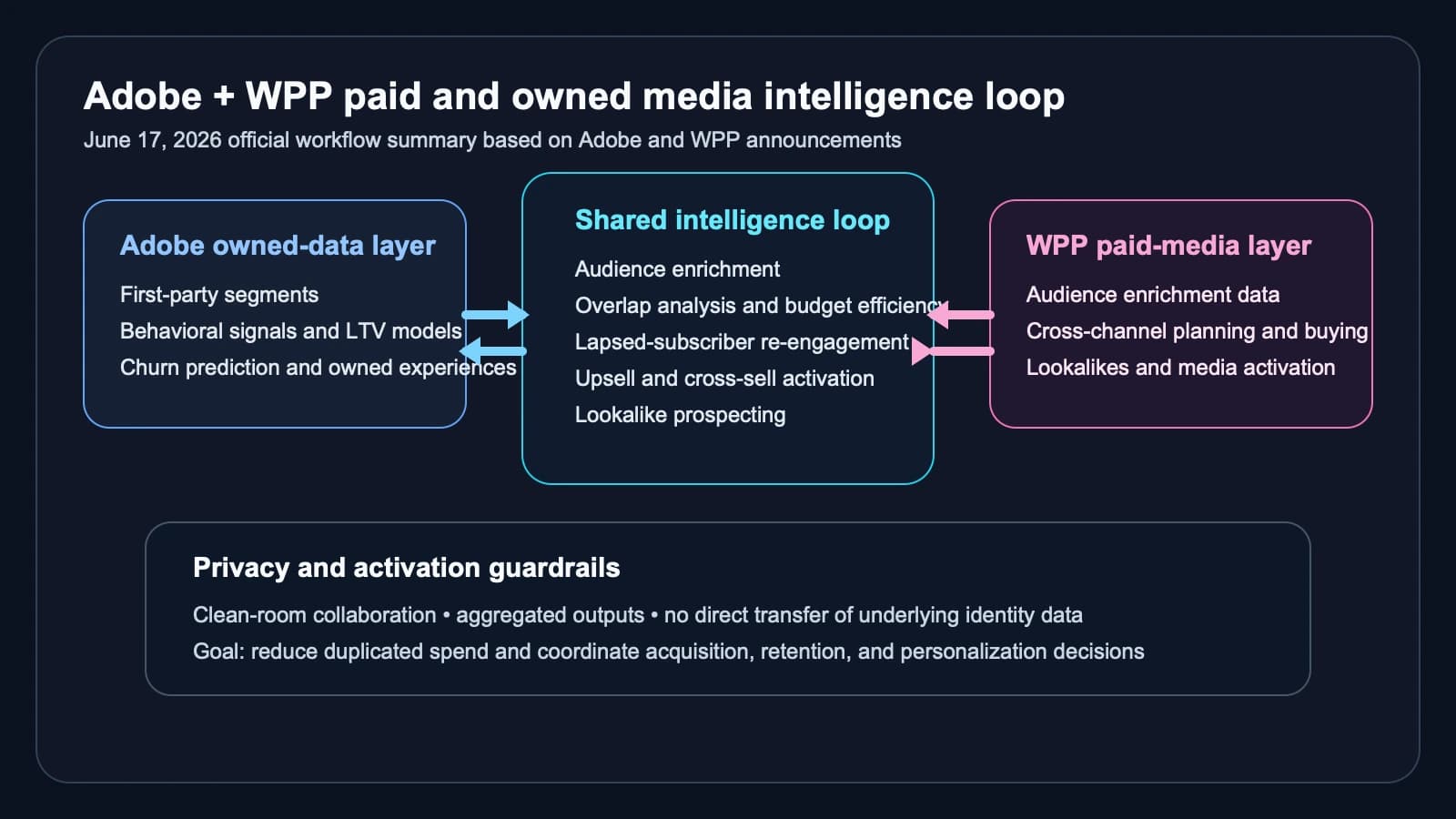
Adobe and WPP made a more practical announcement on June 17, 2026 than the usual partnership headline. Adobe says a new integration between Adobe Real-Time Customer Data Platform Collaboration and WPP Open will create a bidirectional loop between paid media intelligence and owned customer experience data. For enterprise marketing teams, the important change is not that another dashboard exists. It is that audience enrichment, overlap analysis, re-engagement, upsell, and lookalike prospecting are being positioned as one connected operating system instead of separate channel tasks.
The June 17 post becomes more meaningful when read alongside WPP's earlier February 24, 2026 partnership expansion announcement. WPP said then that Adobe and WPP would deliver integrated agentic workflows across planning, creation, production, and activation through WPP Open plus Adobe's content, data, and AI stack. The June 17 update narrows that broader promise into a specific business outcome layer: connect what a brand knows in its first-party systems with how it buys, suppresses, and optimizes paid reach.
What changed
| Confirmed June 2026 point | Primary source | Why it matters operationally |
|---|---|---|
| Adobe says the new integration links Adobe Real-Time Customer Data Platform Collaboration with WPP Open in a bidirectional loop. | Adobe for Business, June 17, 2026 | Paid activation and owned-customer insight can inform each other instead of running in parallel silos. |
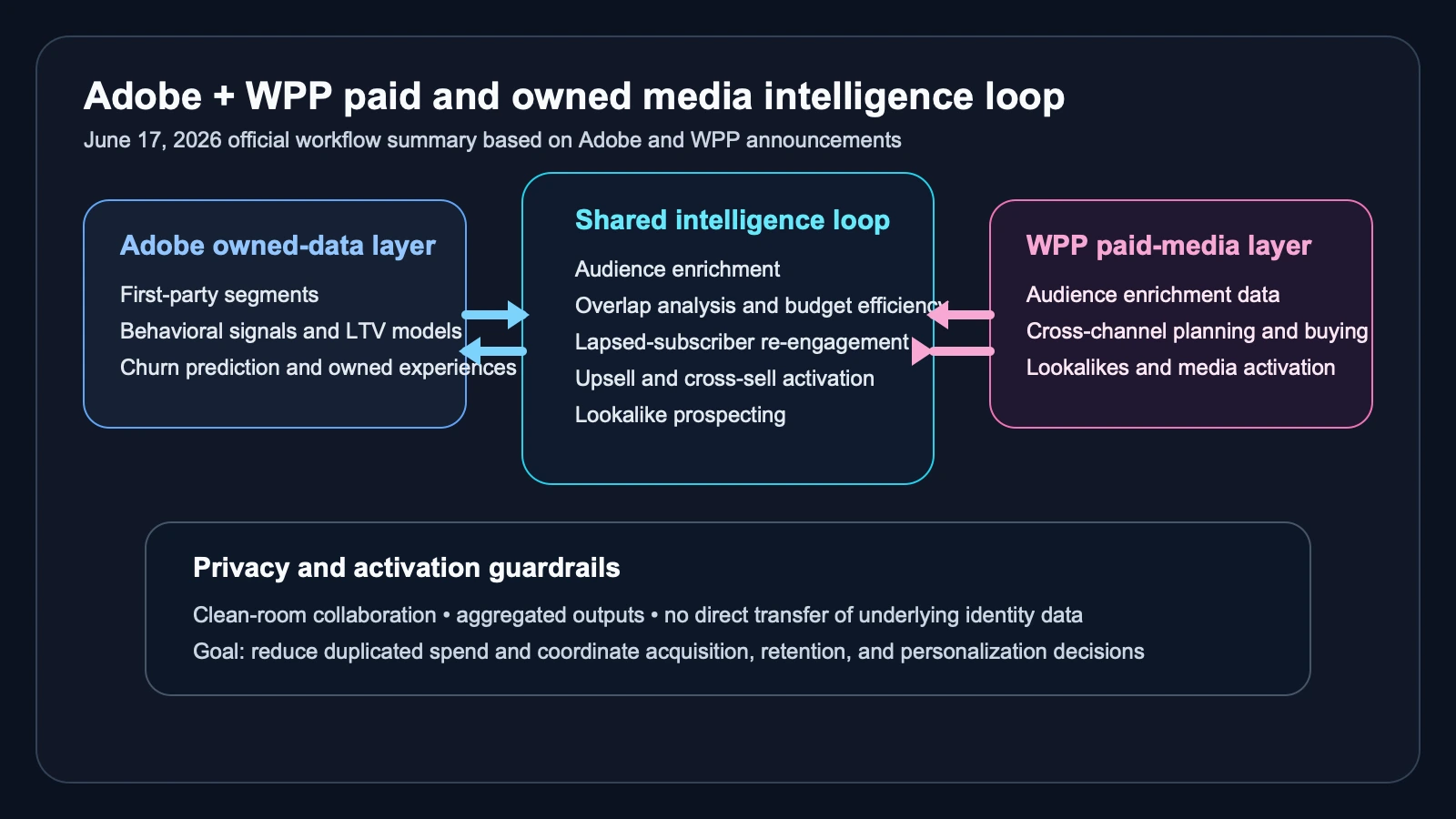
| Adobe says first-party segments flow into WPP media activation while WPP enrichment data flows back into Adobe audience intelligence. | Adobe for Business, June 17, 2026 | Audience building becomes a compounding feedback loop rather than a one-way export. |
| Adobe lists five initial use cases: audience enrichment, overlap analysis, lapsed-subscriber re-engagement, upsell and cross-sell activation, and lookalike prospecting. | Adobe for Business, June 17, 2026 | The announcement includes concrete workflow targets, not only abstract AI language. |
| Adobe says all collaboration happens in privacy-first clean-room environments with aggregated outputs and no direct transfer of underlying identity data. | Adobe for Business, June 17, 2026 | Large brands get a clearer compliance story for cross-party audience work. |
| WPP said on February 24 that the expanded partnership would orchestrate planning, creation, production, and activation of creative and media assets with AI agents. | WPP, February 24, 2026 | The June 17 launch is part of a larger operating-model shift, not a standalone campaign feature. |
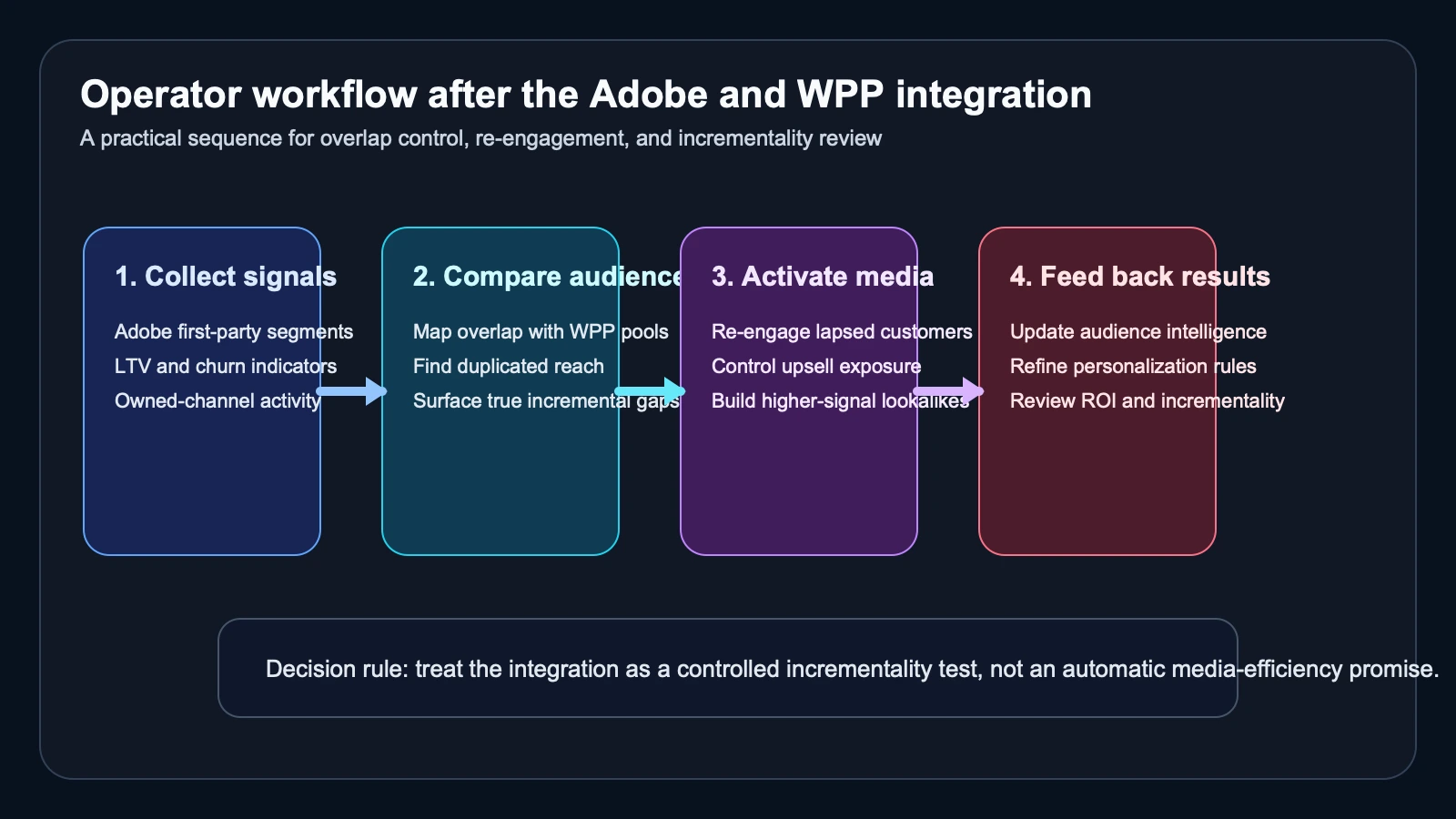
The most important detail is the overlap-analysis use case. Adobe says brands will be able to map Adobe first-party audiences against WPP-managed media pools to quantify incremental reach and reduce duplicated spend on customers already active in owned channels. That targets one of the biggest recurring waste patterns in enterprise media: paying to reacquire or over-message people who are already known, reachable, or progressing through owned journeys.
Why it matters
For most teams, paid media, lifecycle marketing, CRM, site personalization, and audience analytics still behave like neighboring departments rather than one system. The June 17 Adobe post is notable because it frames that disconnect as an addressable workflow problem.
If the integration works as described, marketers could use Adobe's first-party signals, lifetime value models, and churn indicators to shape paid decisions inside WPP Open more deliberately. They could also use WPP's psychographic, lifestyle, transactional, and media-consumption overlays to improve segmentation and personalization back inside Adobe. That matters for teams managing expensive acquisition in the United States, Canada, the United Kingdom, Australia, and Europe, where wasted reach and weak suppression logic can quietly distort performance.
This also connects naturally to Slogan.website readers working on measurement and visibility. If a brand is serious about tying paid outcomes to owned experience quality, then media efficiency can no longer be judged in isolation. The Marketing ROI Calculator, Digital Marketing Budget Planner, GEO Visibility Checklist, and the guide to tracking brand mentions and visibility all become more relevant when media, customer data, and on-site experience are supposed to reinforce one another.
Who is affected
The first group is enterprise performance and media teams that already run large audience programs through agencies or hybrid in-house models. They care because overlap suppression, lookalike quality, and re-engagement timing can materially affect CAC and incremental reach.
The second group is lifecycle, CRM, and personalization operators using Adobe data to decide who should receive an offer, nurture path, or retention intervention. The June 17 use cases suggest their signals may increasingly influence paid strategy rather than staying locked inside email or on-site systems.
The third group is marketing operations and privacy teams. Adobe explicitly says matching and enrichment happen in clean-room environments with aggregated outputs, which means compliance and consent architecture are part of the product story.
What to do next
Use this short workflow before treating the announcement as automatic efficiency:
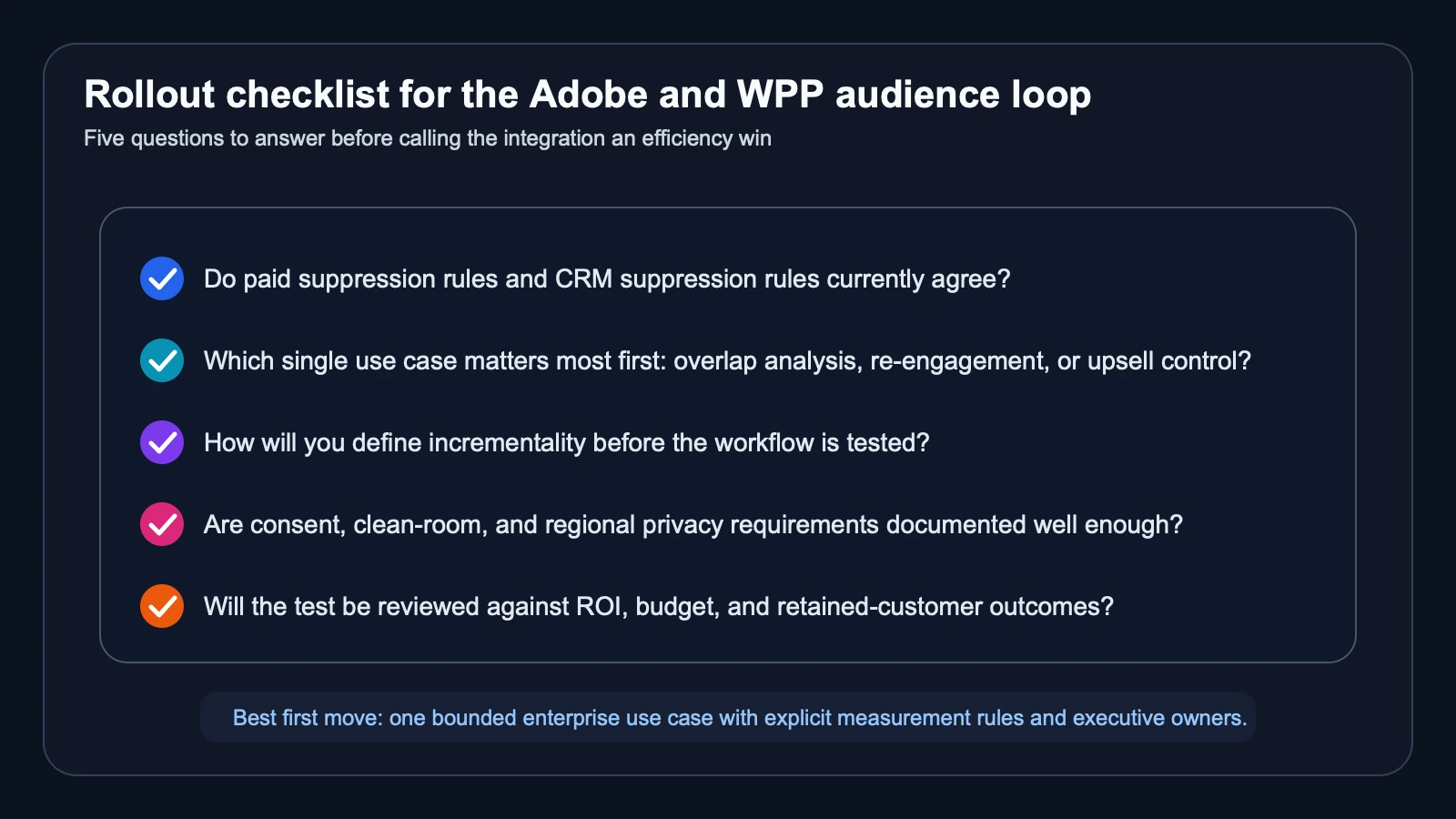
- Inventory where paid suppression, CRM suppression, and owned-channel audience rules currently disagree.
- Identify one high-cost use case to test first: overlap analysis, lapsed-subscriber re-engagement, or upsell exposure control.
- Define what counts as incremental reach or wasted spend before the integration is evaluated, so the result is not judged by vague efficiency claims.
- Pressure-test privacy and consent assumptions early, especially if multiple regions, business units, or agency relationships are involved.
- Tie the test back to business outcomes with the Marketing ROI Calculator and Digital Marketing Budget Planner instead of measuring success only by platform convenience.
What remains uncertain
Important limits remain on June 20, 2026. Adobe says the five use cases will be available soon, which means this is not yet a universally deployed capability with public rollout dates by region or account tier. The announcement also does not publish default measurement methodology, pricing mechanics, implementation timelines, or the exact operational burden required from joint Adobe and WPP clients.
There is also a real governance caveat. A cleaner audience loop does not automatically fix weak data foundations. If LTV signals are poor, churn logic is shallow, or customer IDs are fragmented, then a connected system may simply scale bad assumptions faster.
The defensible conclusion is still strong. On June 17, 2026, Adobe and WPP moved beyond a broad AI-partnership narrative and described a specific operating model for connecting paid media decisions with owned customer intelligence. For enterprise teams trying to cut wasted reach and coordinate acquisition with retention, that is a meaningful change worth testing carefully.