Google Search Console adds dedicated generative AI reporting for AI Overviews and AI Mode
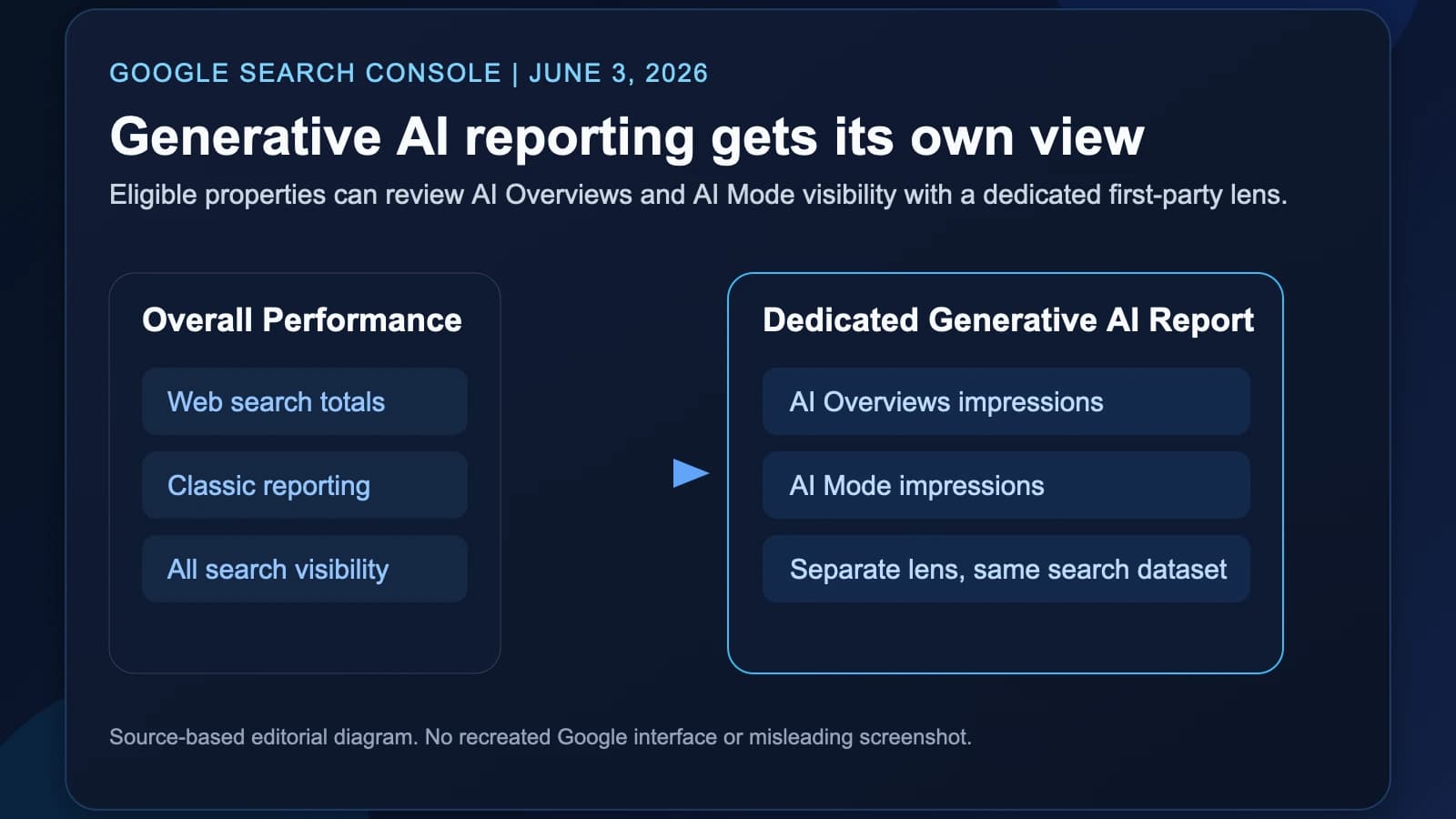
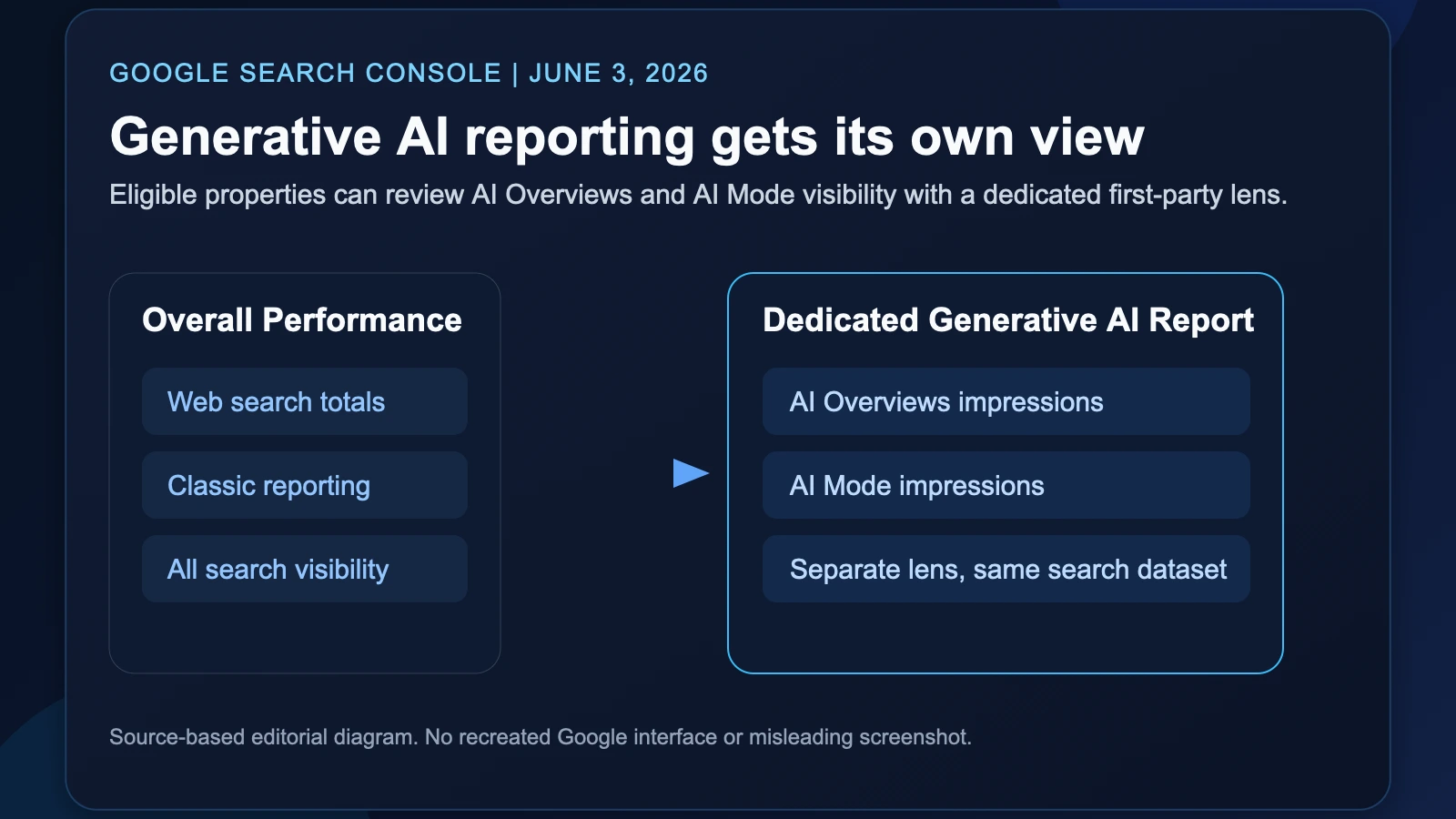
Google changed the measurement conversation around AI search on June 3, 2026 by launching a dedicated Search Console reporting view for generative AI visibility. The new report gives eligible site owners a separate way to review impressions from Google Search generative AI features including AI Overviews and AI Mode, while Google says that data still remains part of the main Performance report as well. For marketing, SEO, GEO, and editorial teams, the significance is practical: AI search visibility is no longer something you can only infer from traffic swings, branded-query anecdotes, or third-party monitoring.
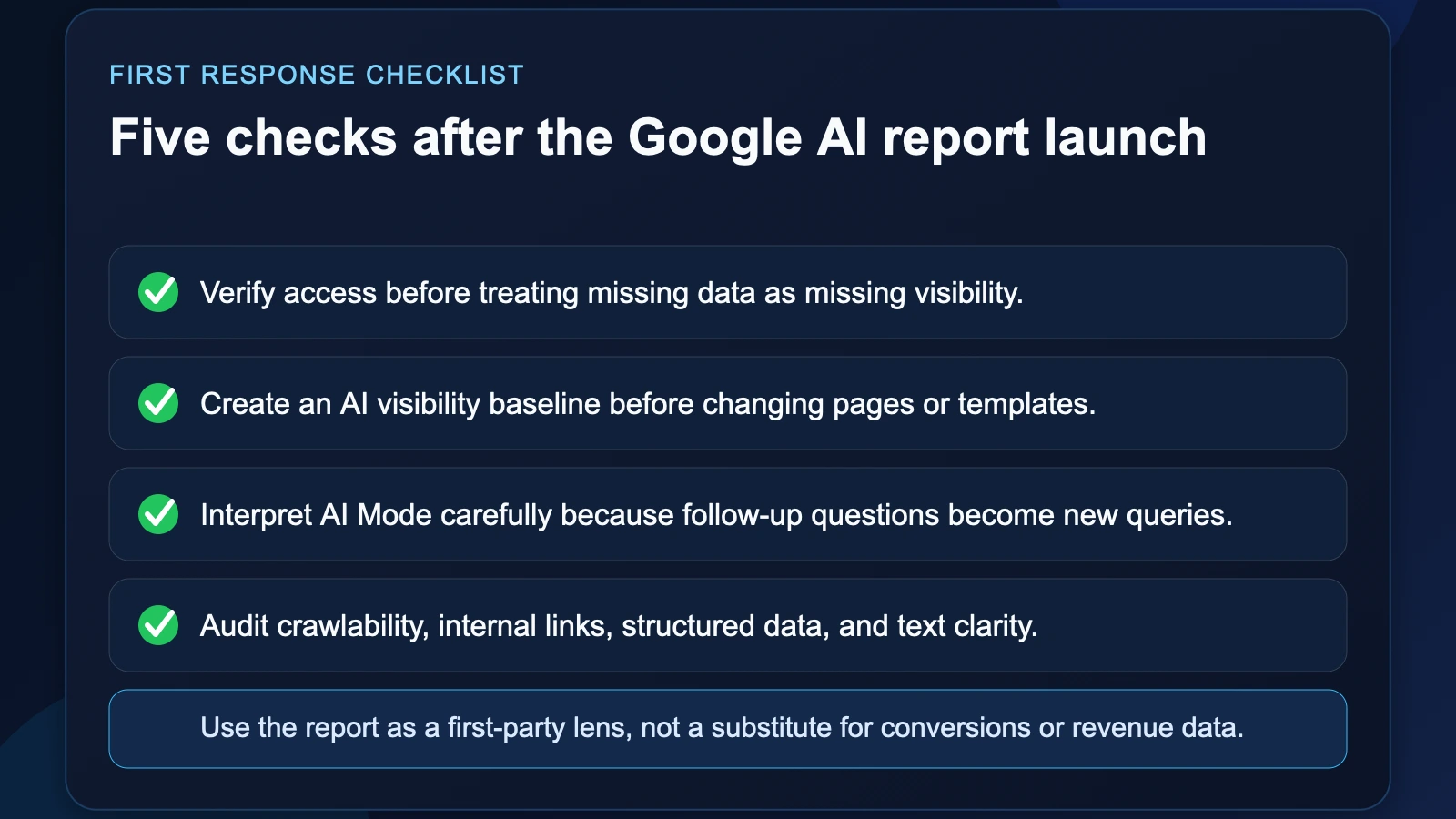
Google is not treating this as a universal rollout yet. In the same June 3 announcement, the company says it is rolling the reports out to a subset of websites first so it can test and gather feedback before wider availability. Google's Search Console Help documentation also says some properties may not see the report yet if rollout has not reached them or if they have not received enough impressions in generative AI features. That means the update is real, but access is uneven.
What changed
Google's official Search Central announcement says the new Search Console view is designed to show dedicated visibility from generative AI features on Search, specifically naming AI Overviews and AI Mode, alongside a similar generative AI reporting view for Discover. Google also says the dedicated report still draws from the overall Search performance dataset rather than creating a separate search universe. In other words, this is a new lens on existing Google Search traffic accounting, not a different analytics product.
The related documentation matters because Google also clarified how AI search interactions are counted. In the Search Console methodology documentation, Google says a click on an external page from AI Mode counts as a click, standard impression rules apply in AI Mode, and a follow-up question in AI Mode is counted as a new query. For AI Overviews, Google says external-page clicks count as clicks, impressions are counted when the link is actually scrolled or expanded into view, and the AI Overview occupies a single search-result position for all links inside it.
Google paired the reporting update with broader guidance. In its June 3 website-owner post and the updated AI Features and Your Website documentation, Google says site owners do not need new machine-readable files, AI text files, or special schema markup to appear in AI features. Instead, the company points teams back to familiar fundamentals such as crawl access, internal linking, text clarity, strong page experience, accurate structured data, and current business or merchant information.
| Confirmed June 2026 Google change | Primary source | Why operators should care |
|---|---|---|
| Search Console now has a dedicated generative AI reporting view for Search visibility. | Google Search Central Blog, June 3, 2026 | Teams can isolate AI search visibility instead of estimating it only from aggregate search changes. |
| The report covers AI Overviews and AI Mode, with a separate generative AI report for Discover. | Google Search Central Blog, June 3, 2026 | Publishers can review AI search and AI-driven discovery with more precision. |
| Rollout is limited at first and some properties may not see the report yet. | Google Search Central Blog, June 3, 2026 and Search Console Help | Missing access does not automatically mean zero AI visibility. |
| AI Mode clicks to external pages count as clicks, and follow-up questions are treated as new queries. | Search Console methodology documentation | Teams need to interpret AI search sessions carefully instead of mapping them one-to-one with classic search journeys. |
| Google says no special AI markup or separate AI text files are required to appear in AI features. | AI Features and Your Website | The work stays centered on content quality, crawlability, structured data, and source clarity. |
Why it matters
This matters because a large share of AI search strategy has been operating in measurement fog. Many teams could see evidence that Google was surfacing their pages inside AI Overviews or AI Mode, but they could not consistently separate that visibility from standard web search reporting. The new report does not solve every attribution problem, but it does move AI visibility from guesswork toward a first-party workflow.
For operators in the United States, Canada, the United Kingdom, Australia, and Europe, that change affects both editorial planning and commercial forecasting. If AI search impressions rise while classic clicks flatten, teams can now investigate whether visibility is shifting form rather than disappearing altogether. That is directly relevant to internal planning with the Digital Marketing Budget Planner, post-click economics in the Marketing ROI Calculator, and visibility diagnostics in the GEO Visibility Checklist.
It also sharpens the ongoing GEO debate. Google's own guidance pushes against AI-era superstition: the company explicitly says you do not need special AI files or custom markup tricks to qualify for these features. That supports a more disciplined operating model where teams improve crawl access, source clarity, content usefulness, structured data accuracy, and brand consistency instead of chasing shortcuts. The same logic fits Slogan.website's guidance on generative engine optimization benefits and brand mention tracking and visibility measurement.
Who is affected
The first group is publishers, content marketers, and SEO teams that need to explain why search visibility is changing even when page-level rankings do not tell the whole story.
The second group is growth teams and demand-generation leaders who need cleaner signals before reallocating budget between SEO, paid search, content production, and brand-demand capture.
The third group is agencies, consultants, and software teams that report on organic performance for clients or internal stakeholders and now need to decide whether to break AI-search visibility out as its own reporting layer.
What to do next
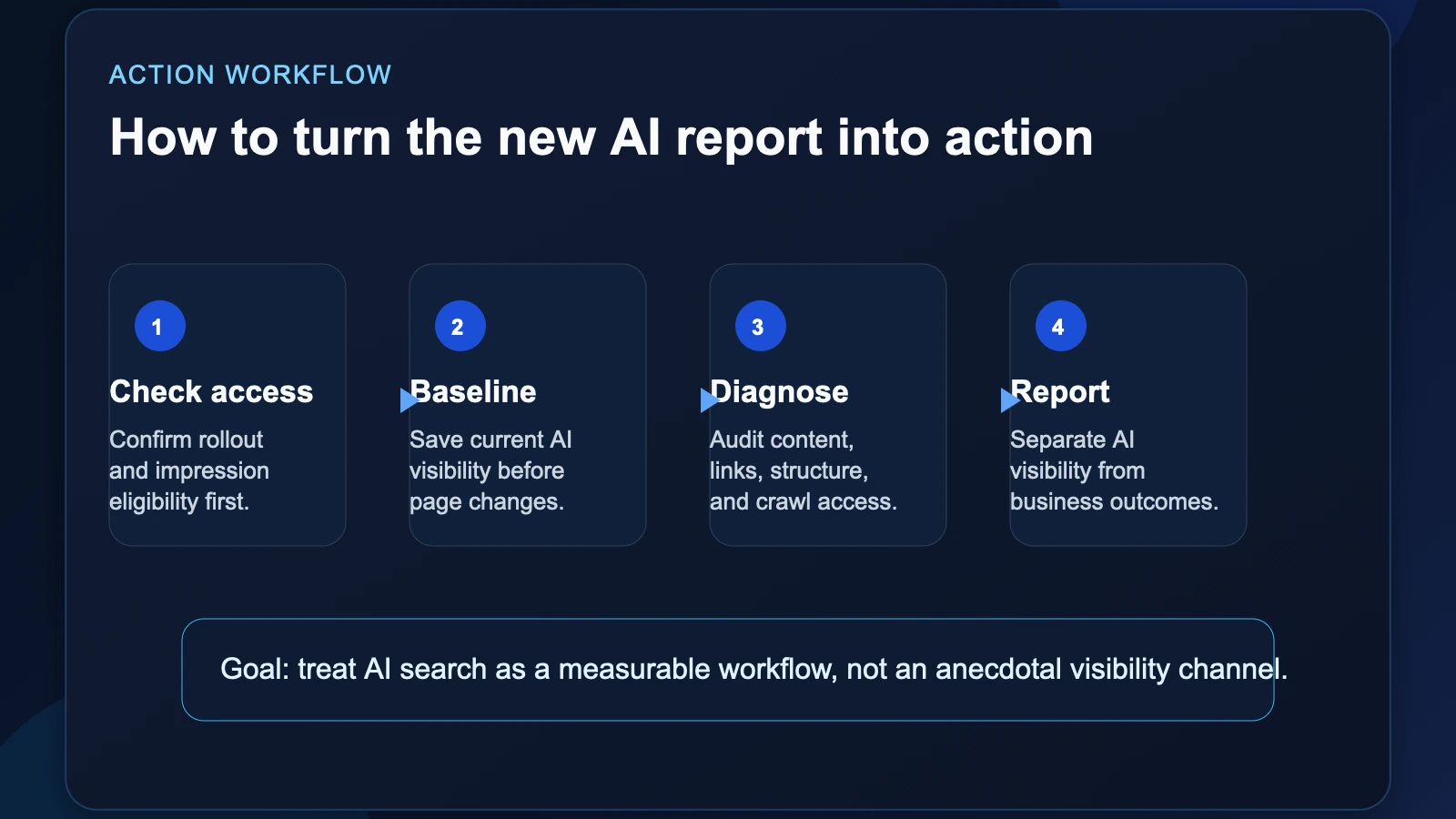
- Check whether your verified property already has access to the new generative AI report before assuming the feature is unavailable to everyone.
- Build a baseline for AI Overviews and AI Mode visibility now so you can compare future content, technical changes, and traffic shifts against a known starting point.
- Separate visibility questions from conversion questions: rising AI impressions do not automatically mean rising qualified traffic, so review on-site outcomes in parallel.
- Use the GEO Visibility Checklist to audit crawl access, source clarity, internal linking, structured data, and page usefulness on pages that should be cited in AI search.
- Update stakeholder reporting so AI search visibility is reviewed intentionally alongside branded demand, organic conversions, and content production cost.
What remains uncertain
The new report still leaves open questions. Google has not published a full rollout date for all properties, and the help documentation makes clear that some sites will not see the report immediately. The company also has not turned AI search into a perfect funnel view: Search Labs experiments are excluded, follow-up questions in AI Mode become new queries, and impressions in AI Overviews depend on whether links are brought into view.
So the right conclusion on June 10, 2026 is not that AI-search measurement is finished. It is that Google has finally given serious site owners a first-party starting point. Teams that use it well will spend less time arguing about whether AI visibility exists and more time deciding which pages, entities, and workflows deserve improvement next.