Google Search Console now reports how social and video posts perform in Search
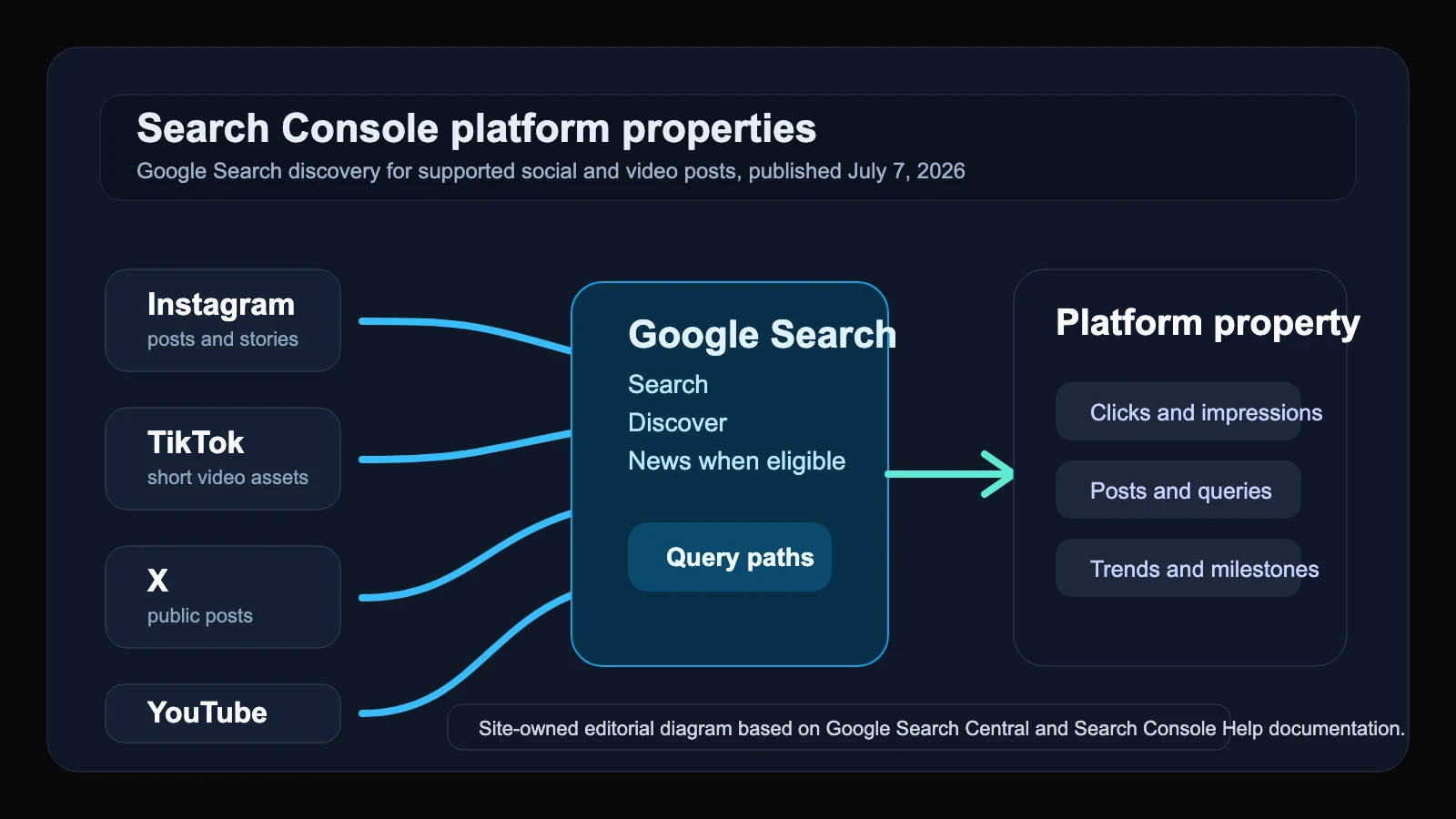
Google changed a small but important part of the search measurement stack on July 7, 2026: Search Console can now create platform properties for Instagram, TikTok, X, and YouTube accounts. The new property type is designed to show how social and video posts perform on Google Search and Discover, including which queries lead people to platform-native posts and which posts drive visibility. For marketers, creators, publishers, and brand teams, this moves social content closer to the evidence layer used for website SEO and GEO work.
The update matters because many brands publish useful information outside their own sites. A product explainer may live on YouTube, a creator review may live on TikTok, and a campaign asset may live on Instagram. Google's new property type does not replace platform analytics, but it creates a clearer Google-side view of off-site content discovery.
What changed
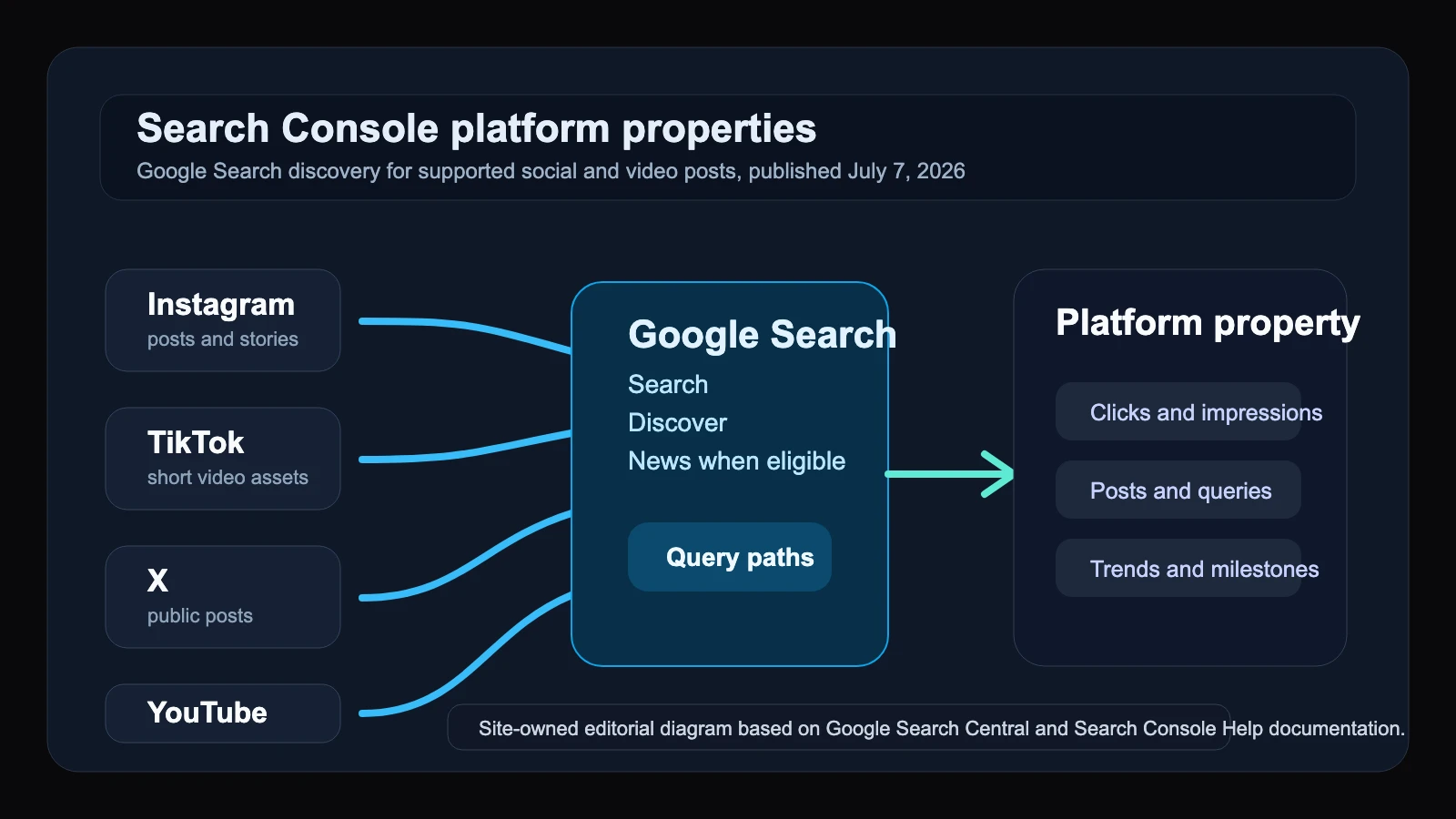
Google's Search Central announcement says platform properties are a new Search Console property type for social and video content. The initial supported platforms are Instagram, TikTok, X, and YouTube. Google says users can track which search terms lead people to those posts, review how audiences interact with them, and use Search Console reports for the property.
The official Search Console Help documentation adds the operating details. Each account or channel should be added as its own property. Platform properties can show content performance on Google Search, and also News and Discover if the content appears there. The help page also says rollout is gradual, new properties may show empty charts at first, and it can take a few days for data to appear after setup.
| Confirmed update | Official source | Operational meaning |
|---|---|---|
| Search Console now supports platform properties for Instagram, TikTok, X, and YouTube. | Google Search Central, July 7, 2026 | Social and video posts can be measured as Google discovery assets, not only as platform-native content. |
| Performance reports include clicks, impressions, CTR, average position, post-level filters, and query analysis. | Search Console Help | Teams can compare which social posts are actually earning search visibility. |
| Insights reports show traffic trends, top-performing content, and how people discover platform content on Google Search. | Search Console Help | Creators and publishers get a higher-level trend view without exporting every report first. |
| Platform properties only track how supported posts perform on Google, not on the social platform itself. | Search Console Help | Search Console should complement, not replace, TikTok, YouTube, Instagram, or X analytics. |
| The rollout is gradual and each account or channel needs its own property. | Search Console Help | Multi-brand, agency, and creator teams need a setup checklist before expecting complete reporting. |
Why it matters
The practical shift is that a social post can now be treated as part of search visibility planning. If a YouTube explainer ranks for a buying question, or an Instagram post appears for a branded query, the content team can see that behavior from the Google side instead of relying only on platform dashboards.
This also gives GEO work a stronger bridge to creator and social operations. The same team that checks owned-page visibility with the GEO Visibility Checklist can now ask whether off-site content is reinforcing the brand facts, product language, and topical authority that buyers encounter before they click. Pair that with the brand mentions tracking workflow, and a social post becomes more than a reach asset. It becomes part of the evidence trail for how a brand is discovered and described.
For budget owners, the update can reduce a common blind spot. Social content often gets funded because it performs well inside a platform, while SEO and content budgets are judged by site traffic. Platform properties create a middle layer: content that lives off-site but earns Google Search visibility. That can help teams decide whether creator posts and product explainers should be included in the Digital Marketing Budget Planner and evaluated in the Marketing ROI Calculator.
Who is affected
Creators and publishers without large websites are directly affected because Google is giving them a way to view Search performance for platform-native content. A YouTube channel, TikTok account, X profile, or Instagram account can become a Search Console property if the rollout is available and ownership is verified.
Brand teams are affected because the boundary between social, SEO, and reputation work is thinner. A launch post, executive video, customer story, or tutorial may influence what searchers see before they reach the website.
Agencies and multi-location operators are affected too. Each supported account or channel must be added separately, and Google's documentation notes that ownership can be periodically checked. Access management, client handoffs, and re-verification should become part of the reporting process.
What to do next
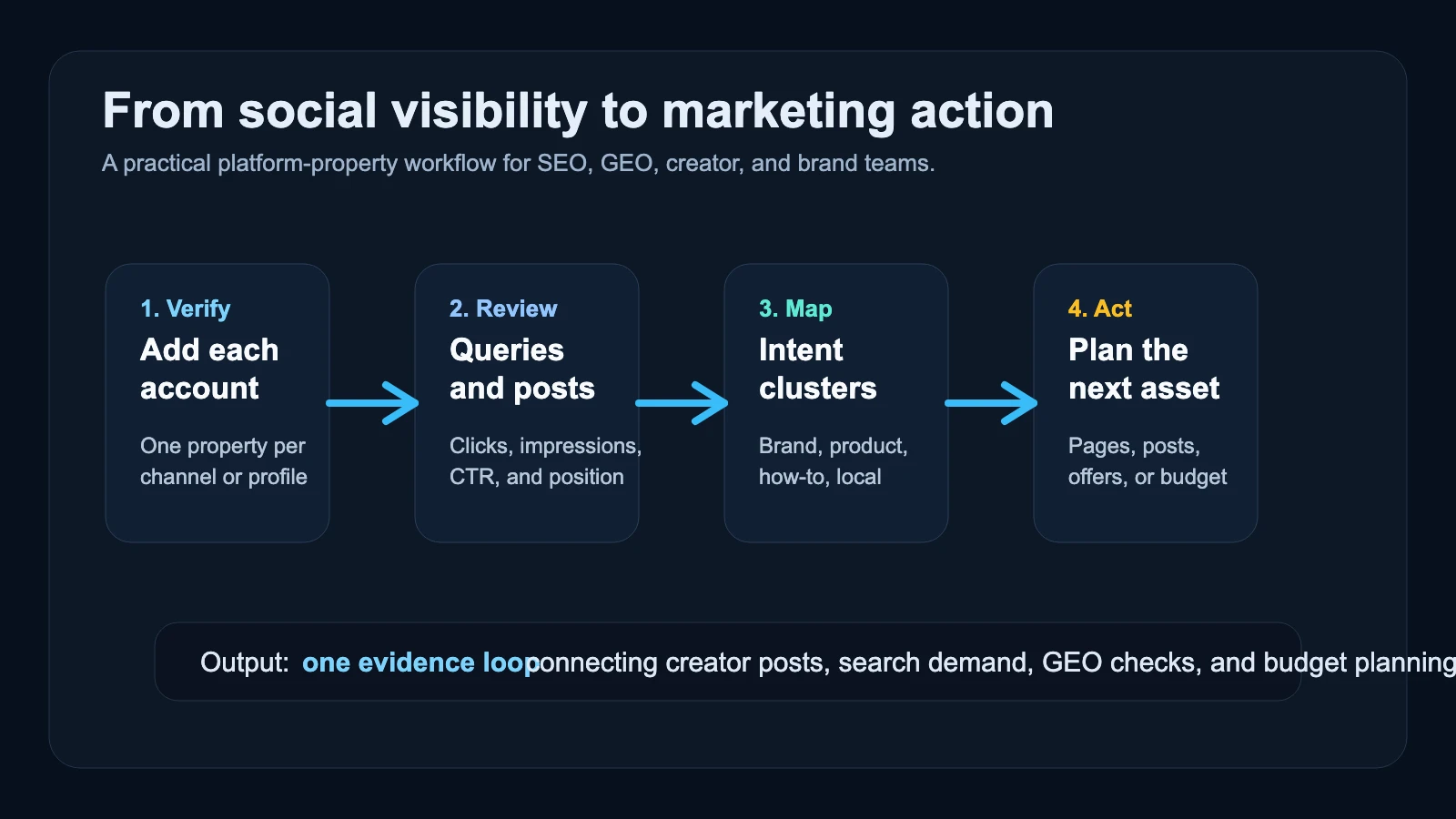
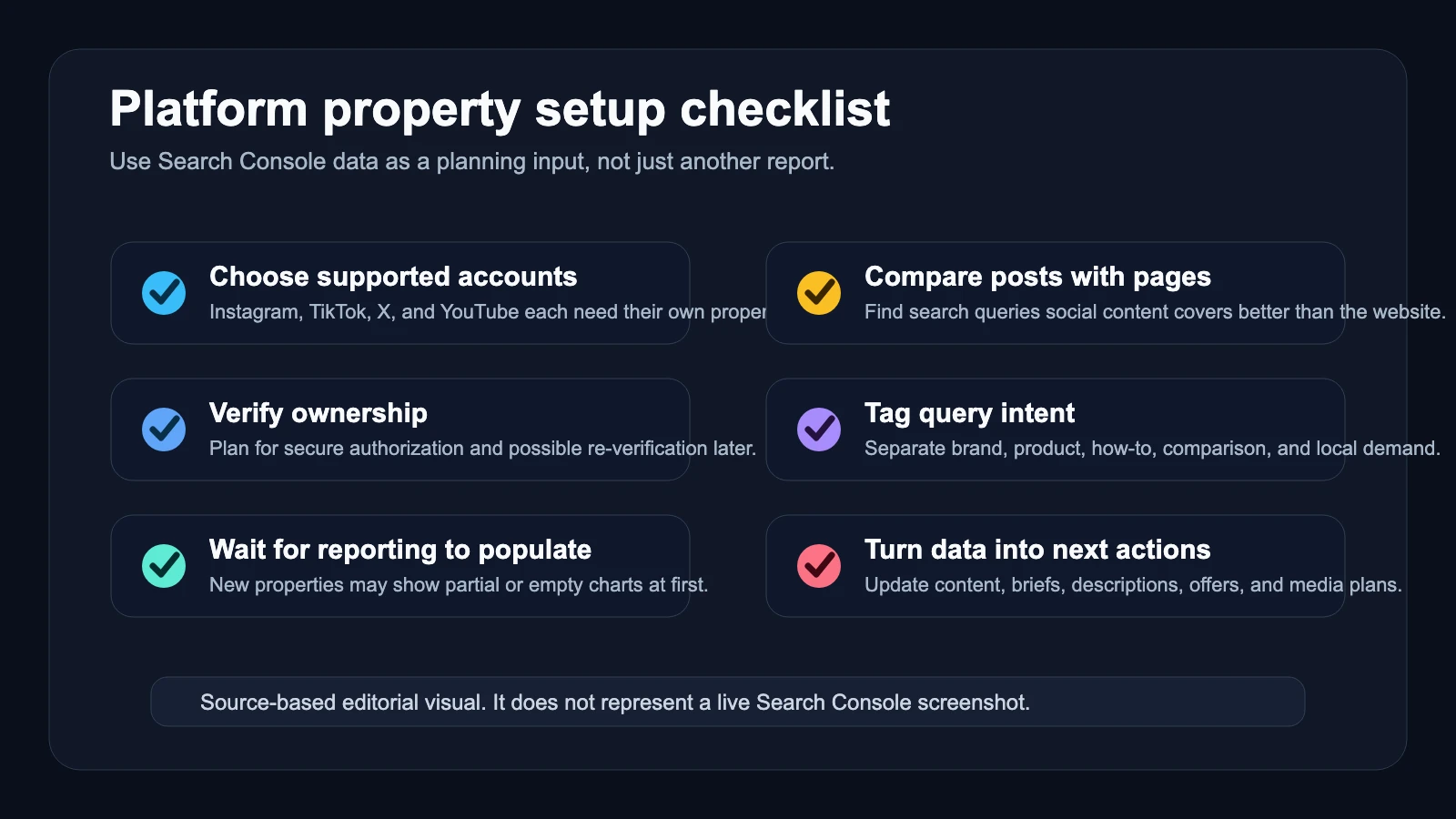
- Identify the supported social and video accounts that matter most to search discovery: Instagram, TikTok, X, and YouTube.
- Add each account or channel as a separate Search Console platform property when the feature appears in your account.
- Wait a few days before judging missing data, because Google's help page says new properties may need time before reports populate.
- Compare platform-property queries with your website Search Console queries to find gaps between owned pages and social posts.
- Create a monthly review that tags high-performing posts by audience intent: branded demand, product research, how-to education, comparison, local discovery, or reputation proof.
- Feed the findings into the next content plan instead of leaving them inside Search Console.
What remains uncertain
The most important uncertainty on July 16, 2026 is availability. Google says platform properties will become available gradually over the coming weeks, and the help page says the feature might not be available to everyone yet.
There are also measurement boundaries. Search Console platform properties show how supported content performs on Google surfaces. They do not report how often a post appeared inside TikTok, YouTube, Instagram, or X, and they do not solve attribution between a platform post, a website visit, and a later conversion. Google also notes that Discover and News reports appear only if the content receives traffic from those surfaces.
The defensible conclusion is specific: Google has made social and video content more measurable from a search perspective. The value will depend on clean account setup, disciplined query review, and whether teams act on the reports rather than adding one more dashboard to the stack.