Google Search Profiles give publishers and creators a new discovery layer on Search and Discover
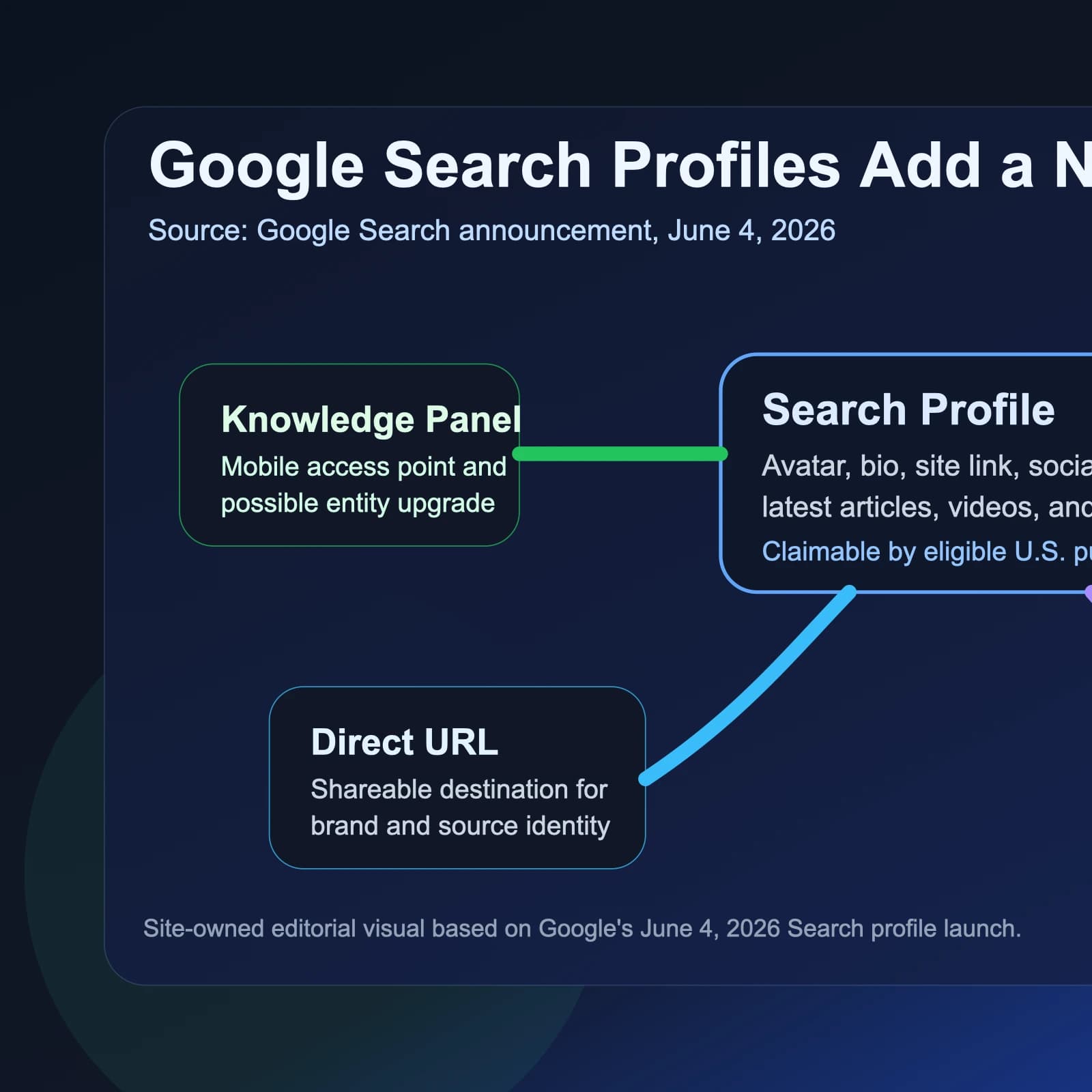
Google said on June 4, 2026 that it is launching Search profiles, a new shareable profile surface that lets eligible publishers and creators shape how they appear on Google Search and Discover. For teams that depend on authority, repeat audience reach, and branded discovery, the update matters because it turns profile management into an operating task instead of an afterthought.
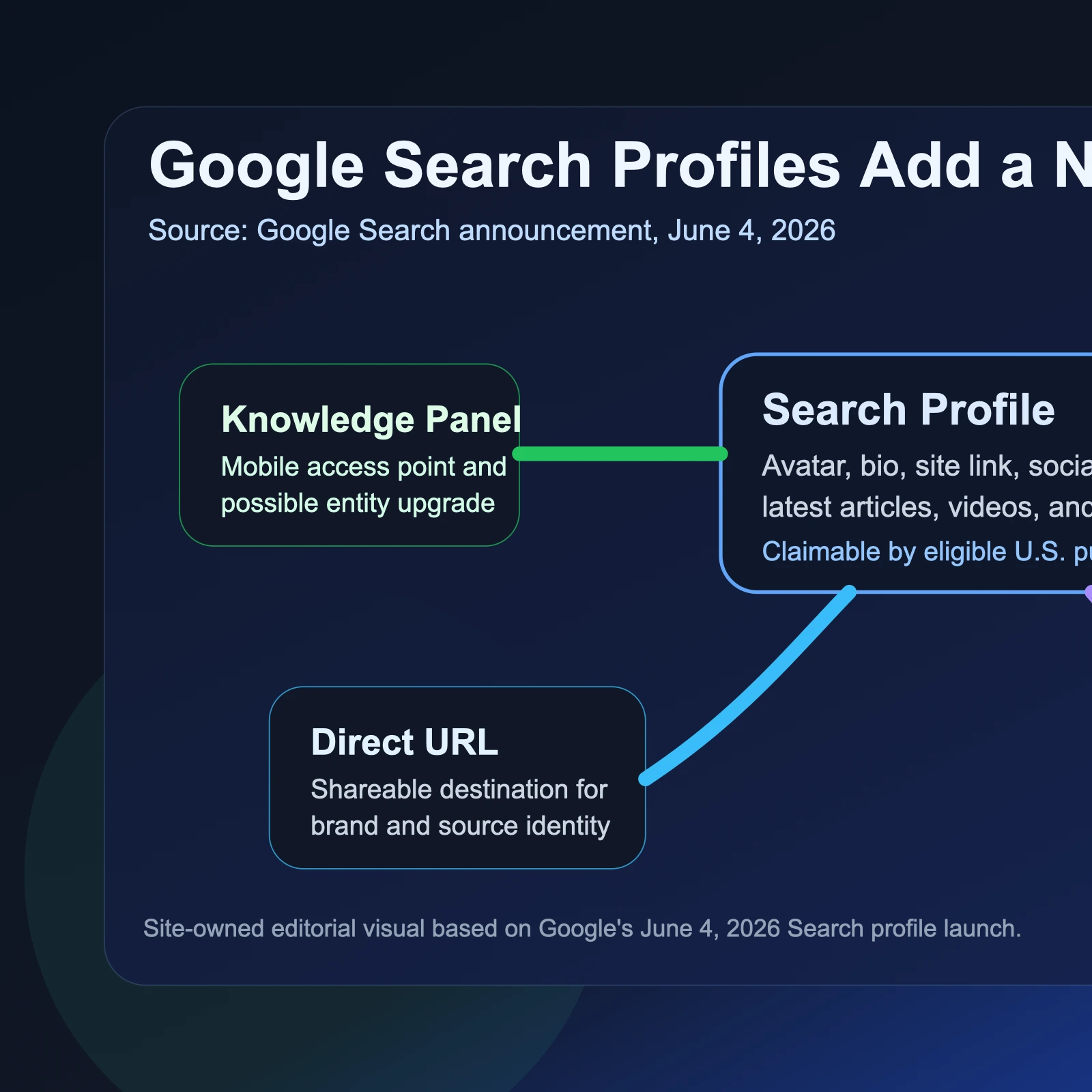
The rollout is narrow but commercially relevant. Google's post says Search profiles launch initially in the United States, can be accessed on mobile from a creator or publisher knowledge panel, by tapping a source name on Discover, or through a direct URL, and are currently available to publishers and creators with a sizable following on at least one major social or video platform. In practice, that means media brands, niche publishers, newsletters, podcast-led content businesses, B2B editorial teams, and creator-led companies now have one more Google-controlled layer where entity clarity and source trust can influence discovery.
What changed
Google's June 4 announcement describes Search profiles as a dedicated, shareable space where publishers and creators can showcase an avatar, bio, website, social links, video platforms, and recent content across the web. Google also says claiming a Search profile may trigger the creation of a knowledge panel for eligible publishers and creators, while existing knowledge panels can be enhanced with an updated avatar, current content, and a direct profile link.
| Confirmed June 4 detail | Primary source | Why it matters |
|---|---|---|
| Search profiles are a new way for publishers and creators to shape their presence on Search. | Google Search post, June 4, 2026 | Entity presentation becomes an active workflow, not only a passive result of indexing. |
| Profiles can highlight latest articles, videos, social posts, and other important content. | Google Search post, June 4, 2026 | Brands can align cross-platform authority signals in one Google-owned surface. |
| People can access profiles from mobile knowledge panels, Discover taps, or a direct URL. | Google Search post, June 4, 2026 | Publisher identity now has a direct path inside mobile discovery journeys. |
| People can follow sources from the profile, making that content more likely to appear on Discover. | Google Search post, June 4, 2026 | Audience loyalty and repeat visibility may compound beyond one article click. |
| The rollout starts in the U.S. for publishers and creators with a sizable following on at least one major social or video platform. | Google Search post, June 4, 2026 | Eligibility and geography will shape who can act now versus who should prepare. |
The move also builds on Google's earlier May 27, 2026 Search update, which added Preferred Sources, Highly Cited labeling, and more creator- and publisher-oriented ways to find original content in AI Search. Read together, the two updates show Google pushing source identity closer to the point of discovery instead of leaving it only to classic blue links.
Why it matters
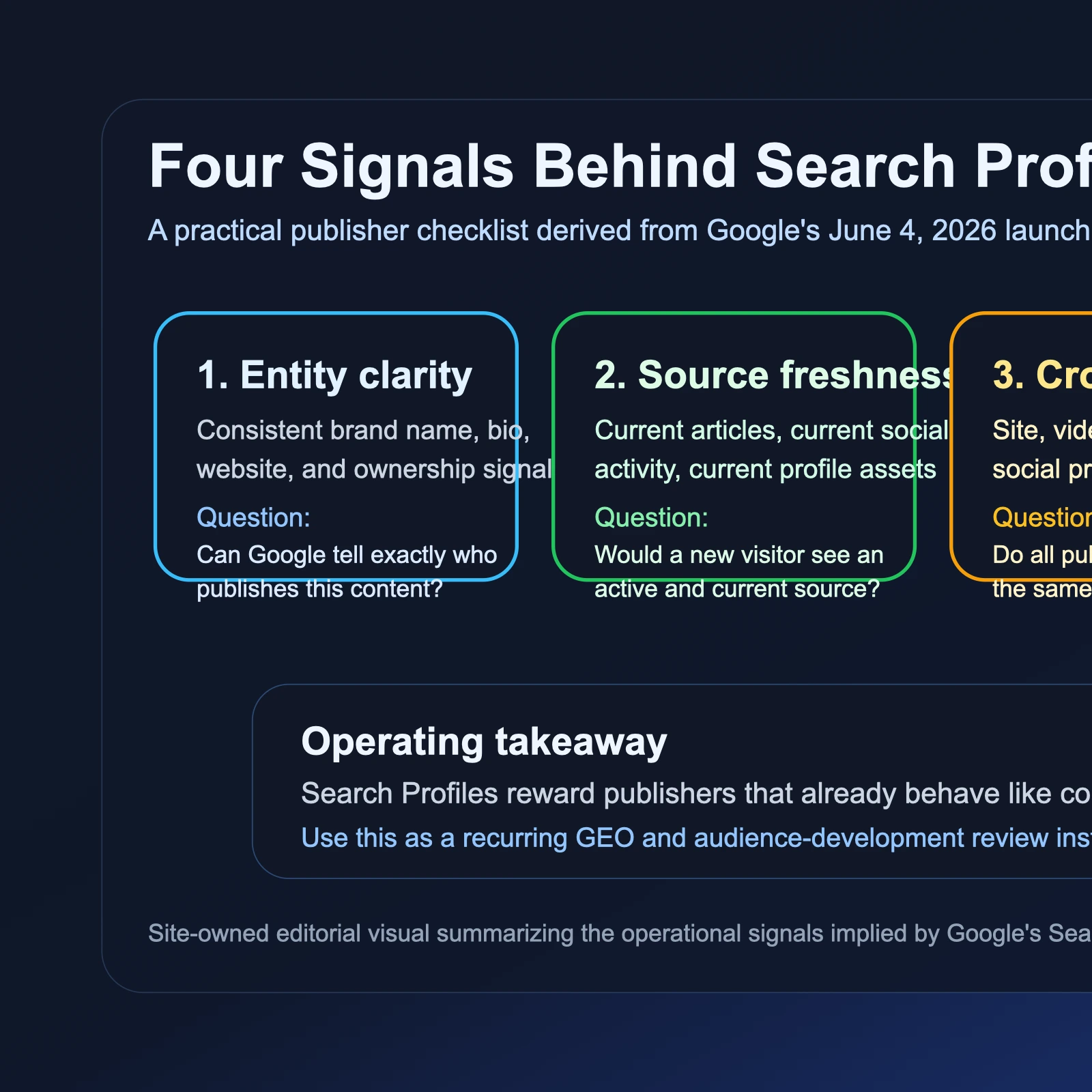
This matters because organic visibility is no longer just a page-level problem. As AI summaries, Discover recommendations, and entity-driven interfaces keep expanding, publishers need cleaner signals about who they are, what they publish, and where audiences should follow them. Search profiles create a new control point for that.
For high-value operators in the United States, Canada, the United Kingdom, Australia, and Europe, the practical implication is straightforward even if the current launch is U.S.-only: if Google is formalizing publisher identity as a product surface, teams should expect entity consistency, brand clarity, and source freshness to matter more across Search and AI-mediated discovery.
It also changes the value of internal content operations. A publisher with mismatched bios, weak site branding, outdated author descriptions, and scattered social signals may still publish good articles, but Google now has another interface where those inconsistencies can be exposed. By contrast, a clean publisher profile can reinforce authority, improve follow intent, and make branded discovery easier for users who are already bouncing between Search, Discover, and AI-generated answer surfaces.
That fits directly with Slogan.website's current tool stack. Teams can use the GEO Visibility Checklist to review entity and source clarity, the guide to generative engine optimization benefits to align AI-era visibility work, and the framework for tracking brand mentions and visibility to measure whether authority signals are becoming easier to find and trust.
Who is affected
The first group is independent publishers, newsletters, creator-led businesses, and media brands that rely on repeat audience behavior rather than one-off search clicks.
The second group is B2B software and service companies publishing expert content under a strong editorial or founder-led brand. If the business already earns direct searches and off-site mentions, a stronger Google profile surface can help reinforce trust before the user reaches a landing page.
The third group is SEO, GEO, and audience-development teams. They now need to think beyond page optimization and review whether the publisher or creator entity itself is consistent enough to perform well across Google surfaces.
What to do next
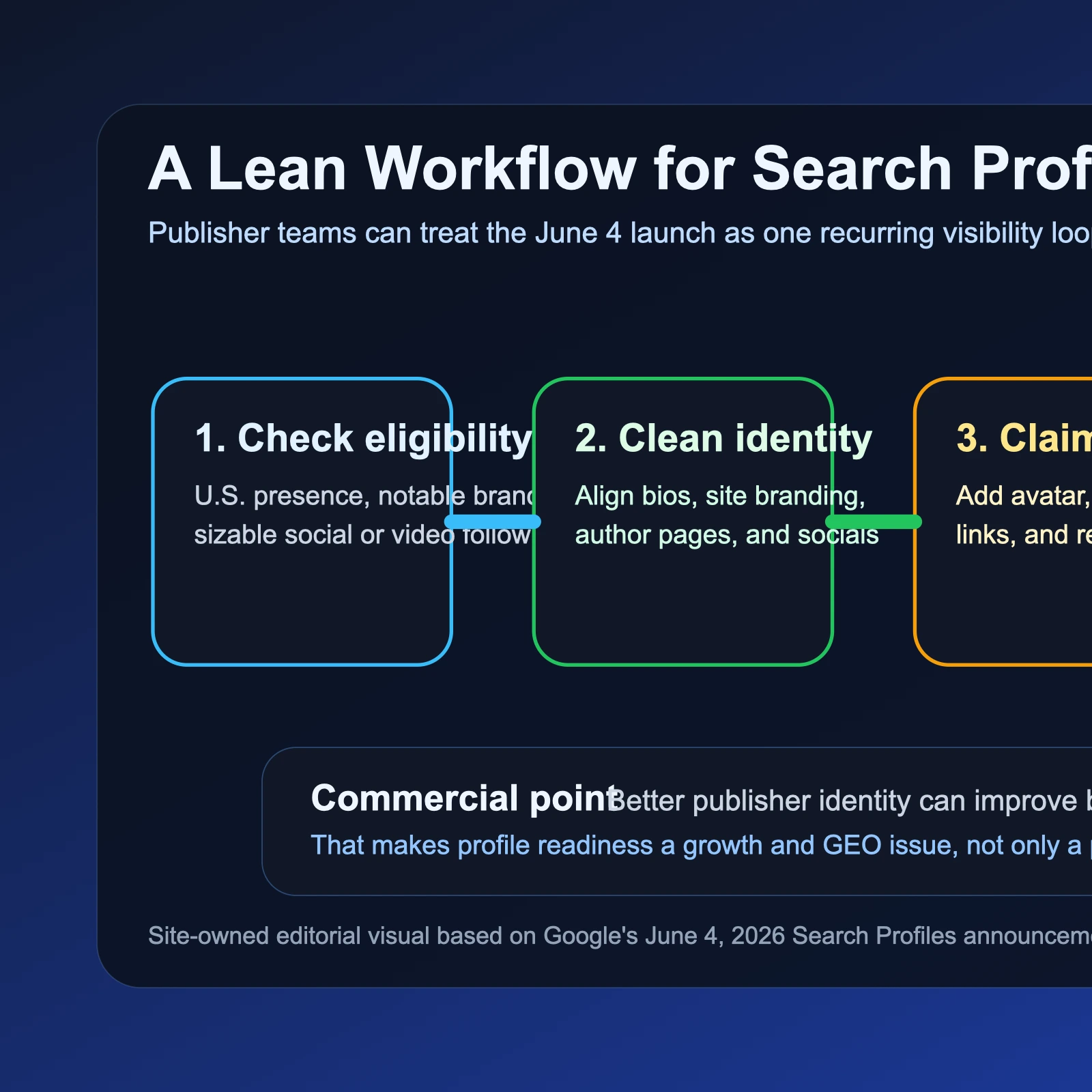
- Check whether your publisher or creator brand meets Google's current U.S. eligibility pattern: recognizable entity, sizable following, and an active cross-platform presence.
- Standardize your public identity across website bios, author pages, social profiles, YouTube channels, and any other major discovery surfaces before claiming anything new.
- Make sure your most important publisher or creator pages clearly describe who you are, what you cover, and where your latest work lives.
- Review whether your current site architecture supports branded discovery, follow intent, and direct audience conversion, not only article-level SEO.
- Use the GEO Visibility Checklist to audit entity clarity and source trust, then model the commercial value of stronger repeat discovery with the Marketing ROI Calculator or Digital Marketing Budget Planner.
For many smaller teams, the right next move is not to publish more. It is to make existing identity signals more coherent so Google has less room to guess.
What remains uncertain
The launch still has meaningful limits. Google's announcement does not define the exact follower threshold needed for eligibility, and it does not promise global expansion timing beyond saying it will look to expand profiles to more publishers and creators around the world in the future. That means operators outside the U.S. should treat this as a signal, not a guaranteed near-term feature.
It is also unclear how much incremental traffic or Discover lift profiles will create on their own. Google says following a source from the profile makes that content more likely to appear on Discover, but it does not publish performance benchmarks, reporting granularity, or specific engagement metrics for profile-driven discovery.
The safest conclusion as of June 8, 2026 is that Search profiles are not a shortcut around content quality. They are a new interface where strong identity, fresh content, and coherent source signals can compound. Publishers that already treat visibility as an entity problem, not just a keyword problem, are better positioned to benefit first.