HubSpot turns quote-to-cash into an AI-operational layer with Revenue Hub
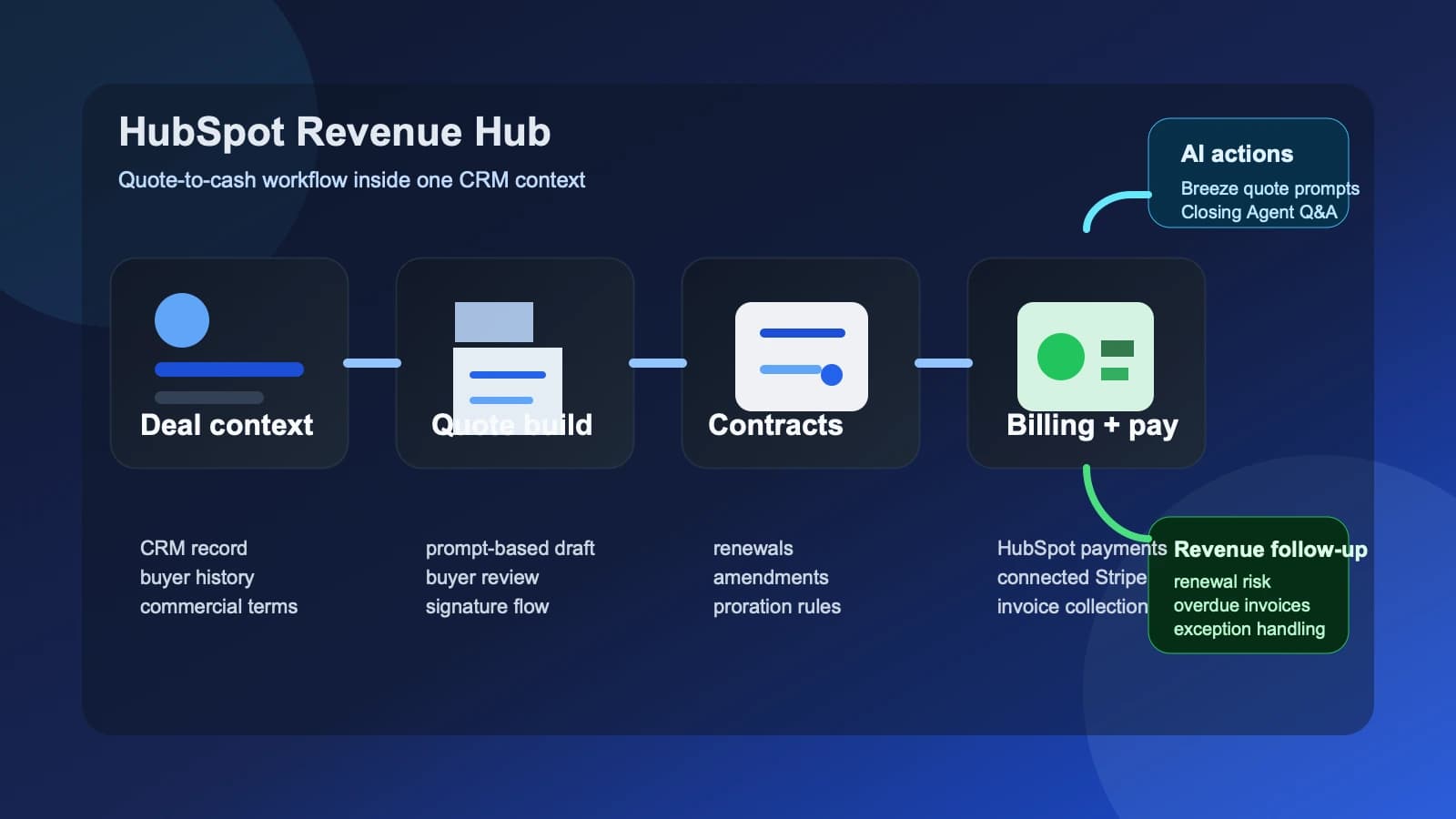
HubSpot said on June 16, 2026 that it is launching Revenue Hub, a quote-to-cash layer that brings quotes, contracts, billing and payments into the same platform context as CRM, marketing, sales and service data. For operators, the practical change is not the rename alone. HubSpot is trying to make post-deal revenue actions available to both humans and AI agents without forcing teams to bounce between CRM records, spreadsheets, billing tools and separate finance workflows.
What changed
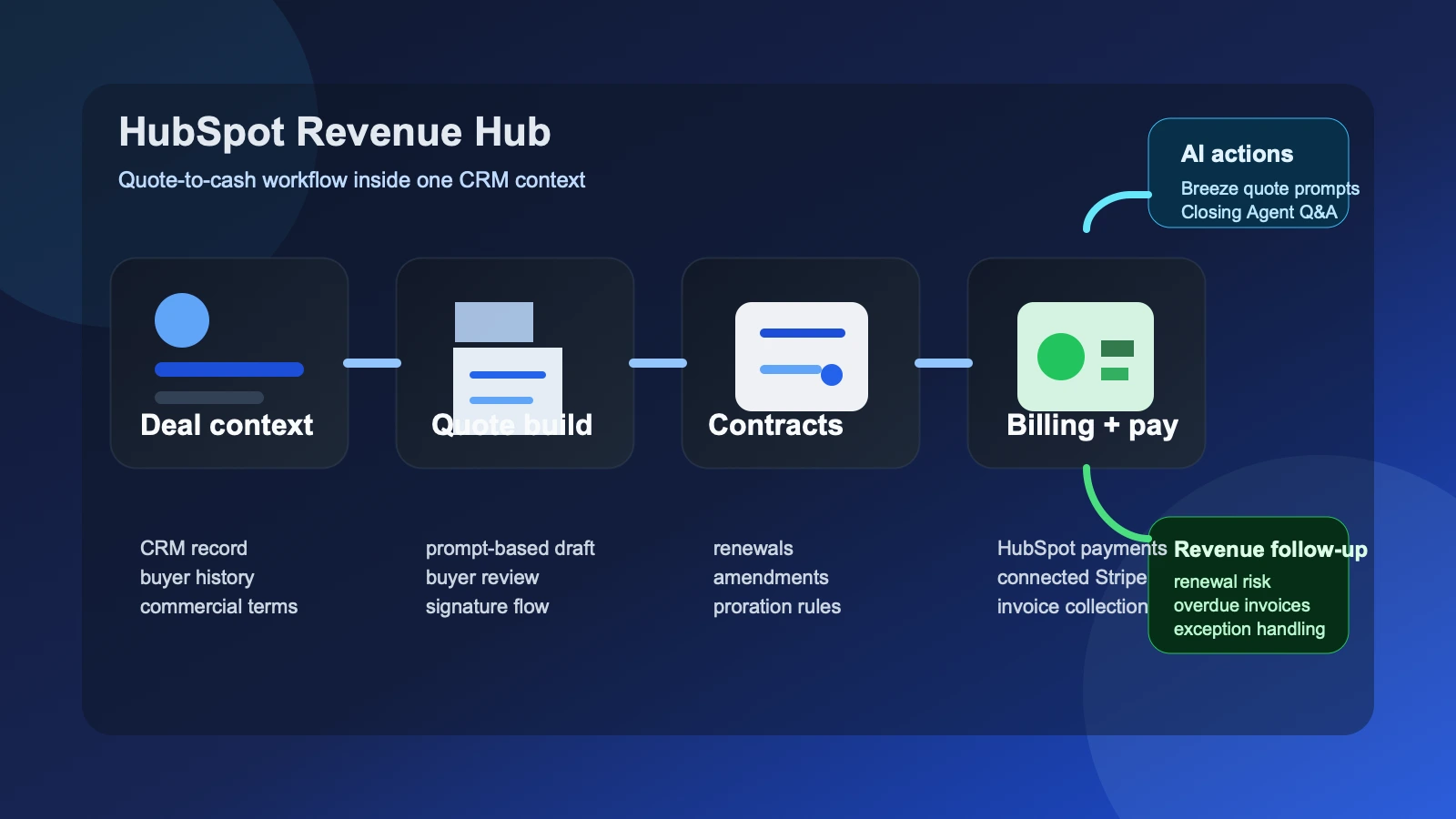
The official launch post says Revenue Hub is available now and combines four layers that were often fragmented before: quoting, contracts, billing and payment collection. HubSpot says reps can use Breeze Assistant to build quotes from prompts inside a deal record, buyers can review, sign and pay in one place, and a Closing Agent can answer quote questions around the clock.
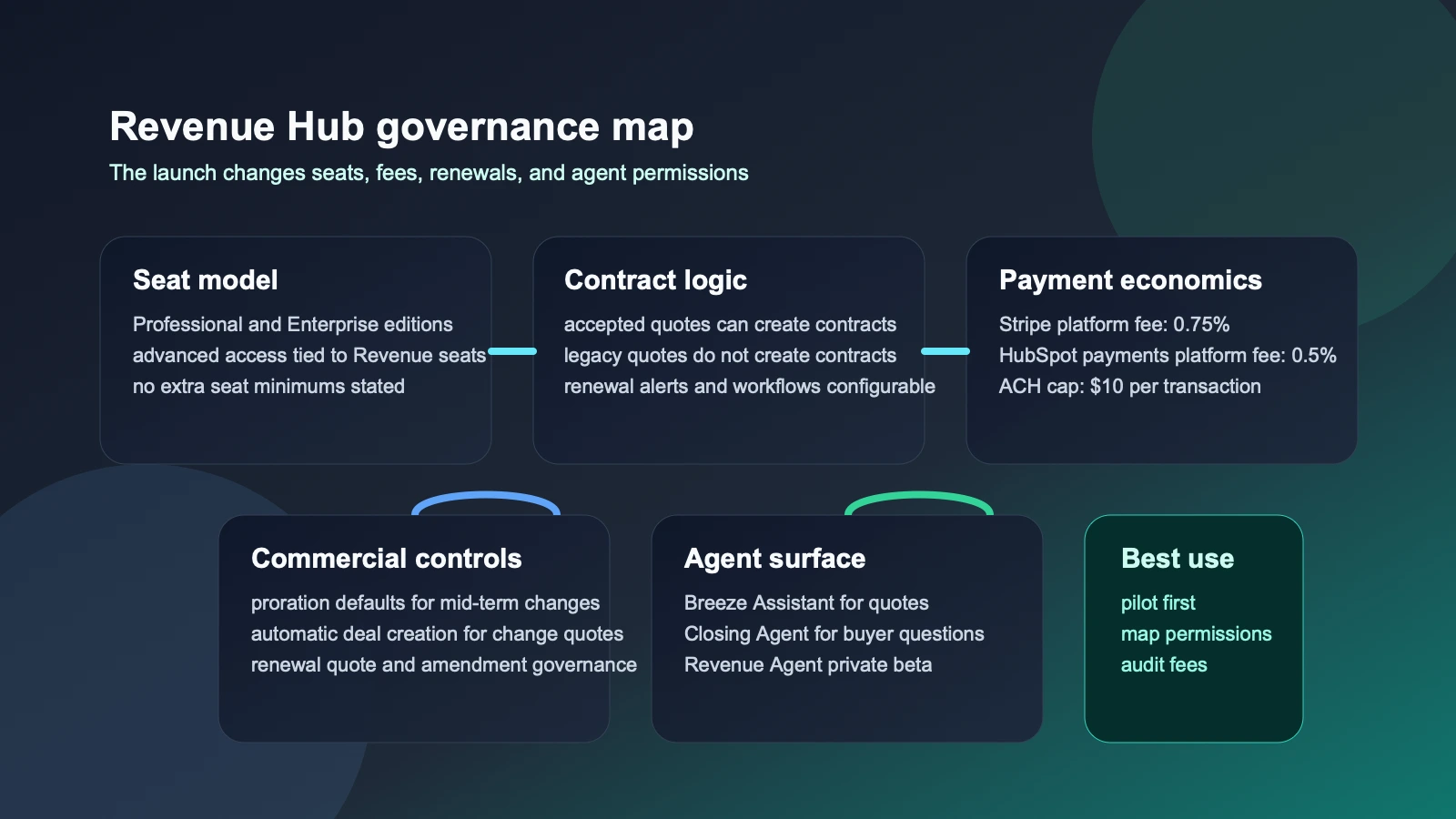
HubSpot's own product catalog adds the structural detail that matters for planning. In the official product and services catalog, HubSpot now lists "Revenue Hub (Previously Commerce Hub)" and says the product is available in Professional and Enterprise editions, with full advanced functionality tied to Revenue Professional or Revenue Enterprise seats. The same catalog says customers using Stripe payment processing are charged a 0.75% platform fee, while customers using HubSpot payments are charged a 0.5% platform fee, with ACH capped at $10 per transaction and a temporary 60-day fee waiver for new signups.
HubSpot's knowledge base also shows that this is more than marketing copy. In the official contracts setup documentation, HubSpot says a Revenue Hub seat is required to create and edit contracts, accepted legacy quotes do not create contracts, and admins can configure renewal alerts, proration defaults and automatic deal creation for change and renewal quotes. That is operational plumbing, not a cosmetic rename.
| Confirmed Revenue Hub signal | Official source | Why it matters |
|---|---|---|
| Revenue Hub is available now and combines quoting, contracts, billing and payments inside HubSpot. | HubSpot launch announcement | Revenue actions can live in the same system as campaign, pipeline and customer context. |
| Breeze Assistant can build quotes from prompts, and a Closing Agent can answer buyer questions. | HubSpot launch announcement | AI is moving from pre-sales drafting into live commercial workflow. |
| Revenue Hub is listed as "Previously Commerce Hub" and requires Revenue Hub seats for advanced functionality. | HubSpot product catalog | Teams need to plan packaging, permissions and budget before rollout. |
| Stripe processing uses a 0.75% platform fee; HubSpot payments uses a 0.5% platform fee. | HubSpot product catalog | Quote-to-cash consolidation changes transaction economics, not only workflow design. |
| Contracts, renewals, proration and automatic deal creation are configurable in official setup docs. | HubSpot contracts documentation | The launch affects real renewal and billing governance, especially for recurring revenue teams. |
Why it matters
For marketing and growth teams, this changes where attribution conversations end. If quoting, billing and payment state now sit closer to campaign and CRM data, lifecycle teams can potentially connect lead generation, close timing, expansion and renewal risk with less manual stitching.
It also fits HubSpot's broader agent strategy. In HubSpot's May 22, 2026 platform announcement, the company said AI outcomes improve when agents have richer context. Revenue Hub extends that context into post-sale commercial activity. In other words, AI inside HubSpot is moving beyond writing emails or summarizing calls. It is being positioned to act around quotes, invoice follow-up, billing questions, renewals and account health.
That makes the launch relevant to teams using tools such as the Marketing ROI Calculator, the Digital Marketing Budget Planner, the GEO Visibility Checklist, or our guide to tracking brand mentions and visibility. Once revenue context gets tighter, marketing teams can ask better questions about which channels create high-quality pipeline and which campaigns lead to cleaner renewals.
Who is affected
The first group is RevOps and sales-ops teams that want fewer handoff gaps between deal, quote, contract and invoice stages. The second group is lifecycle marketers who need better feedback loops between acquisition, customer expansion and retention. The third group is finance-adjacent GTM teams that have been tolerating spreadsheet reconciliation because core billing logic lived outside the CRM. Agencies, consultants and smaller businesses should watch this too if they want fewer tools and more governed automation.
What to do next
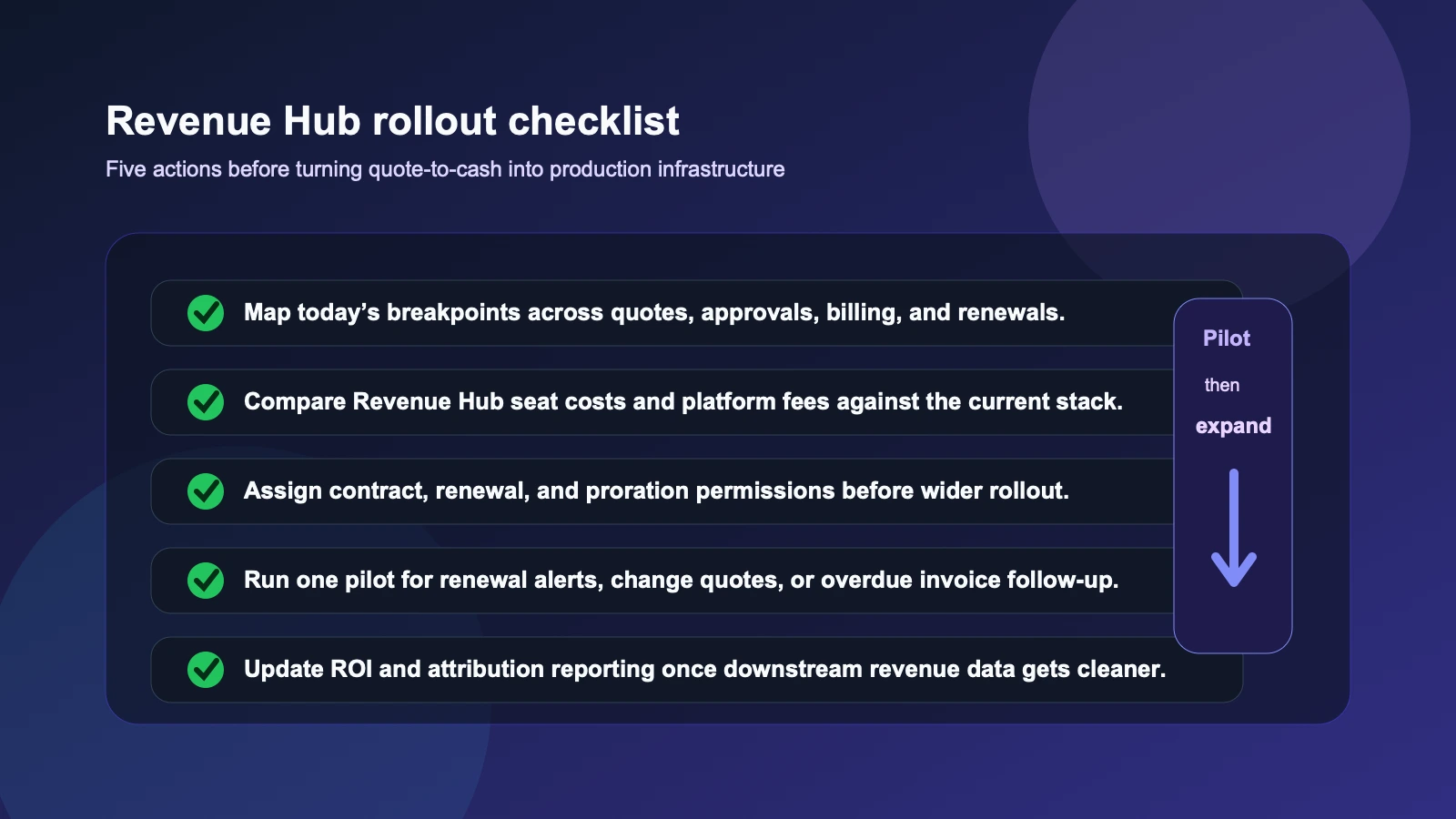
Use this checklist before treating Revenue Hub as production-ready infrastructure:
- Map where your current quote-to-cash flow breaks today: quote creation, approvals, contract updates, invoice timing, payment collection or renewal handoff.
- Confirm whether Revenue Hub seat costs and platform fees still make sense once compared with your existing Stripe, billing or CPQ stack.
- Review which teams actually need contract-editing or renewal permissions, because HubSpot's own docs tie those actions to specific seats and admin controls.
- Build one pilot around a narrow commercial loop, such as renewal alerts, change quotes or overdue invoice follow-up, before centralizing the whole stack.
- Revisit measurement. If revenue context improves, update the KPIs you use in tools like the Marketing ROI Calculator so campaign success is judged against cleaner downstream outcomes.
What remains uncertain
HubSpot has made the direction clear, but several practical boundaries are still open. The launch post says Revenue Agent is in private beta now and coming soon to public beta, so the most agentic collections and follow-up motions are not yet broadly available. Many teams will also still need ERP, accounting and compliance workflows outside HubSpot.
There is also rollout complexity inside the product itself. The contracts documentation shows different behavior depending on whether teams are enrolled in the Connected CPQ, Billing, and Payments beta, whether contract creation from accepted quotes is enabled, and whether legacy quotes are still in play.
The most useful reading on June 17, 2026 is this: HubSpot is trying to make quote-to-cash part of the same AI-operational fabric as CRM and marketing execution. Teams that evaluate it as workflow infrastructure, not just as another AI feature, will be in a better position to decide whether the consolidation is worth the cost and control tradeoffs.