LinkedIn tightens feed distribution and verification signals as it cracks down on AI slop
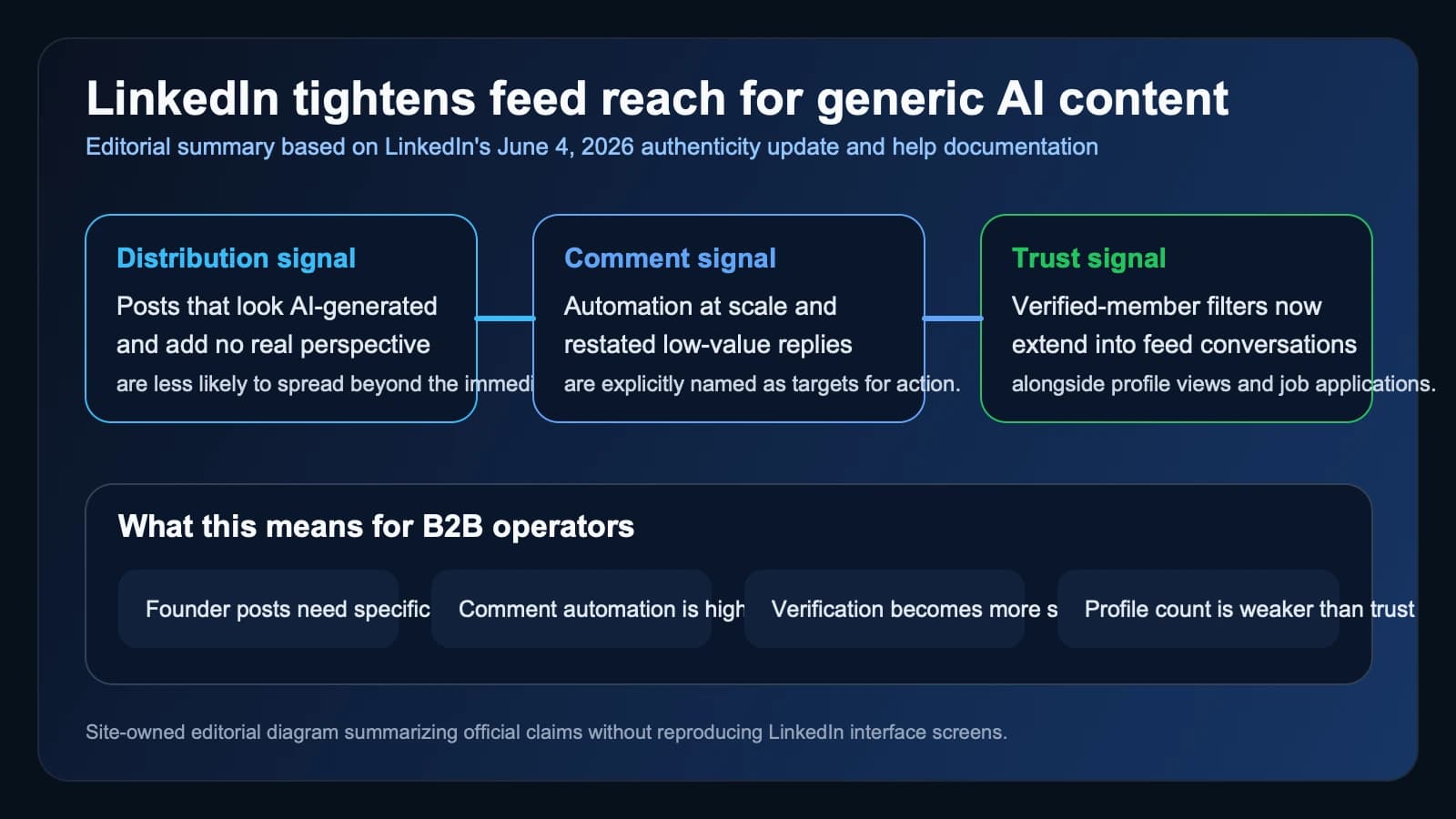
LinkedIn said on June 4, 2026 that it is taking new steps to reduce the spread of low-effort AI-generated content, comments posted at scale through automation tools, and responses that add no new perspective. For B2B marketers and operators, the practical change is not about style policing. It is about distribution risk. LinkedIn now says content that appears AI-generated and lacks clear perspective is less likely to be distributed beyond a person's immediate network, while verified-member filters are expanding into comments and conversations in the feed.
That makes this a workflow story, not a culture-war story. LinkedIn is effectively telling teams that generic scale tactics can lose reach even if the copy looks polished. The company also says on the same June 4 newsroom post that its early testing is correctly identifying generic content 94% of the time. Combined with LinkedIn Help guidance that excessive comment creation or automation can limit visibility, the platform direction is clear: posting volume and automated engagement no longer look like safe substitutes for original expertise.
What changed
LinkedIn's public June 4 update combines three platform signals that matter for brand, demand generation, and executive visibility teams.
| Confirmed update | Official source | Why it matters in practice |
|---|---|---|
| LinkedIn says content that appears AI-generated and lacks clear perspective is less likely to be distributed beyond a member's immediate network. | LinkedIn newsroom, June 4, 2026 | Generic AI-assisted posts may lose reach before they ever become a useful brand signal. |
| LinkedIn says its initial testing is correctly identifying generic content 94% of the time. | LinkedIn newsroom, June 4, 2026 | The platform is framing this as a measurable ranking and moderation system, not only as messaging. |
| LinkedIn says it will recognize and act on comments created and posted at scale with little or no human involvement. | LinkedIn newsroom, June 4, 2026 | Comment automation and employee-advocacy shortcuts now carry higher visibility risk. |
| LinkedIn Help says excessive comment creation or use of an automation tool may limit comment visibility. | LinkedIn Help: commenting | The enforcement model is already reflected in product documentation, not only in press language. |
| LinkedIn says verified-member filters now extend to comments and conversations in the feed, and that the platform has more than 100 million verified members. | June 4 newsroom update and LinkedIn verification milestone | Trust signals are moving closer to engagement surfaces where marketers try to earn reach and authority. |
The important detail is that LinkedIn is not banning AI assistance outright. In the June 4 post, the company says AI can help refine language, but the post or comment still needs to reflect a real human voice and perspective. That nuance matters for teams using AI to edit executive drafts, tighten social copy, or summarize a webinar into a post. The issue is not "AI used at all." The issue is automation and generic sameness.
Why it matters
This matters because many B2B teams quietly built distribution habits around efficiency instead of expertise. AI-assisted employee advocacy, auto-generated executive commentary, templated thought leadership, and mass comment workflows all promised more visibility with less effort. LinkedIn is now signaling that these shortcuts can backfire when they remove the actual point of view that makes a post useful.
There is also a trust-market signal here. LinkedIn's Help article on profile verifications says verified members see 60% more profile views on average and 50% more engagement on average. That does not prove verification causes better outcomes by itself, but it does show where LinkedIn wants the product to go: more weight on authenticity, clearer identity signals, and less oxygen for anonymous or automated engagement theater.
For operators in the United States, Canada, the United Kingdom, Australia, and Europe, this turns LinkedIn posting into a quality-control issue. If your B2B social strategy depends on reach from founder posts, sales-team commentary, or agency-run executive accounts, you need a stronger review loop. That fits the same discipline behind Slogan.website's tools hub, the GEO Visibility Checklist, and the guide to tracking brand mentions and visibility: machines increasingly reward clear source value, not volume for its own sake.
Who is affected
The first group is in-house B2B marketing teams running founder-led or executive-led distribution. If those posts are increasingly assembled from generic prompts and then lightly edited, they may now be more vulnerable to suppressed reach.
The second group is agencies and ghostwriting teams managing several client voices at once. The operating question changes from "How do we scale output?" to "How do we preserve specific perspective across every account?" That can require tighter interview notes, approval workflows, and differentiation between an AI draft helper and a one-click content factory.
The third group is employee-advocacy and social-selling programs that rely on canned comments, templated replies, or automation layers. LinkedIn's public language around scaled comments and low-human-involvement responses puts those tactics directly under scrutiny.
What to do next
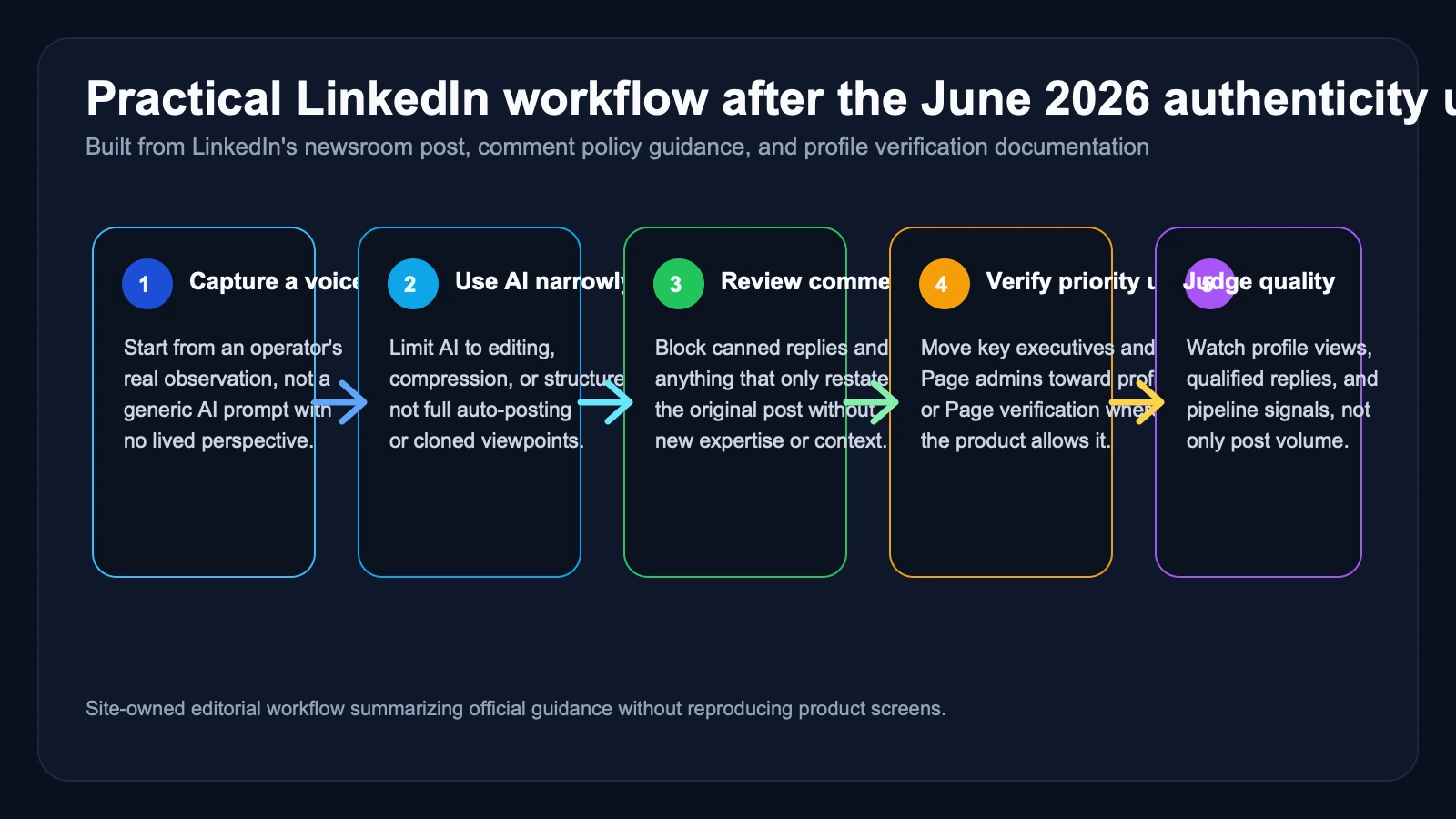
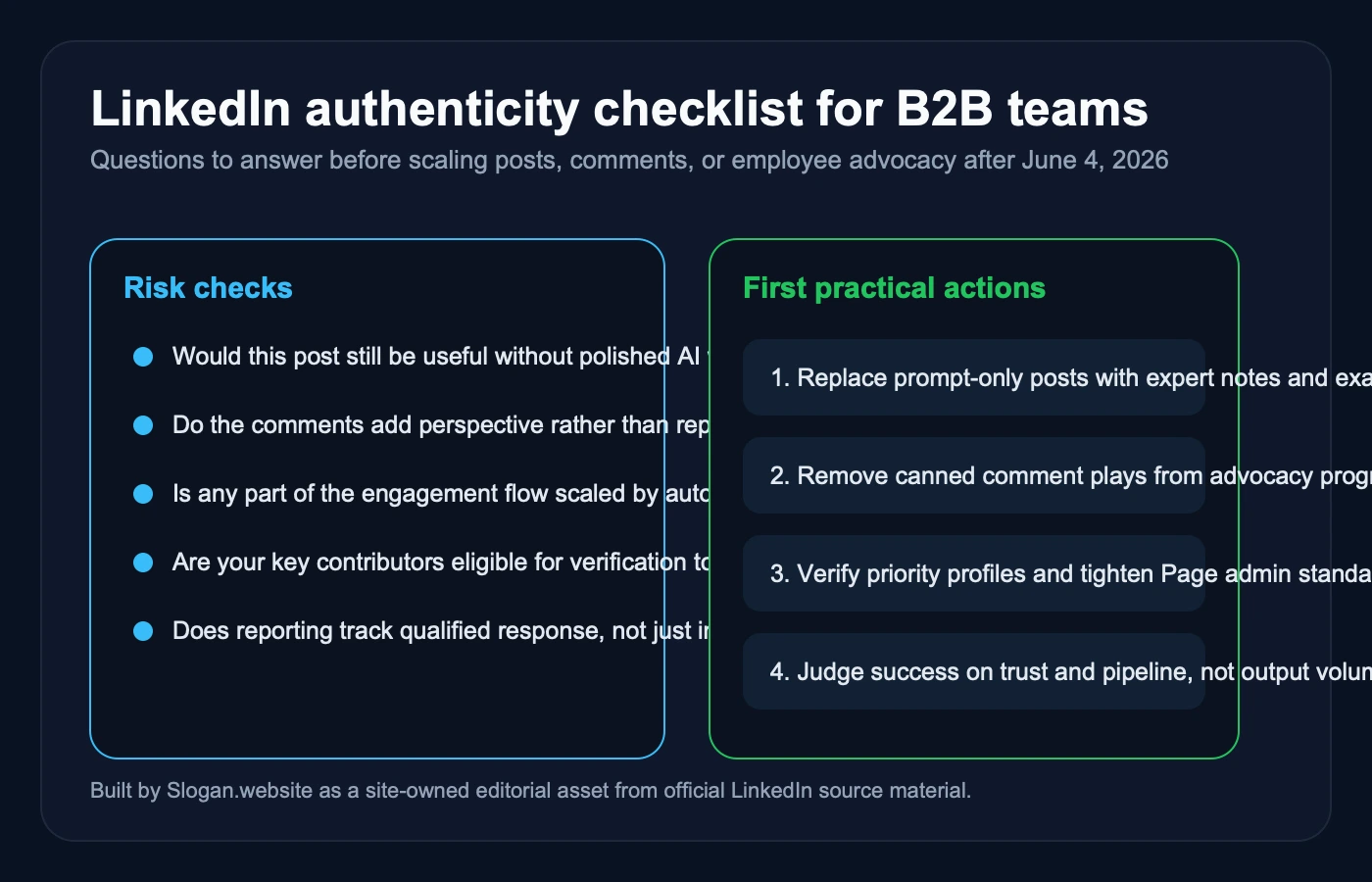
Use the June 4 update as a reset for how your team publishes on LinkedIn:
- Audit any workflow that generates posts or comments from one reusable template with minimal human editing.
- Require every executive, founder, or subject-matter post to add one concrete observation, example, lesson, or disagreement that clearly comes from lived experience.
- Review whether employees, SDRs, or community teams are using comment tools that could look like scaled automation under LinkedIn's comment policy guidance.
- Push priority profiles and Page admins toward verification where eligible, using LinkedIn's verification guidance and Page verification overview.
- Reframe reporting away from raw post count and toward profile views, qualified conversations, branded search lift, and downstream pipeline signals, then pressure-test that spend or labor with the Marketing ROI Calculator and Digital Marketing Budget Planner.
What remains uncertain
Several important questions remain open as of June 5, 2026. LinkedIn has not published a full scoring framework for what triggers lower distribution, and the company has not broken out how these systems treat AI-assisted drafting versus more heavily automated publishing. It also has not shown whether penalties or reduced reach are applied evenly across member posts, Page posts, and large employee-advocacy programs.
There is also a measurement gap. LinkedIn says members are already seeing fewer generic posts in their feeds, but public materials do not yet quantify how much distribution loss a borderline post or automated comment stream will face. That means teams should not wait for a perfect rubric. The safer interpretation is operational: if the content does not sound like a real expert and the comments do not add anything new, the platform is telling you it will likely matter less over time.
The practical takeaway is straightforward. LinkedIn is no longer only rewarding participation. It is building a clearer ranking and trust system around perspective, identity, and human involvement. For B2B teams that want durable visibility, that is a signal to invest less in automated polish and more in real expertise that machines and people can both recognize.