Similarweb brings market intelligence directly into Perplexity Computer workflows
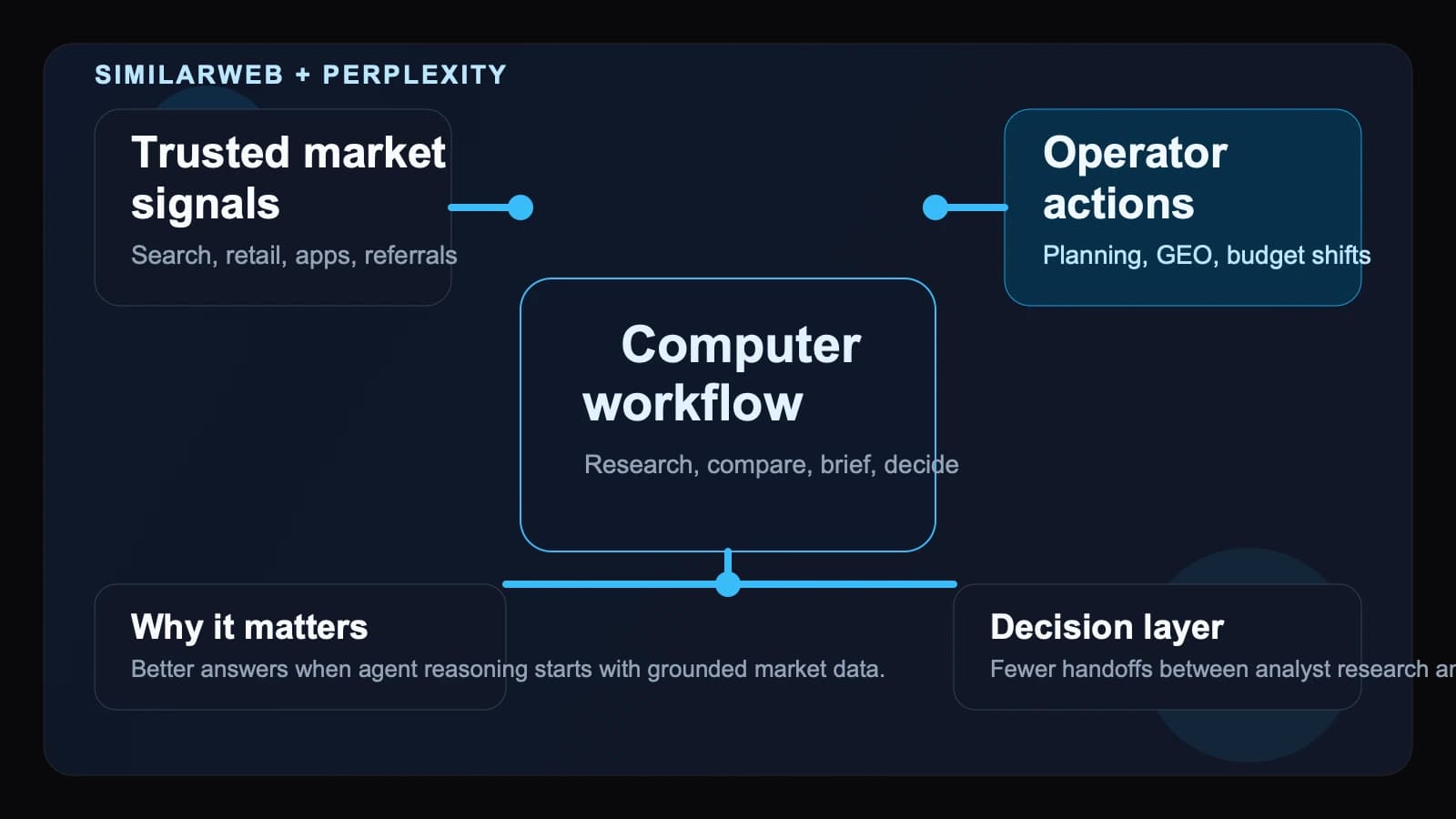
Similarweb said on June 3, 2026 that its market intelligence is being integrated directly into Perplexity Computer, giving operators a new way to run research, competitive analysis, and marketing workflows without bouncing between a chat tool, separate analytics tabs, and manual exports. The practical change is to make external demand, consumer, retail, app, and search signals available inside an agent runtime where tasks can be executed, not only discussed.
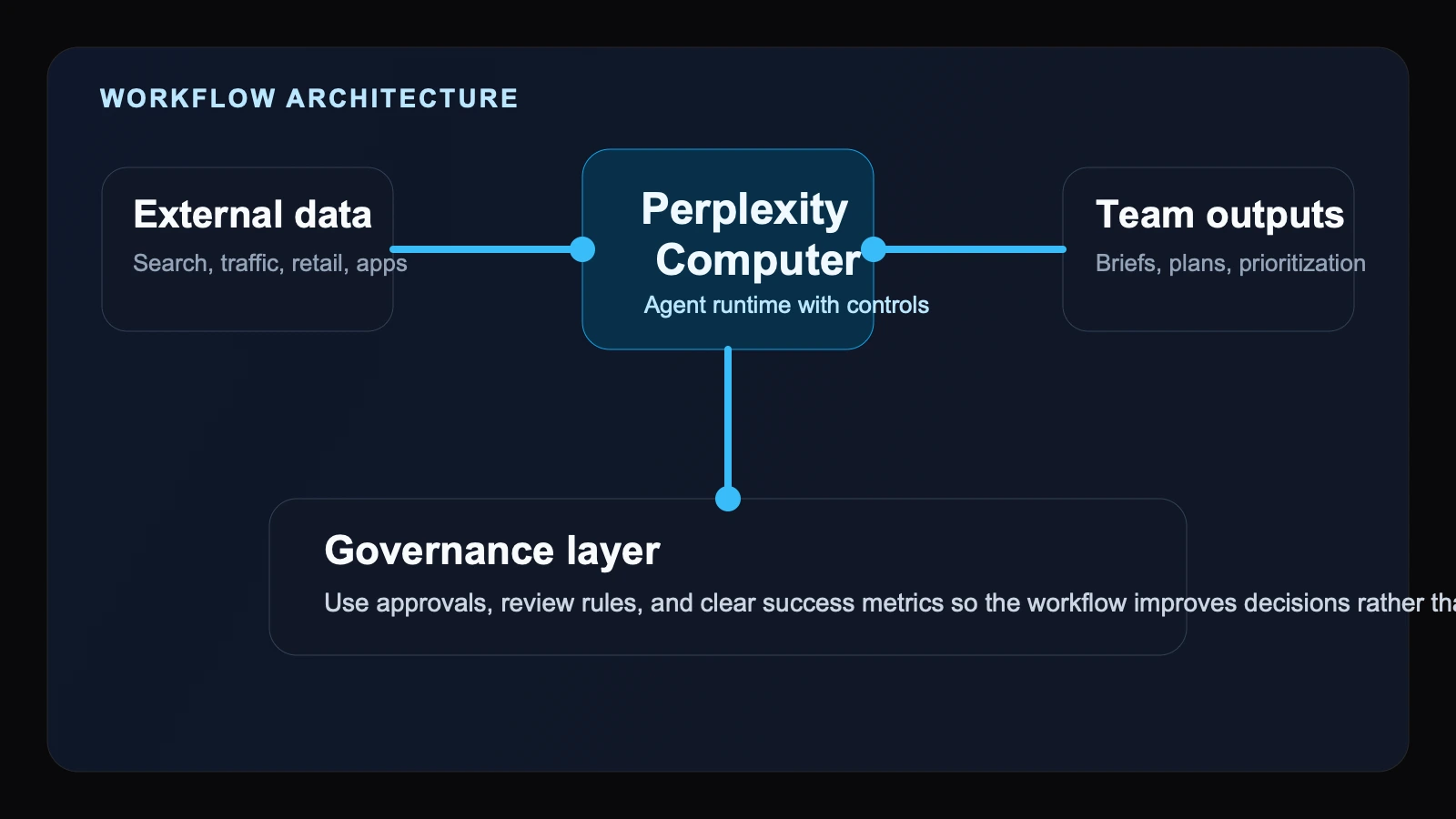
That makes this more relevant than a standard partnership headline. In the same official announcement from June 3, 2026, Similarweb said the integration includes an official MCP connector and deeper native integrations so Perplexity workflows can use trusted digital intelligence directly. Perplexity has separately described Perplexity Computer as a system that works across files, tools, memory, and the web. For marketing, SEO, GEO, and competitive-intelligence teams, agentic work is starting to get grounded in market data instead of ad hoc browsing.
What changed
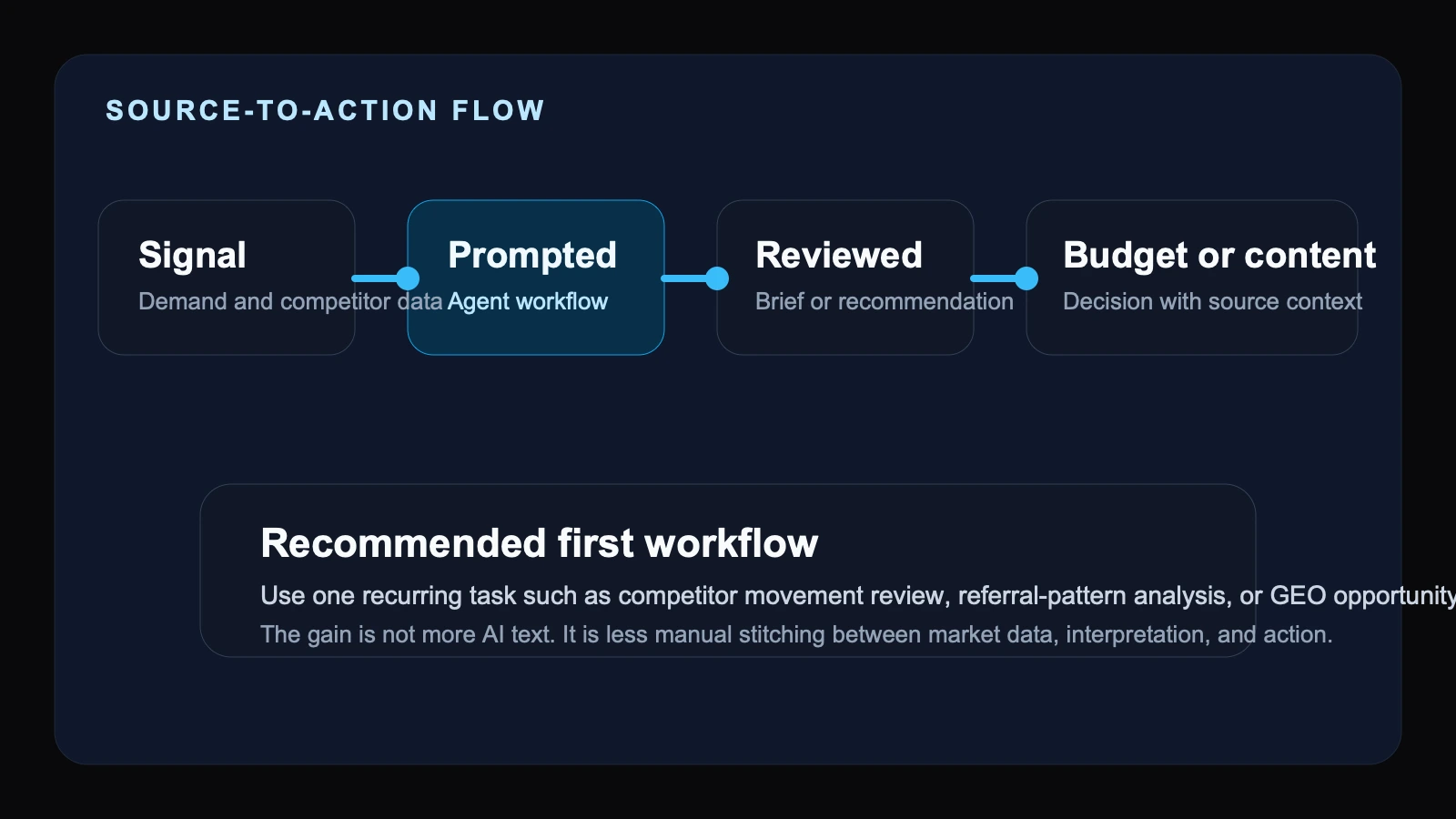
The main shift is that Similarweb is no longer being positioned only as a destination platform where an analyst signs in, exports data, then briefs another team. The June 3 release says Similarweb data can now be used within Perplexity Computer workflows for research, marketing analysis, and strategic decision-making. That matters because the value of agentic tooling rises when it can see something better than the open web alone.
| Confirmed point | Primary source | Why operators should care |
|---|---|---|
| Similarweb and Perplexity announced an expanded relationship on June 3, 2026 | Similarweb press release | This is a current product move, not a speculative roadmap rumor. |
| The integration brings Similarweb digital data directly into Perplexity Computer workflows | Similarweb press release | Market intelligence can become part of execution-time reasoning instead of a separate analyst handoff. |
| Similarweb says the launch includes an official MCP connector plus deeper native integrations | Similarweb press release | Teams can expect more than a shallow citation link or one-off plugin behavior. |
| Perplexity describes Computer as a system that operates across files, tools, memory, and the web | Introducing Perplexity Computer | The runtime is designed for multi-step work, which makes embedded data more useful than in ordinary chat. |
| Perplexity's security material describes sandboxing, audit logs, SSO, and granular admin controls | How We Built Security Into Computer | That signals a push toward governed enterprise workflows, not only individual experimentation. |
This is especially relevant for teams that still stitch together browser research, spreadsheet exports, brand-mention checks, and executive summaries by hand.
Why it matters
For high-value operators in the United States, Canada, the United Kingdom, Australia, and Europe, the immediate importance is workflow compression. Growth teams increasingly need to answer questions such as which competitors are gaining search demand, where referral traffic is shifting, which retail categories are heating up, or whether an AI-search visibility push is actually reflected in market behavior. Those questions are rarely solved by one dashboard alone.
Similarweb's release explicitly frames its data as grounding for AI-generated outputs across apps, retail, Gen AI, search, and consumer behavior. That fits the current operating reality for performance marketers, SEO leads, and revenue teams: they do not just need generative answers, they need answers anchored to something closer to live market intelligence. If that grounding works as described, it could reduce the amount of prompt-only speculation that still contaminates many "AI strategy" workflows.
It also creates a more credible bridge between GEO work and commercial decision-making. Teams using the GEO Visibility Checklist, the guide to brand mentions and visibility measurement, or the broader tools hub already know that discoverability work falls apart when visibility signals are disconnected from actual market movement. Embedding digital intelligence inside an agent workflow could help connect discovery research, competitive pattern detection, and planning outputs faster.
Who is affected
The first group affected is in-house marketing and SEO teams that regularly brief leadership on search, demand, and competitive shifts.
The second group is agencies and consultants packaging competitive research as a service. If Similarweb data can sit inside Perplexity Computer workflows, the agency value may shift away from manual collection and toward better scoping, interpretation, and decision framing.
The third group is product, ecommerce, and growth-operations teams that need external signals before changing budgets or shipping campaigns.
What to do next
Treat this launch as a process redesign opportunity, not a generic AI upgrade.
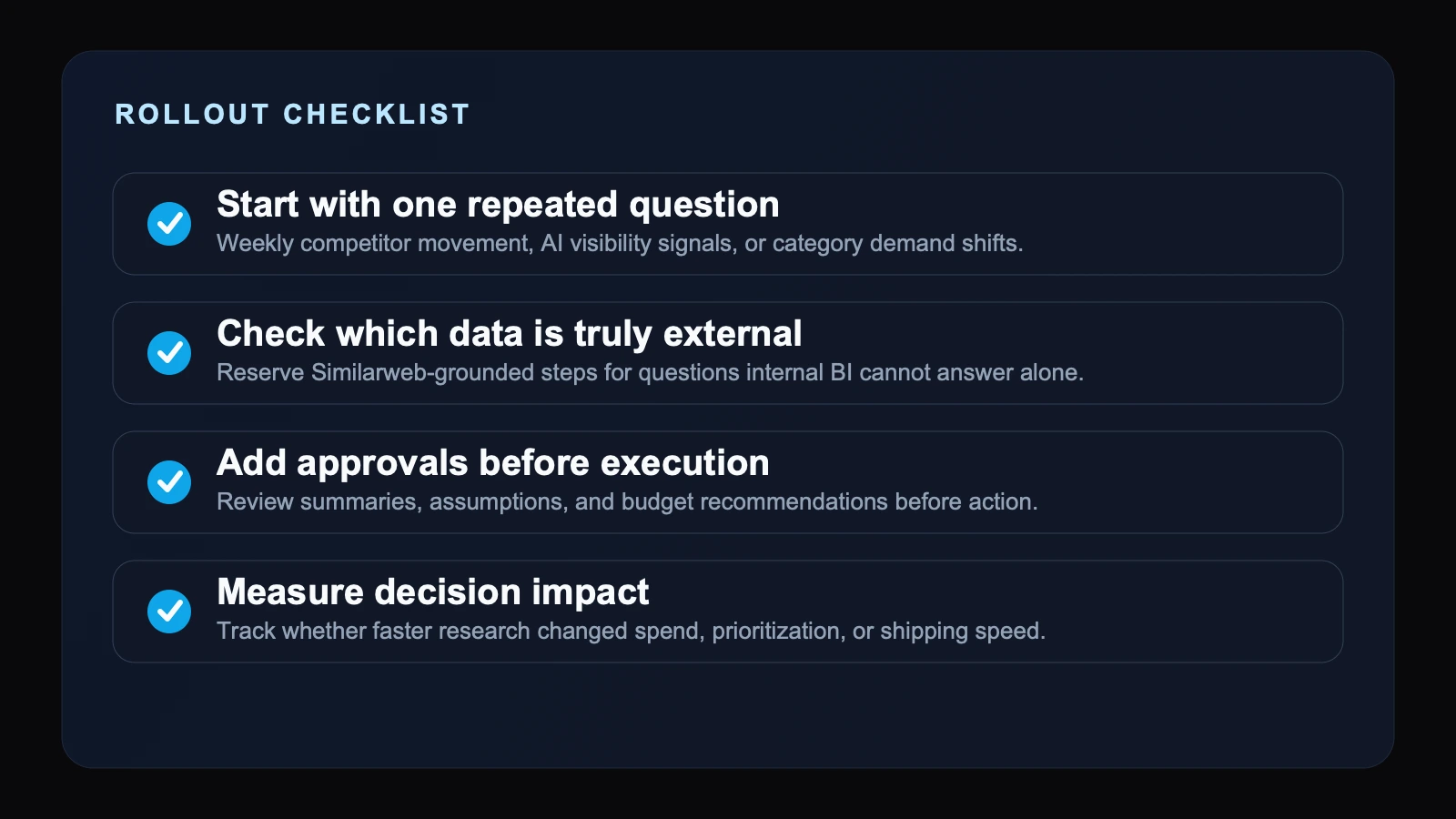
- Identify the market-intelligence questions your team repeats every week: competitor traffic shifts, category demand, retail visibility, referral sources, app trends, or AI-search exposure.
- Separate questions that need trusted external data from questions your internal BI stack can already answer.
- Build one small repeatable workflow first, such as weekly competitor movement review or AI-visibility brief generation.
- Add decision checkpoints so the agent output feeds a real budget, content, or channel action instead of another unused summary.
- Use the Digital Marketing Budget Planner and Marketing ROI Calculator to test whether faster research actually changes allocation or payback decisions.
What remains uncertain
Important gaps remain. Similarweb's public release does not spell out pricing, usage limits, connector permissions, supported plans, or the exact data surfaces available in every workflow. Perplexity's public materials explain the Computer concept and security posture, but they do not yet show a detailed operator playbook for this specific Similarweb integration.
There is also a quality-control question. Better data does not remove the need for clear prompts, approval rules, and business context.
Finally, the real test is adoption. Many organizations buy new AI features faster than they redesign the underlying work. If this integration stays trapped inside experiments run by a few power users, its commercial value will be limited. If it becomes part of how teams routinely research competitors, prioritize GEO work, and justify budget shifts, then June 3, 2026 may end up looking like an early sign that market intelligence is moving from a dashboard destination to an execution layer.