Walmart Connect and DV360 bring closed-loop YouTube measurement closer to media buying desks
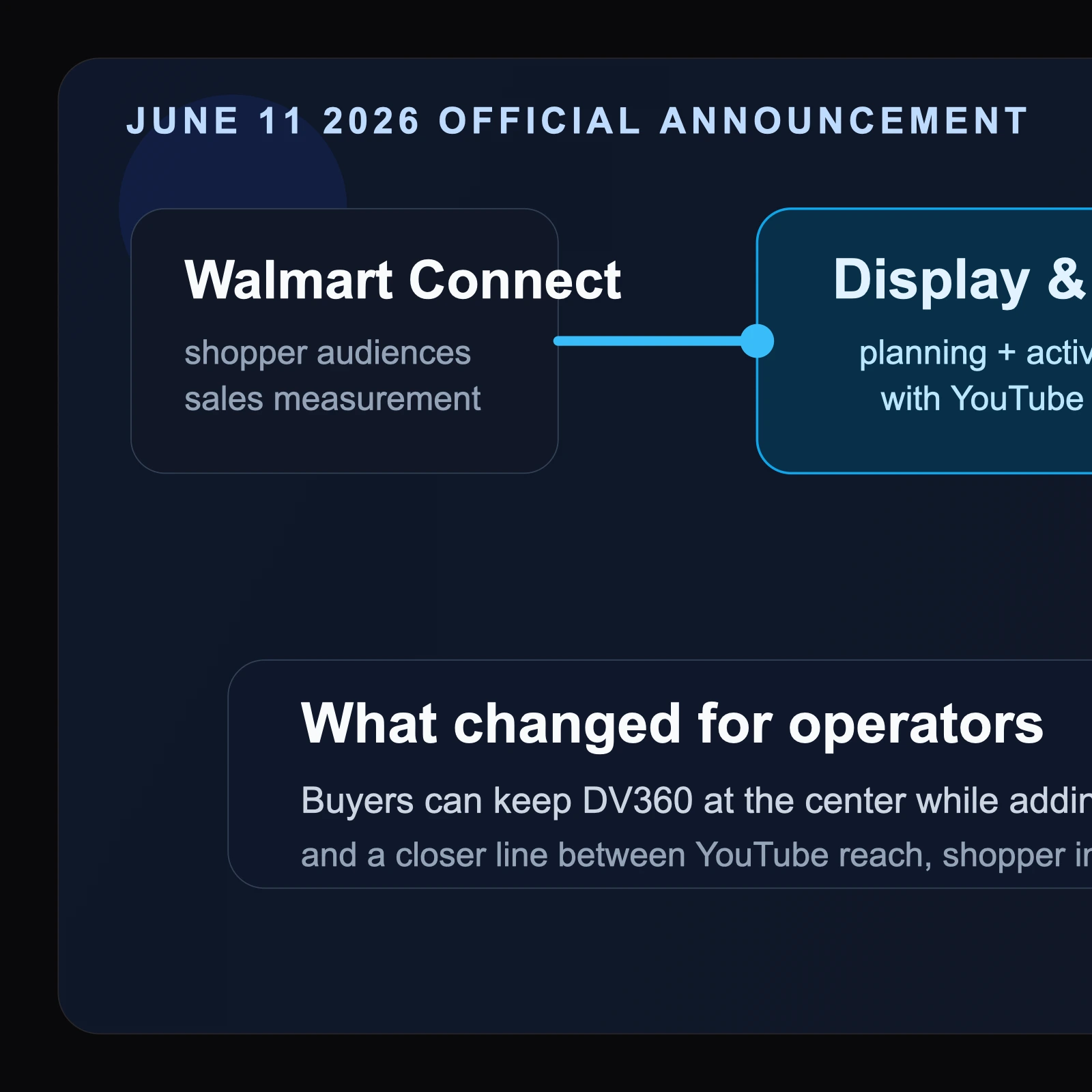
Google and Walmart both published official details on June 11, 2026 showing that Walmart Connect audiences and sales measurement are being brought into Display & Video 360 for YouTube campaigns. For agencies, commerce media teams, and enterprise advertisers, the practical shift is not just "more retail media inventory." It is the chance to plan YouTube video through an existing DV360 workflow while tying audience activation and outcome measurement more directly to Walmart shopping behavior and Walmart sales.
The story matters because the official rollout language is more nuanced than the headline. Google's post says the integration is rolling out now in Display & Video 360, starting with YouTube campaigns. Walmart's matching announcement says it is currently in a closed proof of concept phase and will become more widely available later. That means sophisticated teams should read this as a high-value access expansion, but not yet as a universal self-serve feature.
What changed
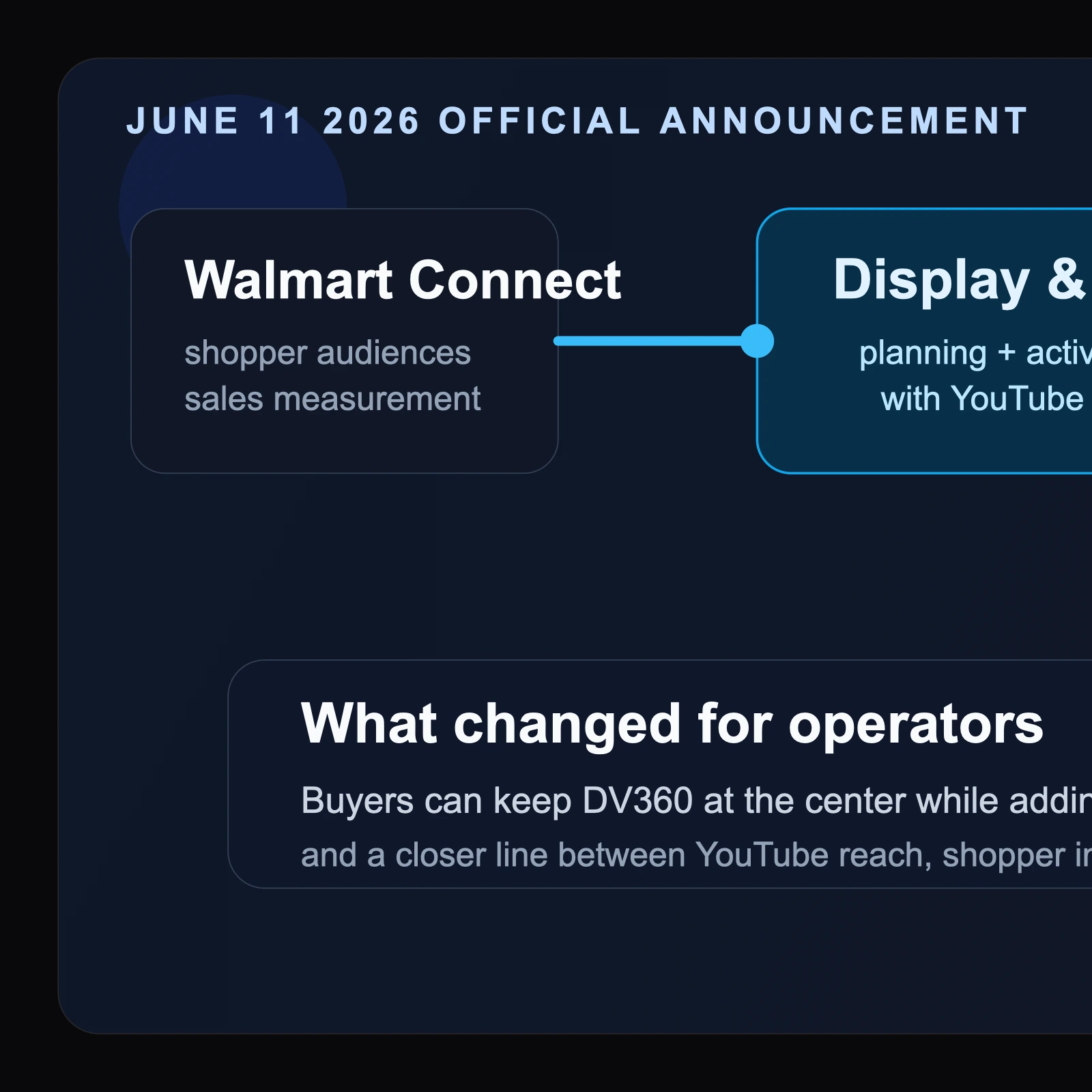
Google's official announcement says advertisers can now use Walmart Connect audience insights inside DV360 to reach shoppers through YouTube campaigns and then measure how those ads affect sales at Walmart. Google also says advertisers can pair those audience and measurement capabilities with the platform's broader planning and activation workflow, including what it calls the Gemini advantage in campaigns.
Walmart's official article adds important operator detail. It says the new partnership lets advertisers activate Walmart Connect audiences with DV360 and measure how video reach and awareness campaigns impact sales at Walmart. Walmart also makes clear that this starts with YouTube, that more inventory types are expected later, and that the current release is not yet broad open access.
The scale claim is also source-backed rather than implied. Google's post cites Walmart as serving 150 million weekly U.S. customers, and Walmart repeats that scale positioning on its about page. That is why this is more than a feature connector. It joins a major U.S. retail media signal set with one of the most established programmatic buying environments used by agencies and enterprise brands.
| Confirmed point | Official source | Why it matters operationally |
|---|---|---|
| Google and Walmart announced the DV360 integration on June 11, 2026. | Google Marketing Platform blog and Walmart Connect article | Teams should treat older retailer-media planning assumptions as outdated immediately. |
| The integration starts with YouTube campaigns inside Display & Video 360. | Google announcement | Video buying desks can test retail audience activation without rebuilding their existing DV360 operating model. |
| Advertisers can use Walmart audiences and measure how exposure affects Walmart sales. | Walmart Connect article | Upper-funnel YouTube campaigns gain a more commerce-linked measurement story. |
| Google says the rollout is starting now, but Walmart says the program is in a closed proof of concept and wider access comes later. | Google announcement and Walmart Connect article | Availability is likely gated by account-team access, not instant self-serve enablement. |
| Walmart positions the network around approximately 150 million U.S. customers served weekly. | Walmart Connect about page | The audience pool is big enough to matter for national brand planning, not just experimental tests. |
Why it matters
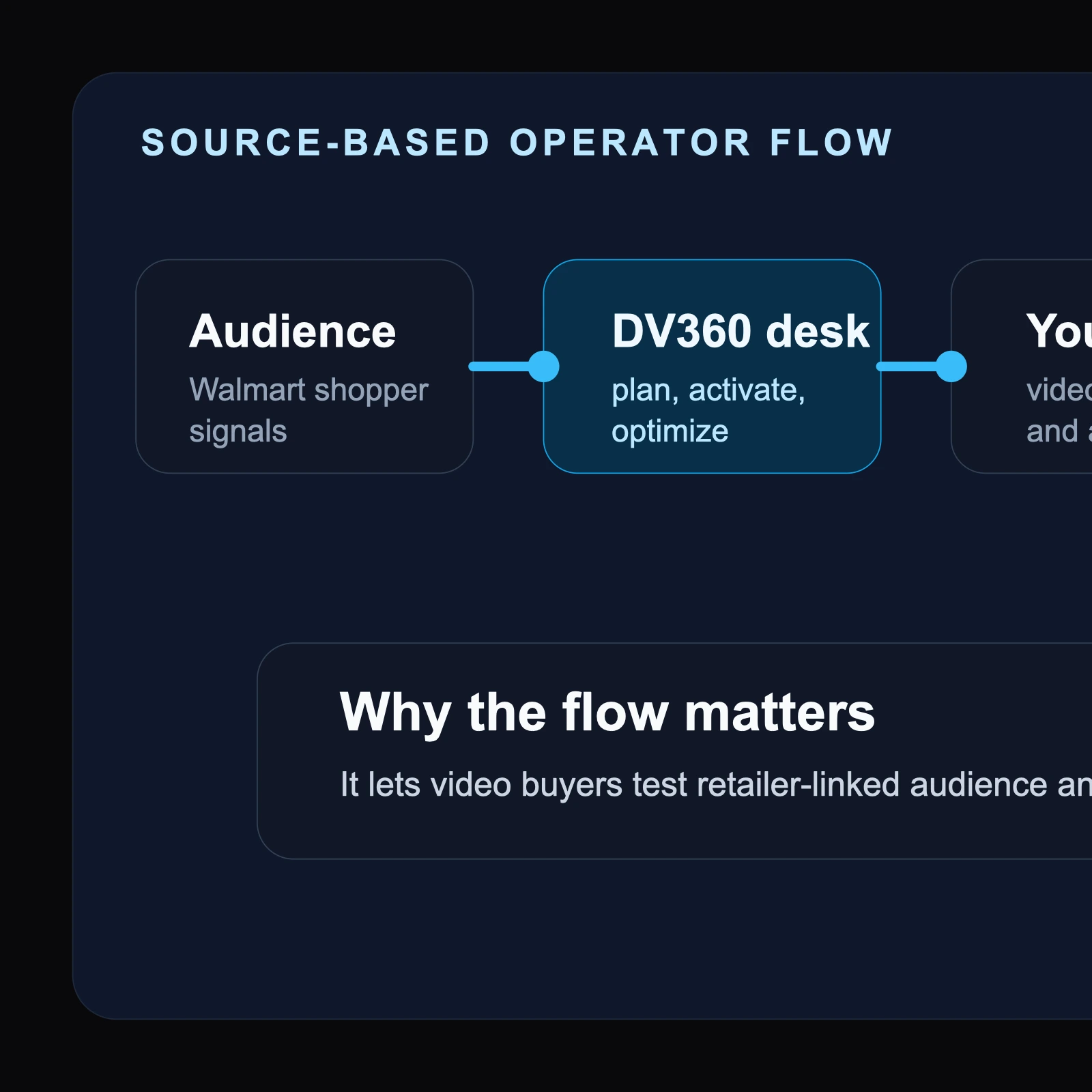
For years, many brand teams have had to split video planning, retail media activation, and commerce measurement across different teams and tooling. This partnership suggests a tighter loop. If a buyer is already working in DV360, they can potentially layer Walmart shopper audiences into YouTube campaigns and evaluate impact against Walmart sales signals instead of treating video as a mostly top-funnel awareness line with weak retail feedback.
That is strategically important for U.S.-led advertisers and for multinational teams in Canada, the United Kingdom, Australia, and Europe that often use the U.S. market as an early read on where commerce media is heading. Walmart's article explicitly frames the value around combining premium video reach with signals tied to real shopping behavior and business outcomes. Google frames it as a more connected shopper-journey workflow inside DV360. Read together, the message is that video, audience intelligence, and retail outcomes are being pulled closer together operationally.
There is also a planning discipline angle. Teams using the Digital Marketing Budget Planner or the Marketing ROI Calculator can start modeling YouTube retail-media experiments less like soft-awareness spend and more like measurable demand generation. The same operators should also treat this as a signal to tighten visibility and mention tracking, because AI-assisted discovery and commerce media are converging faster than many reporting stacks assume. That makes resources like the GEO Visibility Checklist and brand mention measurement guidance more relevant, not less.
Who is affected
The most affected teams are national brands, agencies, commerce media specialists, and retail intelligence groups already running YouTube and retail media in parallel.
- Agency trading desks that already use DV360 and need better retailer-linked outcome signals.
- CPG and consumer brands that want YouTube reach tied more directly to Walmart sales impact.
- Retail media and shopper marketing teams trying to connect awareness budgets to business outcomes.
- Analytics and finance teams that need a cleaner story for incrementality, not just impression delivery.
- Adtech and internal platform teams evaluating whether retailer audiences should become part of their standard DV360 workflow.
What to do next
Treat the June 11 announcement as a readiness prompt, not as a generic headline.
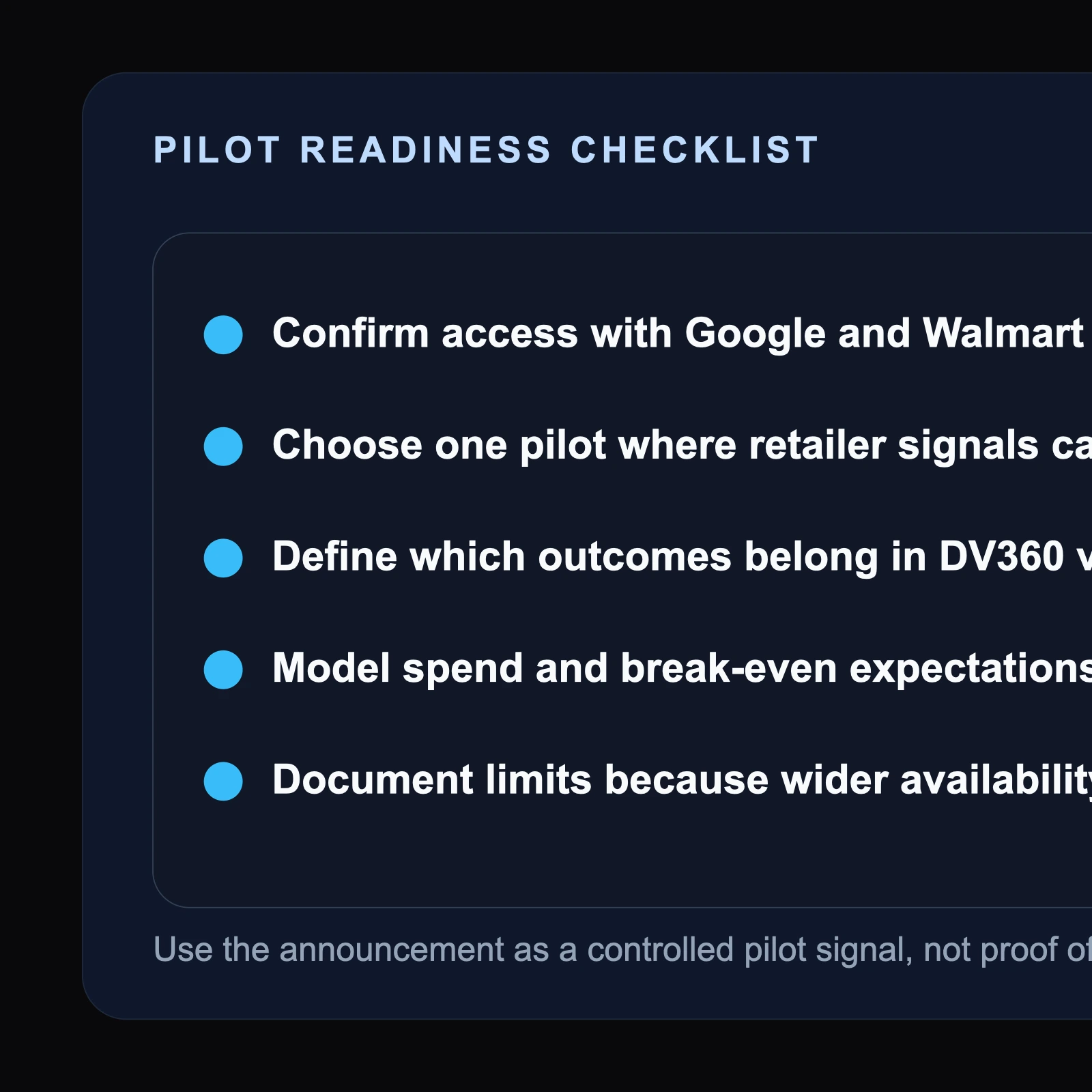
- Ask your Google and Walmart account teams whether your organization is eligible now, because both official announcements imply controlled access rather than universal rollout.
- Review where YouTube planning, retailer audience strategy, and sales measurement still sit in separate operating silos.
- Define one or two pilot use cases where Walmart shopper signals could change creative, targeting, or budget allocation in a meaningful way.
- Set expectations with stakeholders that the current phase appears limited, and that broader inventory expansion is still pending according to Walmart's announcement.
- Build a measurement brief before activating anything so your team knows which success criteria belong in DV360 reporting, which belong in retailer measurement, and which need to be translated into internal ROI models.
- Pair any pilot with stronger visibility tracking and demand capture hygiene across owned properties, especially if YouTube campaigns are meant to support wider search and AI-discovery outcomes.
What remains uncertain
The biggest uncertainty is availability. Google's June 11 post says the integration is rolling out now, while Walmart's June 11 article says it remains in a closed proof of concept and will be more widely available later. That suggests the capability is real and active, but not equally accessible across all advertisers, agencies, and markets yet.
There are also open questions around exactly which inventory types arrive next, how measurement windows and reporting views will be exposed inside day-to-day workflows, and how much setup work will still require hands-on support from account teams. Neither announcement publishes a broad self-serve product matrix, a public pricing model, or a country-by-country availability table.
The practical takeaway on June 11, 2026 is that Google and Walmart are moving retail audience activation and sales measurement closer to one of the main video-buying desks marketers already use. That is meaningful for brand, commerce, and agency teams, but the smart move now is disciplined pilot planning, not assuming broad availability before the access details catch up.