YouTube says Shorts is now the first short-form video surface with MRC brand-safety accreditation
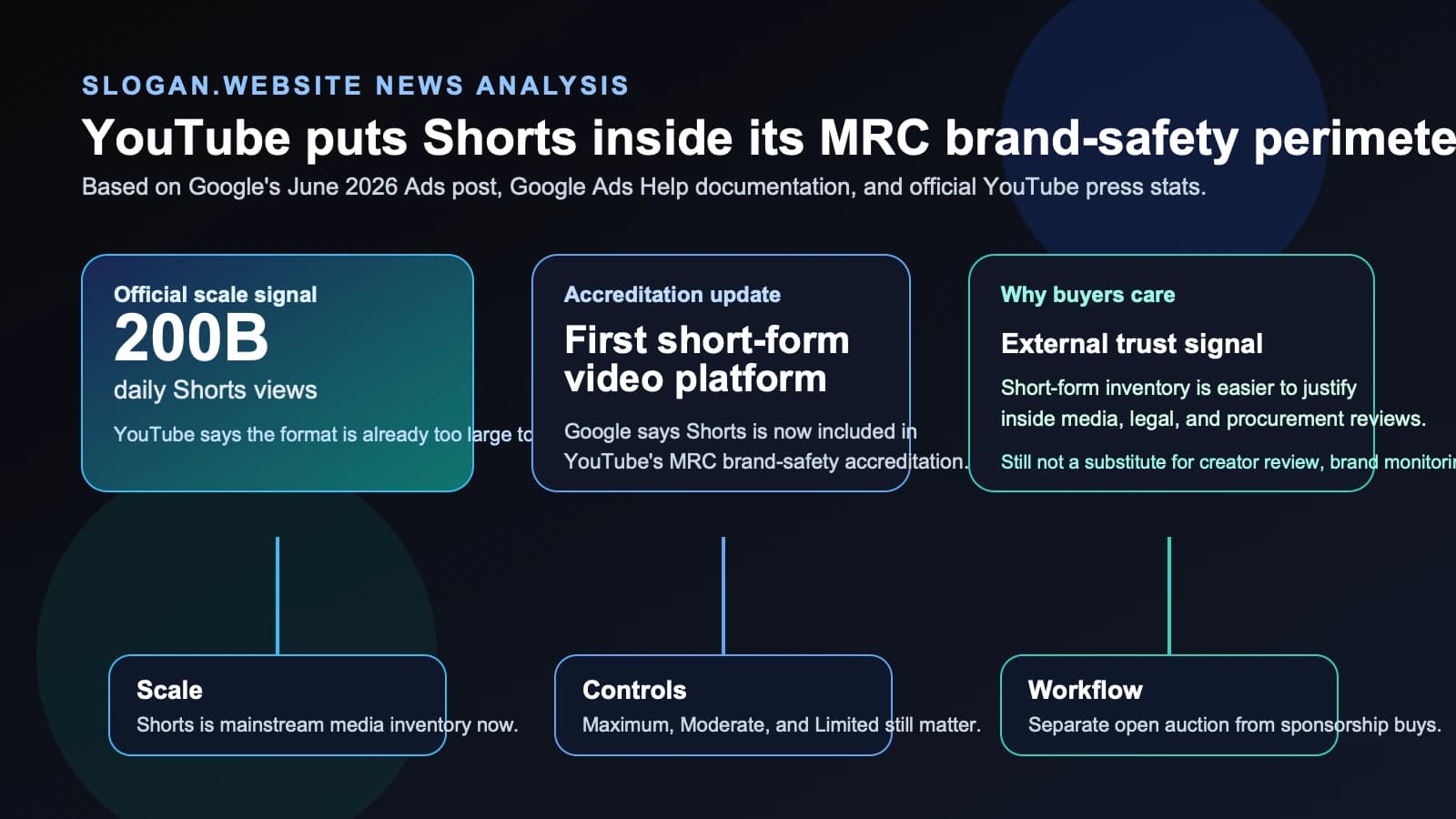
Google said in an official Ads & Commerce post published in early June 2026 that YouTube Shorts is now included in YouTube's Media Rating Council brand-safety accreditation, making YouTube the first platform to earn MRC brand-safety accreditation for short-form video. For marketers, agencies, and creator-led brands, the shift is not a vanity badge. It is a more usable buying signal at a moment when short-form inventory is large, fast-moving, and often harder to govern than traditional video placements.
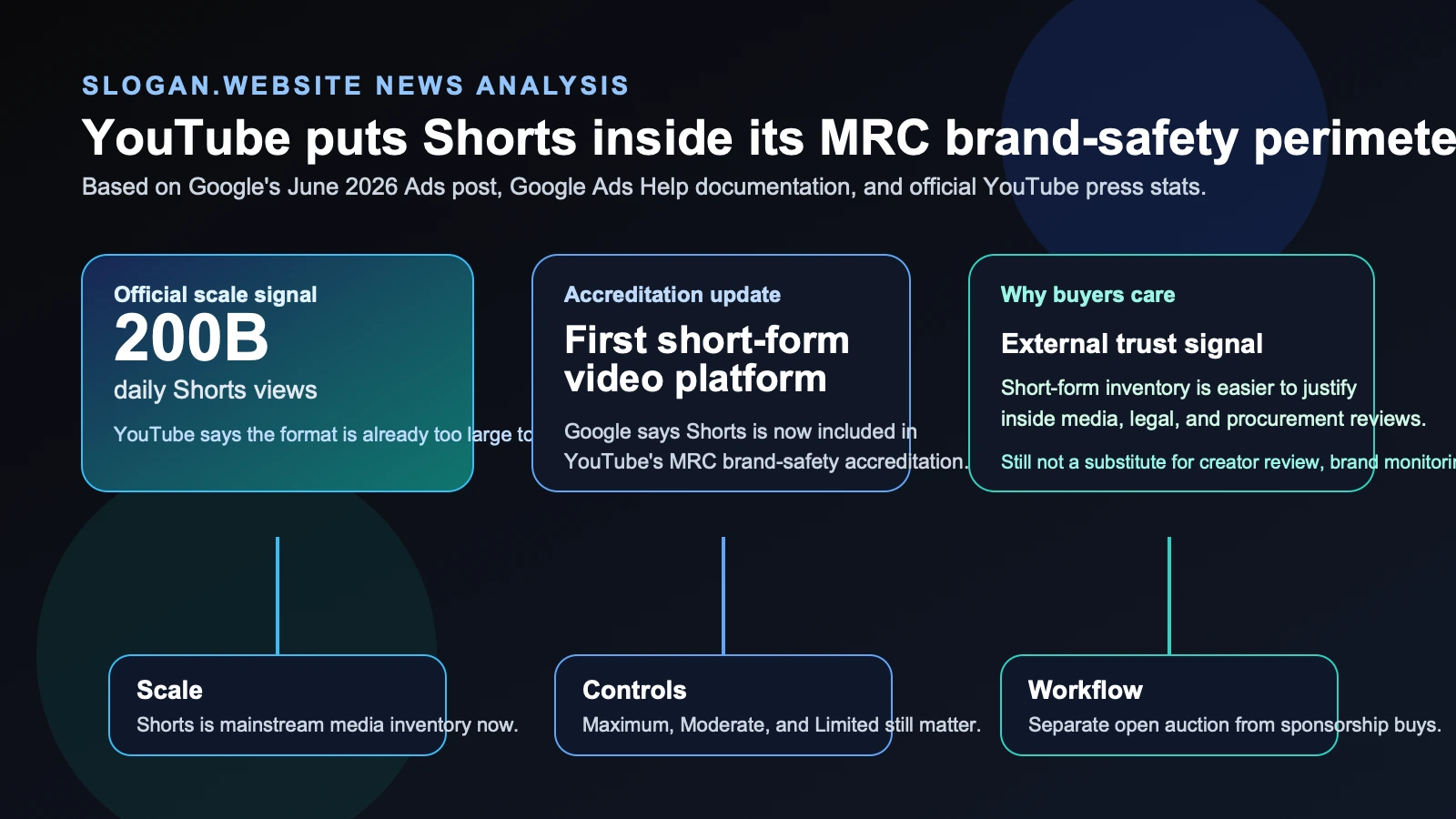
The timing matters. In the same official post, Google said Shorts is now averaging 200 billion daily views, a scale figure also reflected on YouTube's official press statistics page. That means the accreditation update lands on an inventory surface that is already too big to treat as experimental. If your team allocates budget across creator video, upper-funnel reach, app growth, or brand response, this changes how confidently you can discuss short-form risk controls with stakeholders.
What changed
The core announcement is narrow but meaningful. Google's official post says YouTube has received Media Rating Council brand-safety accreditation for the sixth consecutive year, and that the 2026 update expands that accreditation to YouTube Shorts for the first time. Google also says the certification spans YouTube's Maximum, Moderate, and Limited inventory suitability tiers, which are documented in the official Google Ads Help page for content suitability.
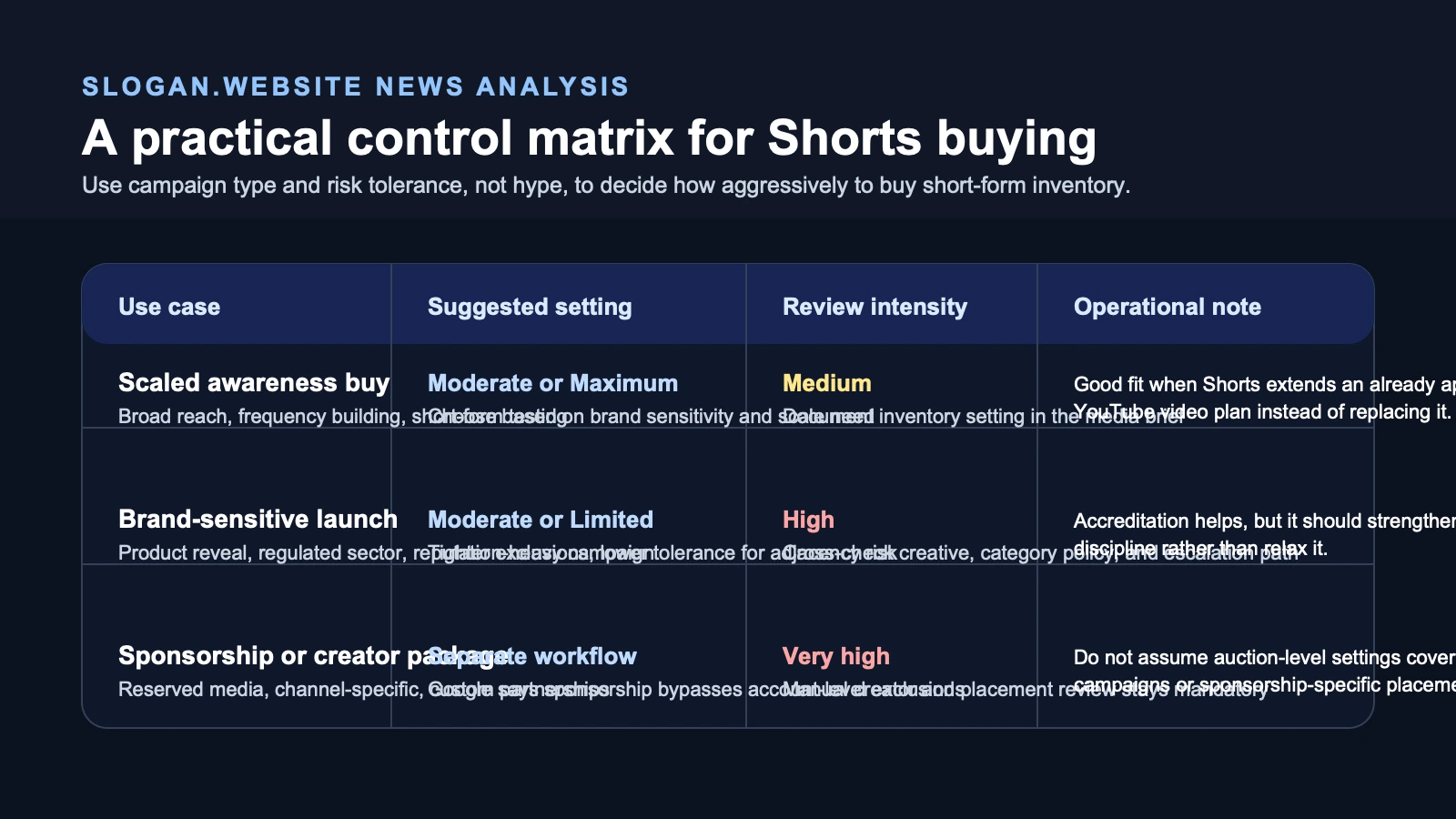
That matters because the announcement does not just say "YouTube is safe." It ties Shorts to the same control system advertisers already use to manage suitability across broader YouTube inventory. Google's help documentation says those inventory types let buyers choose how strict they want content suitability to be, from broader reach to tighter exclusions. The same documentation also notes that YouTube Sponsorship campaigns automatically bypass account-level content suitability exclusions because they are bought against specific trusted content, which is an important operational distinction for teams mixing reservation buys with broader reach campaigns.
| Confirmed point | Official source | Why it matters in practice |
|---|---|---|
| YouTube says Shorts is now included in its MRC brand-safety accreditation. | Google Ads & Commerce post | Short-form buying now carries a clearer external trust signal for procurement, media, and brand teams. |
| Google says YouTube is the first platform to receive MRC accreditation for short-form video. | Google Ads & Commerce post | The company is trying to differentiate Shorts from looser short-form environments on governance, not just audience scale. |
| The accreditation spans Maximum, Moderate, and Limited inventory suitability tiers. | Google Ads Help: content suitability | Buyers can map Shorts campaigns to existing suitability settings instead of building an all-new control model. |
| YouTube says Shorts now averages 200 billion daily views. | YouTube for Press | This is no longer fringe inventory; governance choices can affect meaningful spend and reach. |
| YouTube Sponsorship campaigns bypass account-level suitability exclusions. | Google Ads Help: content suitability | Teams running creator partnerships and auction-based campaigns should not assume the same safety settings apply everywhere. |
Why it matters
Short-form video has become a budget conversation, not just a creative-format conversation. The practical problem for many teams has been governance: it is easy to test short-form inventory, but harder to explain to legal, brand, and finance leaders how placements are controlled once campaigns move beyond a narrow creator shortlist.
This update gives YouTube sales and media teams a simpler answer. Accreditation does not guarantee performance, and it does not mean every placement is automatically right for every brand. It does mean buyers now have a more defensible basis for saying Shorts sits inside an externally reviewed safety framework instead of a purely self-attested promise.
That matters most for teams managing cross-market media programs in the United States, Canada, the United Kingdom, Australia, and Europe, where governance reviews are increasingly part of normal media planning. If you already use tools like the Marketing ROI Calculator, the Digital Marketing Budget Planner, or your own media scorecards, this update should change how you weight Shorts in planning conversations about reach versus risk.
Who is affected
The most affected teams are enterprise and upper-midmarket advertisers running video across multiple surfaces, agencies that need procurement-friendly buying rationales, app and ecommerce teams testing incremental reach, and brand-led marketers who previously treated short-form as a channel that was hard to defend internally.
Creator-led businesses are also affected. Shorts may now look more viable for brands that want creator-adjacent scale without moving entirely into unmanaged social placements. That does not eliminate the need for brand monitoring. Teams should still pair placement controls with message monitoring, creator review, and visibility tracking through workflows like the GEO Visibility Checklist and guidance on tracking brand mentions and visibility.
What to do next
Treat this as a workflow change, not as a blind-buy signal.
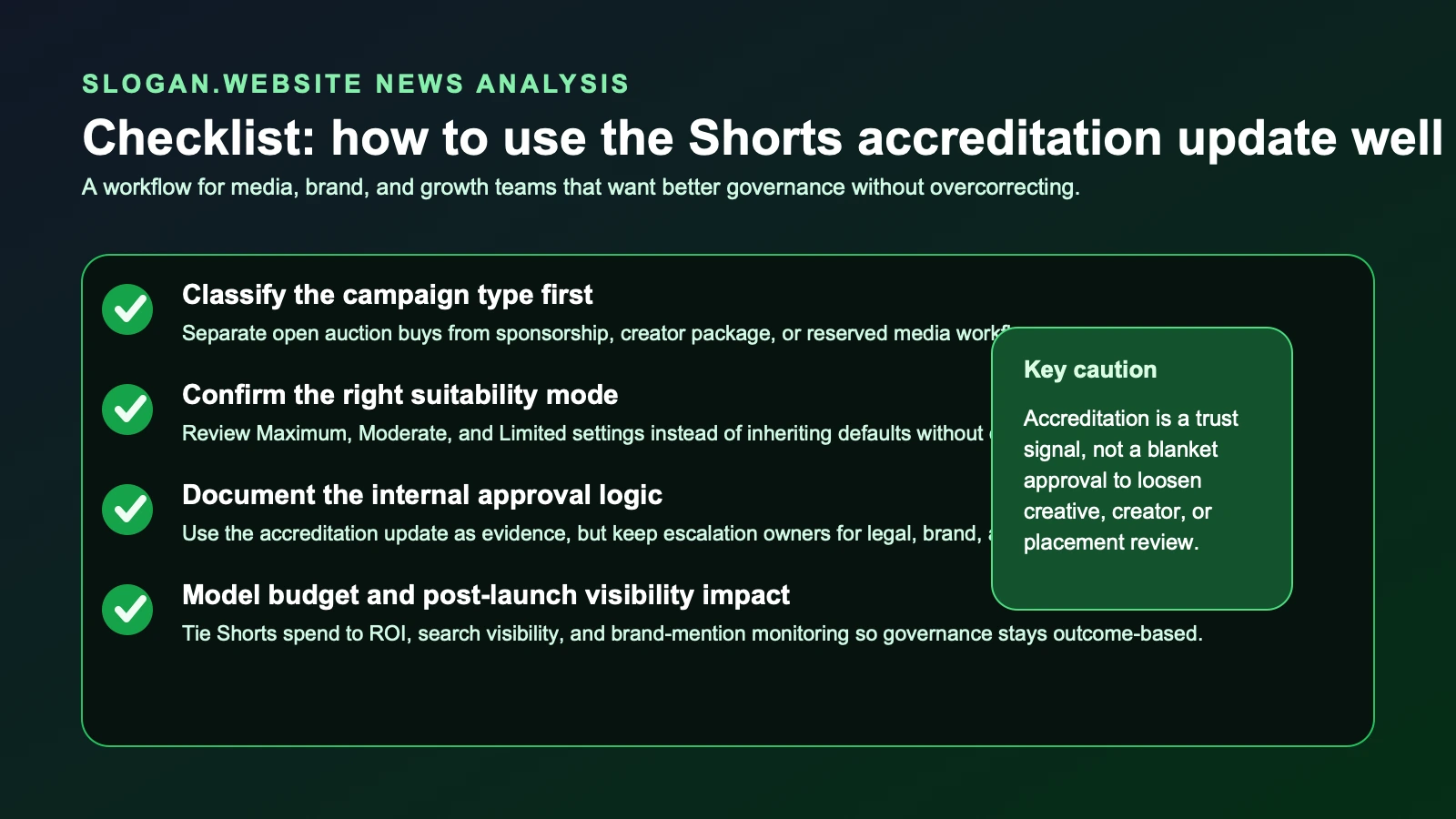
- Split your YouTube plan by campaign type: open auction, managed creator programs, and sponsorship or reservation inventory should be reviewed separately.
- Revisit your current Maximum, Moderate, and Limited inventory settings so Shorts inherits the right posture for the business objective.
- Update media briefing templates so teams record both the growth case and the suitability setting for each Shorts campaign.
- Run a budget scenario in the Digital Marketing Budget Planner to test whether Shorts should absorb incremental awareness spend or only tightly scoped experimental budget.
- Pair campaign reporting with brand and search visibility monitoring so spend decisions are tied to outcomes, not only impressions.
What remains uncertain
Google's announcement does not disclose new performance benchmarks, pricing changes, conversion lift, or whether advertisers using one suitability tier versus another should expect materially different campaign economics in Shorts. It also does not quantify how accreditation will affect inventory availability by market, vertical, or campaign objective.
There is also an important boundary around what this update does not solve. Accreditation helps with brand-safety confidence, but it does not replace creative judgment, creator due diligence, or market-by-market policy review. Teams should infer that Shorts is becoming easier to approve inside a governed media stack, not that brand-risk management is now automatic.
The most reasonable reading is narrower and still useful: Google is trying to turn Shorts from a high-scale but sometimes hard-to-justify format into a more procurement-ready media surface. For operators, that is enough to warrant a fresh look at budgeting, controls, and internal approval paths this quarter.