How to Start a Landscaping Business in 2026: Complete Guide
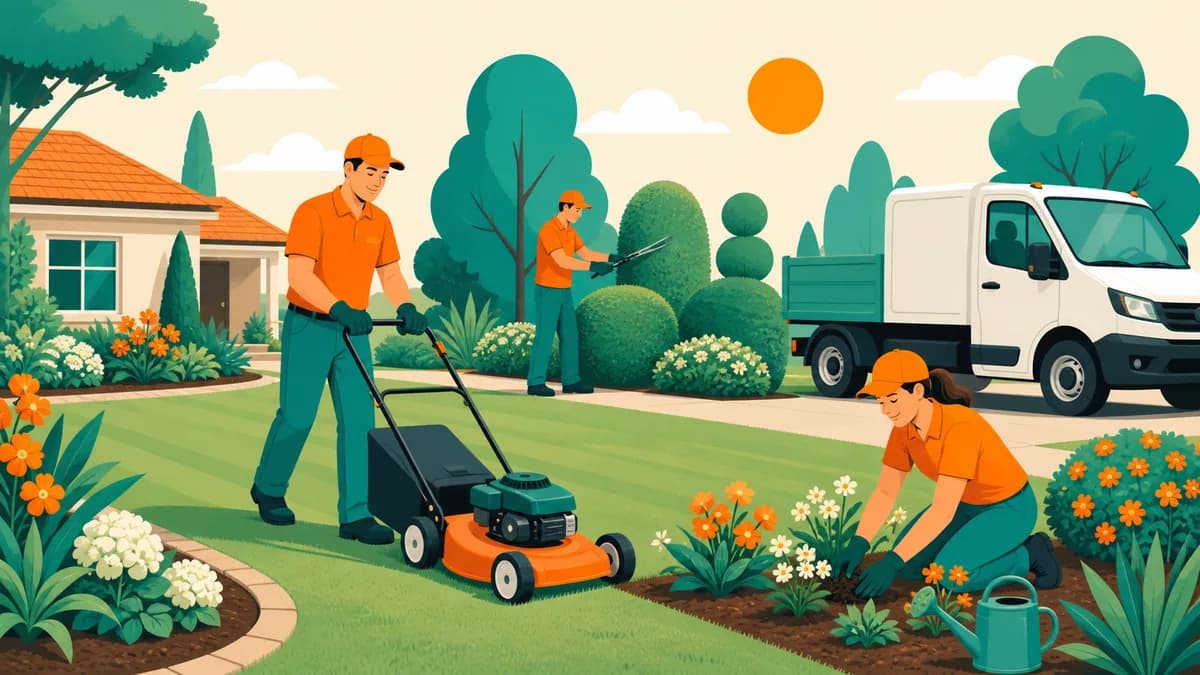
The landscaping and lawn care industry generates over $130 billion annually in the US, serving millions of residential and commercial customers who simply don't want to maintain their own properties. It's a business with low barriers to entry, high repeat-client rates, and clear paths to scale — but it requires physical stamina, reliable equipment, and sharp business management to build profitably.
This guide covers everything from your first equipment purchase to building a year-round revenue stream.
Services You Can Offer
Before buying a single piece of equipment, decide which services you'll offer. Each has different equipment requirements, pricing, and client acquisition strategies.
Lawn Maintenance (Core Service)
Mowing, edging, blowing, trimming — the bread-and-butter of most landscaping businesses. Regular recurring revenue from weekly or biweekly visits. High volume, moderate margins.
Landscaping Design and Installation
Planting beds, mulching, sod installation, retaining walls, walkways. Higher-value projects ($2,000–$50,000), but more labor-intensive and seasonal. Requires design skills or a partnership with a landscape designer.
Snow Removal
High-demand, high-margin service in northern states. Pairs perfectly with a landscaping business since the same clients who hire you in summer need you in winter. Equipment: snow blower or plow attachment.
Irrigation Systems
Installation and maintenance of sprinkler systems. Requires state licensing in many states, specialized knowledge, and specific tools. High ticket value ($3,000–$10,000 for installation).
Tree Services
Pruning, removal, stump grinding. Requires additional equipment (chainsaw, chipper, stump grinder) and carries higher liability risk. Usually a separate business or subcontracted out.
Seasonal Services
Spring cleanups, fall leaf removal, aeration and overseeding, fertilization programs. Layer these onto existing maintenance clients for significant revenue increases.
Startup Cost Breakdown
| Item | Cost |
|---|---|
| Commercial lawn mower (zero-turn) | $3,000–$10,000 |
| Truck and trailer | $5,000–$40,000 |
| Hand tools and small equipment | $1,000–$3,000 |
| Leaf blowers and string trimmers | $500–$2,000 |
| Business registration (LLC) | $50–$500 |
| Insurance | $500–$2,000/year |
| Website and marketing | $300–$1,000 |
| Working capital | $2,000–$5,000 |
| **Total** | **$12,350–$63,500** |
Equipment Deep Dive
Lawn Mower: The zero-turn mower is the workhorse of professional lawn care. Starting options:
| Mower | Price | Cut Width | Best For |
|---|---|---|---|
| Husqvarna MZ54 (residential ZTR) | $3,200–$3,800 | 54" | Starting out, smaller properties |
| Exmark Radius S-Series | $5,500–$7,000 | 52"–60" | Mid-size operation |
| Scag Turf Tiger (commercial) | $8,500–$12,000 | 52"–72" | Full commercial operation |
| Walk-behind (for small/gated yards) | $600–$2,000 | 21"–33" | Supplement to zero-turn |
String Trimmer: Budget $300–$600 for a commercial-grade trimmer (STIHL FS 94 R or Echo SRM-225 are industry standards). Don't buy residential-grade — they fail under daily professional use.
Leaf Blower: Backpack blower is essential. STIHL BR 600 ($400–$500) or Husqvarna 580BTS ($500–$600) are top commercial choices.
Truck and Trailer: You need a pickup truck (at minimum F-150 or equivalent) and an open utility trailer (6x12 or 7x16). A used F-250 or F-350 with a 16' trailer runs $15,000–$30,000 in good condition. New: $40,000–$70,000.
Safety equipment: Never skip it. Hearing protection ($15), safety glasses ($10), steel-toed boots ($80–$150), and gloves ($20) protect you from injuries that sideline the business.
Licensing Requirements
Business License
A general business license from your city or county is required ($25–$100/year). Register your LLC through your state's Secretary of State office ($50–$500).
Pesticide Applicator License
This is the most important license for landscaping businesses. If you plan to apply any herbicides, pesticides, or fertilizers — even Roundup — you need a state-issued pesticide applicator license.
Process: Study your state's pesticide laws and integrated pest management practices, pass an exam through your state's department of agriculture, and pay a licensing fee ($25–$150). Exam costs $50–$150. Licenses must be renewed every 1–3 years.
Why it matters: Operating without a pesticide license can result in fines up to $25,000+ and loss of operating rights. Customers can also hold you liable for lawn or garden damage from improper chemical application.
Contractor's License
Required in some states for irrigation installation, hardscaping (retaining walls, pavers), or jobs over a certain dollar value. Check your state's contractor licensing board.
Vehicle and Equipment Registration
Your truck and trailer must be properly registered and insured for commercial use. Personal auto insurance does not cover your vehicle when used for business.
Insurance Requirements
Landscaping is a physical business with real liability risks: mowing injuries, property damage (rocks through windows are extremely common), chemical misapplication, and worker injuries. Proper insurance is essential.
General Liability Insurance: $500–$1,500/year for $1M–$2M in coverage. Covers property damage (broken windows, damaged plants, irrigation lines cut) and bodily injury. This is your most important policy.
Commercial Auto: $1,200–$3,000/year. Required for your business truck and trailer.
Workers' Compensation: Required once you hire employees. Covers on-the-job injuries. Costs vary by state: budget $2,000–$5,000/year for your first employees.
Equipment Insurance: Covers theft or damage to your mowers and tools. Often bundled with a Business Owner's Policy (BOP).
For full coverage details and provider comparisons, see our landscaping insurance guide.
Pricing Strategies
Residential Lawn Mowing Pricing
Pricing varies by region, property size, and service frequency:
| Property Size | Frequency | Price Per Visit | Monthly (4 visits) |
|---|---|---|---|
| Small (under 5,000 sq ft) | Weekly | $35–$55 | $140–$220 |
| Medium (5,000–10,000 sq ft) | Weekly | $50–$80 | $200–$320 |
| Large (10,000–20,000 sq ft) | Weekly | $75–$120 | $300–$480 |
| Acreage (1+ acre) | Weekly | $100–$200+ | $400–$800+ |
Monthly contracts are better for your business than per-visit pricing. They guarantee income, allow you to optimize routes, and reduce the friction of clients skipping a mow during tight weeks.
Commercial Property Pricing
Commercial properties (offices, HOAs, shopping centers) are priced per square foot of maintained area:
- Standard lawn maintenance: $0.01–$0.03/sq ft per visit
- Monthly maintenance contracts: $200–$3,000+/month depending on size
Landscape Installation Pricing
For landscaping projects (mulch, plants, beds), the standard formula is: Materials cost × 3 + labor hours × $45–$75/hour
This accounts for material markup, overhead, and a reasonable profit margin. Adjust labor rate upward for complex or specialty work.
Finding Your First Clients
Door-to-Door Canvassing
The most effective method for new landscaping businesses. Walk neighborhoods with overgrown or unkempt lawns and knock on doors. Be professional, bring business cards, and offer a free estimate or first mow discount.
Script: "Hi, I run a local lawn care business and I noticed your lawn could use some attention. I'm currently taking on new clients in this area — would you like a free estimate for regular maintenance?"
Expect 1 in 10–15 conversations to convert to a client. In a 2-hour canvassing session, that's 1–3 new clients.
Yard Signs
Place signs (with permission) in completed project lawns. A simple sign: "[Your Business Name] — Lawn & Landscaping — [Phone Number]." Signs cost $50–$150 for 10–20 signs. Neighbors notice who does the nicest lawns on the street.
Google Local Services Ads
Appear at the very top of Google when someone searches "lawn care near me" or "landscaping [your city]." You pay per lead (typically $15–$40/lead) and Google verifies your license and insurance. High-quality, exclusive leads.
Setup cost: $0 (pay per lead). Monthly lead budget: $200–$600 for a solid flow.
Angi and Thumbtack
Service marketplace platforms where homeowners post projects. Angi leads run $20–$60 each; Thumbtack varies. Conversion rates of 20–35% make these profitable if managed well. Read reviews carefully and respond within minutes — speed matters enormously.
Referral Program
Offer every satisfied client $25 in service credit for each referral who becomes a recurring client. Word-of-mouth referrals close at 80–90% and have zero acquisition cost beyond the credit.
Nextdoor
Create a business account and post in local Nextdoor groups. Landscaping and lawn care recommendations are frequently requested. One positive Nextdoor mention can generate 5–15 inquiries.
Landscaping Software
Managing clients, routes, invoices, and crew scheduling in spreadsheets doesn't scale. Invest in purpose-built software when you reach 20+ clients.
| Software | Monthly Cost | Best For |
|---|---|---|
| Jobber | $49–$149/month | Growing teams, quoting, invoicing |
| Aspire | Custom pricing | Mid-to-large landscaping businesses |
| LMN (Landscape Management Network) | $99–$299/month | Estimating, job costing, scheduling |
| Service Titan | Custom pricing | Larger operations, enterprise features |
| Yardbook | Free–$50/month | Solo operators, budget-conscious startups |
For a solo operator just starting: Yardbook (free) or Jobber's Lite plan ($49/month) handle scheduling, invoicing, and client management without overwhelming complexity. Upgrade to LMN once you have a crew and need job costing.
Seasonal Revenue Strategy
The Problem With Seasonal Income
In northern states, mowing season is roughly April–November (about 30 weeks). If your only service is mowing, you have 22 weeks without revenue. That's financially unsustainable — you need to pay truck payments, insurance, and often employee costs year-round.
Solutions
Snow removal: The most obvious complement to lawn care. The same trucks and trailers you use in summer plow in winter. Snow removal contracts often run $200–$600/month per commercial property. Charge per-push rates for residential ($40–$120/push) or seasonal contracts ($500–$1,500/season).
Holiday lighting installation: December service with premium pricing ($300–$2,000 per home). No ongoing equipment cost — just your labor and rental/purchased lights.
Fall and spring cleanups: These are often priced at 2–3x the normal mowing rate. A thorough fall cleanup (leaves, beds, final mow, winterization prep) might run $250–$800 for a property you normally mow for $60/week.
Irrigation system winterization: Blowing out irrigation systems before the first freeze. Quick jobs at $75–$150 each that generate $1,000–$2,000/day with the right route density.
Year-round maintenance contracts: Bundle mowing, fertilization, snow, and cleanup into one annual contract. Divide the total by 12 for equal monthly payments. Clients love the predictable cost; you love the predictable income.
Hiring Your First Employee
When to Hire
Hire when:
- You're turning away work consistently
- You're too physically exhausted to maintain quality
- You're fully booked at 35–45 hours/week of billable work
A second person on your crew allows you to nearly double your route capacity while your fixed costs (truck, equipment, insurance) barely change.
Finding Landscaping Workers
- Indeed and ZipRecruiter: Post for "landscaping crew member" at $16–$22/hour for experienced workers
- Craigslist: Still effective for trade labor
- Word of mouth: Ask current employees for referrals (offer $50–$100 bonus for a hire who stays 90 days)
H-2B Visa Program
The H-2B visa program allows landscaping businesses to hire seasonal foreign workers when they can demonstrate insufficient US worker availability. The process:
- File a temporary labor certification with the Department of Labor (6–8 months before you need workers)
- Get USCIS approval
- Workers apply for H-2B visas at US consulates
Reality: H-2B is bureaucratically intensive and best suited for companies needing 5+ seasonal workers. Most small operators hire locally. NALP (National Association of Landscape Professionals) offers H-2B resources and guidance.
Equipment Financing
Buying a zero-turn mower, truck, and trailer outright is a significant capital outlay. Financing options include:
Dealer financing: Husqvarna, Exmark, and Scag dealers all offer financing programs at 0–9.9% interest for qualified buyers. Often the easiest option for equipment under $15,000.
Equipment loans: Community banks, credit unions, and online lenders (National Funding, Balboa Capital) offer loans specifically for commercial equipment. Rates: 6–15% depending on credit.
Line of credit: Once established, a business line of credit lets you finance equipment and supplies as needed.
For a full review of small business financing options, see our equipment financing guide.
Build Your Landscaping Brand
Your brand is what clients remember and what makes them refer you. A professional name, branded truck (magnetic signs or a vinyl wrap for $800–$2,500), and clean uniforms signal that you're running a real business — not just a side hustle.
Use our Slogan Generator to create a tagline that captures your brand identity. The best landscaping slogans are memorable, play on transformation (before/after), and communicate reliability. Use it on your truck, website, and business cards.
For more client acquisition and marketing strategies, read our small business marketing ideas guide.
Frequently asked questions
How much does it cost to start a landscaping business?
A basic solo landscaping operation (mowing and maintenance) can start for $12,000–$25,000 with a used zero-turn mower, basic hand tools, and a trailer. A full-service landscaping business with a truck, quality equipment, and a small team costs $40,000–$80,000 to launch properly.
Do I need a license to start a landscaping business?
Most states don't require a general landscaping license, but you typically need: a business license from your city or county, a pesticide applicator license if you apply herbicides or pesticides (required in all states), and a contractor's license for certain hardscaping or irrigation work. Check your state's agriculture department for pesticide licensing requirements.
How much can I charge for landscaping services?
Lawn mowing rates vary by region but typically run $35–$80 per visit for a standard residential lawn. Monthly maintenance contracts run $100–$300/month per residential property. Landscaping design and installation projects range from $1,500 to $50,000+ depending on scope.
How do I get my first landscaping clients?
Door-to-door canvassing in target neighborhoods is the fastest way to land your first clients. Bring a professional flyer, introduce yourself, and offer a free first mow or seasonal special. Google Local Services Ads and Nextdoor work well for ongoing lead generation. Yard signs in completed project lawns generate neighborhood referrals.
Is landscaping a seasonal business?
In northern states, landscaping is heavily seasonal (April–November for mowing; December–March for snow removal). In southern and western states, year-round mowing is common. Smart landscaping business owners stack complementary services — snow removal, holiday lighting, spring cleanups, and irrigation winterization — to smooth out revenue throughout the year.