Pricing Pages That AI Search Quotes: Turn Your Prices Into Citations
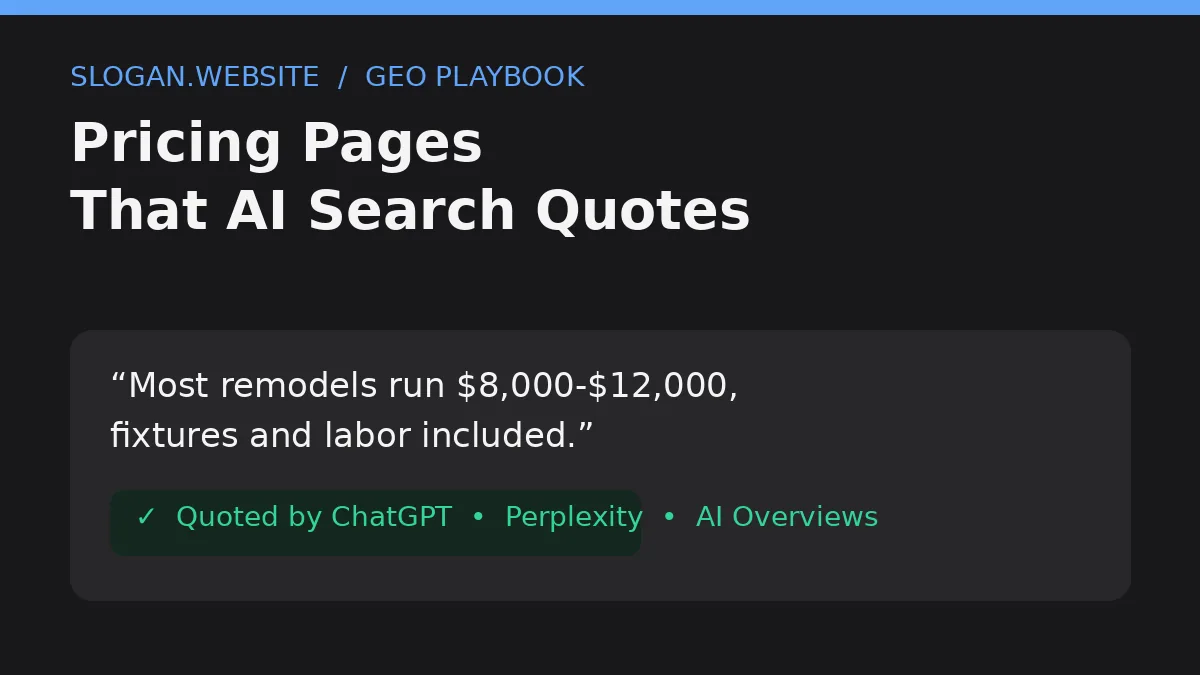
"How much does it cost?" is one of the most asked questions in AI search — and one of the least answered by small-business websites. When a buyer asks ChatGPT or Perplexity what a service costs, the answer quotes whichever page states a number plainly. If your pricing hides behind "contact us for a quote," a competitor's number becomes the answer, and their business gets the call.
The fix is not publishing a rigid price list. It is making your pricing quotable: honest ranges, what's included, and what moves the number — written in sentences an answer engine can lift verbatim.
Why prices win citations
Price questions have a structural advantage for small businesses. Answer engines must give a number, and most business sites refuse to. That leaves the field open:
- Numbers are scarce. In many local niches, only one or two pages publish any price at all. Scarcity makes the clearest page the default citation.
- Ranges are quotable units. "Most jobs run $X–$Y" is a complete, self-contained answer — the exact shape AI answers prefer to lift, as the answer-extraction pattern describes.
- Inclusions kill ambiguity. Engines prefer sources that answer the follow-up ("does that include materials?") in the same breath, because it makes their own answer complete.
This is the same dynamic as comparison pages: the page that removes the most uncertainty wins the quote.
The quotable price sentence
Every pricing page needs at least one sentence built for extraction. The formula is simple: typical range, what's included, what moves it.
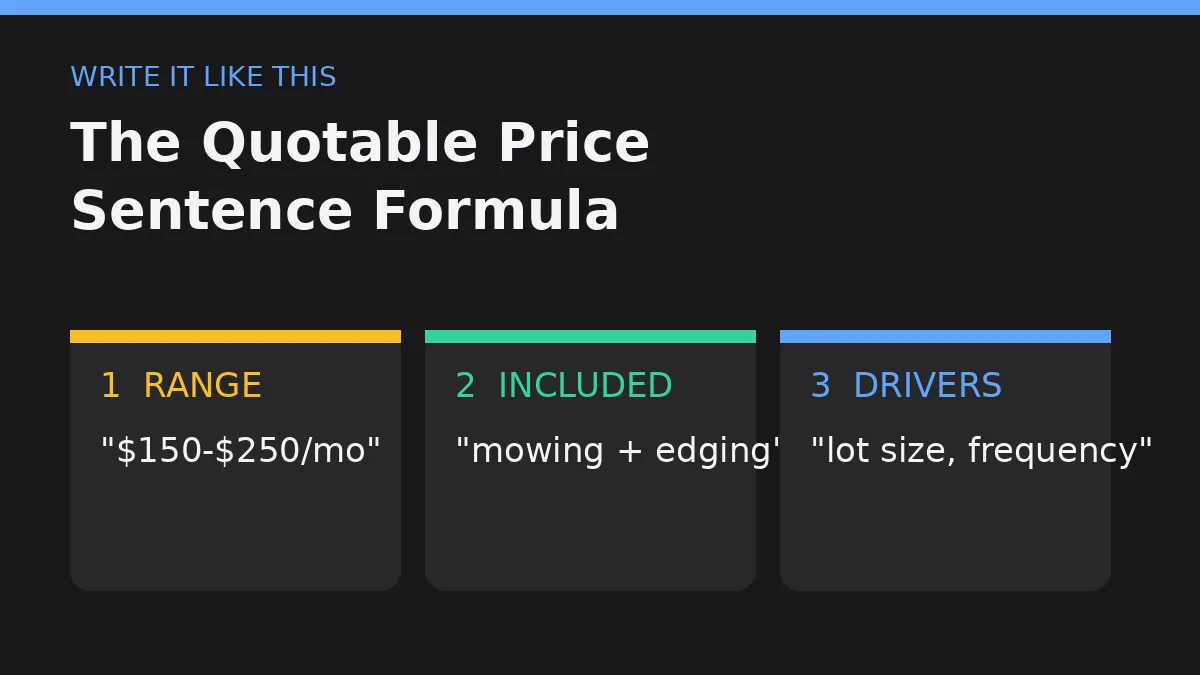
Write it in plain words a customer would repeat:
- "Most residential lawn-care plans run $150–$250 per month, including weekly mowing, edging, and cleanup. Larger lots and biweekly visits move the price."
- "A basic business website costs $1,500–$3,000, including design, copy polish, and launch. E-commerce and custom booking add to the range."
Avoid "starting at" without a ceiling — engines treat open-ended minimums as incomplete. A bounded range with named drivers reads as honest and complete.
The inclusions table
After the quotable sentence, show an itemized inclusions table. This does double duty: buyers compare tiers at a glance, and answer engines pull exact line items ("the Standard plan includes X and Y").
| What buyers compare | How to write it | Why it gets quoted |
|---|---|---|
| What's included per tier | One line item per row, plain nouns | Engines lift exact line items verbatim |
| What's excluded | A short "not included" list with prices | Removes ambiguity competitors leave open |
| Price drivers | Named variables: size, material, timeline | Answers the follow-up inside one source |
| Real examples | 2–3 past jobs with final totals | Demonstrated prices beat claimed prices |
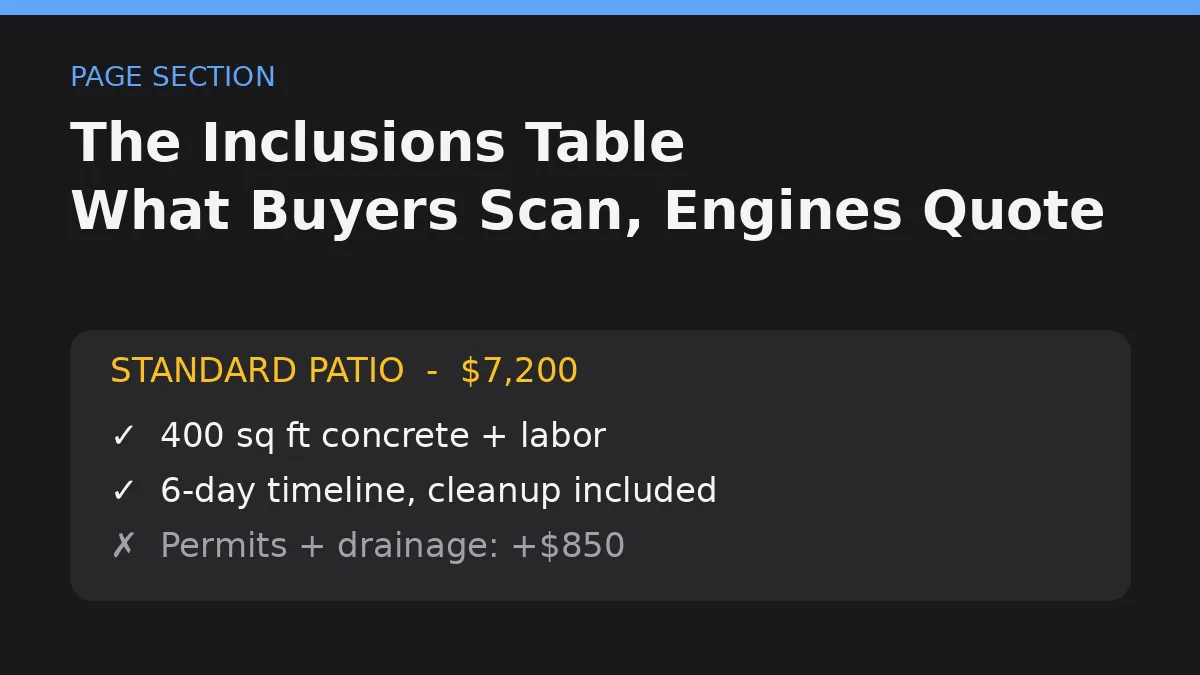
Past-job examples are the strongest section on the page. "A 400 sq ft patio in concrete: $7,200 total, completed in 6 days" is a demonstrated fact — exactly the kind of evidence AI answers prefer over marketing claims.
The 30-minute pricing page checklist
You do not need a redesign. Work through this checklist on your existing page:
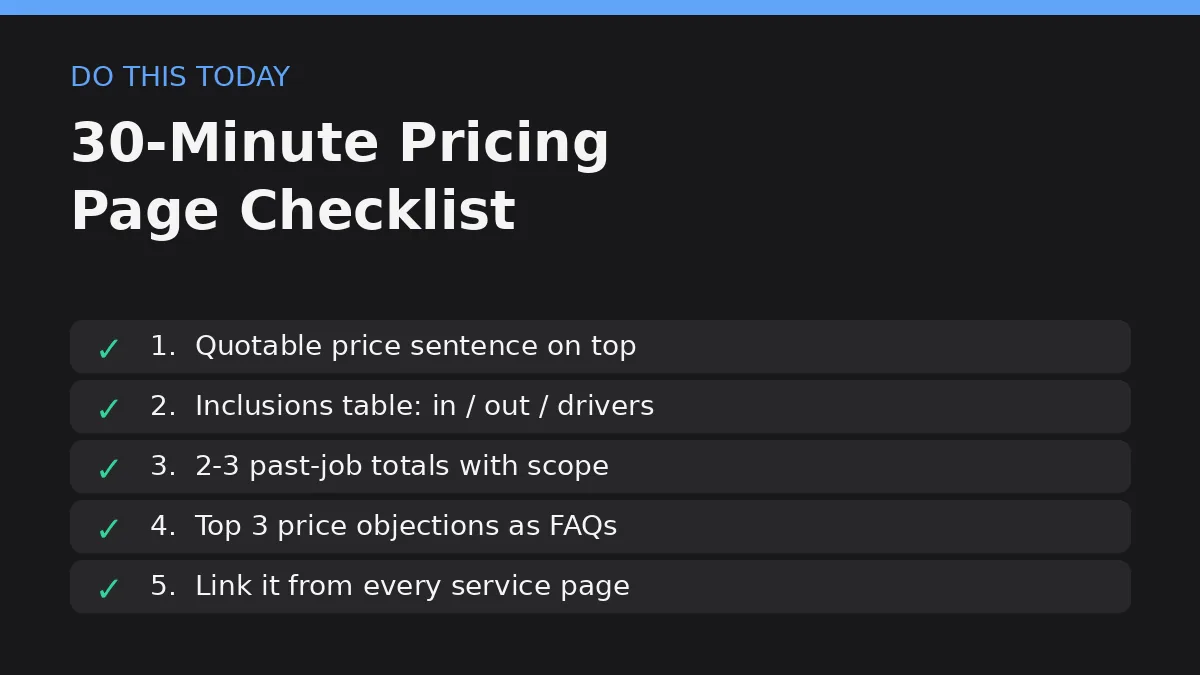
- Add one quotable price sentence near the top: range, inclusions, drivers.
- Publish an inclusions table with what's in, what's out, and what moves the price.
- Add 2–3 past-job totals with scope and timeline.
- Answer the top 3 price objections as short FAQs (why the range is wide, deposits, what's extra).
- Link the page from service pages and mention it in your product visibility content so engines find the number through multiple paths.
Businesses that publish honest ranges consistently report the same surprise: price shoppers arrive pre-sold instead of price-shopping. And once your number is the one AI answers repeat, competitors are the ones hiding behind the contact form.
Frequently asked questions
Why do AI answers quote some pricing pages and ignore others?
Answer engines quote pages that state a number plainly and explain what the number covers. A page that says 'most bathroom remodels run $8,000–$12,000 including fixtures and labor' is quotable; a page that says 'contact us for a quote' gives the engine nothing to cite.
Should I show exact prices if every job is custom?
Show honest ranges with the variables that move the price. 'Patios run $15–$25 per square foot depending on material and access' is citable and still leaves room for a custom quote. Ranges convert better than silence and they give AI answers a number to repeat.
Can my pricing page outrank bigger competitors in AI answers?
Yes. AI citations reward clarity, not domain size. A local business page with a plain price range and an itemized inclusions list is routinely quoted over a national brand page that hides prices behind a form.