From Slogan to Landing Page to ROI: Campaign Message Workflow
Most small businesses treat slogans, landing pages, ads, and reporting as four separate chores. That is why a catchy line dies in the header, the page talks about the company instead of the job, and ROI debates happen without shared numbers.
This workflow keeps one message moving through the stack. Use it when you are launching a service offer, a seasonal promotion, or a new lead magnet — not when you are still choosing a business model.
The four-stage stack
| Stage | Job | Tool or guide |
|---|---|---|
| 1. Angle | Get a short, specific line that names the audience or outcome | Business Slogan Generator, Tagline Generator |
| 2. Page | Turn the angle into hero, proof, offer, objections, and CTA | Landing page copywriting framework |
| 3. Traffic | Reuse the same outcome language in ads, email, and snippets | AI marketing workflow |
| 4. Money | Compare fully loaded cost to attributed return before scaling | Marketing ROI Calculator, Budget Planner |
Skip a stage and the next one guesses. A slogan without a page is decoration. A page without matched ads wastes clicks. Ads without ROI math become a habit.
Stage 1: Draft the angle, then stress-test it
Open the business slogan generator with the business type, location, audience, and the one benefit you can prove. Generate more than you need. Shortlist three lines that pass this test:
- A stranger can say who it is for.
- You can name the outcome in one extra sentence.
- A nearby competitor would look odd using the same line.
"Quality you can trust" fails. "Same-week roof repairs for Austin homeowners" can become a hero even if you later shorten the slogan.
Keep a rejected list. Off-brand puns are useful as examples of what not to feed the next prompt. The AI marketing strategy guide is the place to store voice rules once, then reuse them.
Stage 2: Expand the winner into a page stack
Do not paste the slogan into an H1 and stop. Use the five questions in the landing page framework:
- Who is this for?
- What outcome do they get?
- Why should they believe it?
- What objection might stop them?
- What should they do next?
Write the hero as a promise plus audience. Put the slogan above or below it if it still earns the space. Proof can be process-based when you lack case studies: show the checklist, the visit steps, or the sample deliverable.
If AI drafts the first version, review claims the same way you would review an ad: no invented ratings, no implied licenses, no pricing you have not approved.
Stage 3: Match traffic to the page
Copy the hero outcome into:
- paid search and paid social primary text
- email subject lines for the same offer
- the meta description for the landing URL
- the first sentence sales uses on the phone
When the ad says "same-week repair" and the page says "full-service comfort solutions," you paid for a bait-and-switch. Fix the match before you raise bids.
For organic and AI-answer discovery on the same URL, keep the page crawlable and citation-ready. GEO vs SEO and robots.txt for AI crawlers cover the technical layer; the GEO visibility checklist is the audit.
Stage 4: Put a number on the message
Use the Marketing ROI Calculator with honest inputs:
- Cost: media, tools, contractor time, and owner hours spent on the campaign
- Return: revenue or booked-job value you can actually tie to the offer
A 5:1 ratio looks excellent until you omitted the weekend you spent rewriting the page. A 2:1 ratio can still be viable if lifetime value is real and you recorded it. The attribution CRM workflow keeps source, campaign, and landing page fields consistent so the calculator is not fed guesswork.
Plan the next month's mix in the Digital Marketing Budget Planner only after you know which message earned the return.
Weekly 30-minute checklist
- Confirm the live hero still matches the ads that spend money this week.
- Change one block only if you are testing (hero or CTA, not both).
- Log cost and attributed return in the ROI calculator.
- Note one phrase customers repeated on calls or in form comments.
- Feed that phrase into the next slogan or ad prompt.
That is enough to keep the loop closed without a marketing department.
When to stop and rewrite
Rewrite the stack when any of these show up:
- Cheap clicks, weak booked jobs
- Sales saying "they thought we did something else"
- A slogan you cannot explain in one spoken sentence
- Proof that no longer matches the offer
Do not rewrite because a competitor launched a punchier line. Rewrite when the money or the sales notes say the message is lying.
The point of the workflow is not more assets. It is one clear offer, said the same way, measured like a business decision.
Frequently asked questions
Should I pick a slogan before I write the landing page?
Draft slogan options first so you have a memorable angle, then write the landing page hero in plain language. If the slogan cannot support a specific audience and outcome, keep generating — do not force a vague line onto the page.
How do I know if a campaign message is working?
Track cost, attributed revenue or booked jobs, and lead quality — not slogan likes. Use the Marketing ROI Calculator for the money math and keep UTM plus CRM source fields consistent.
Can AI write the whole campaign?
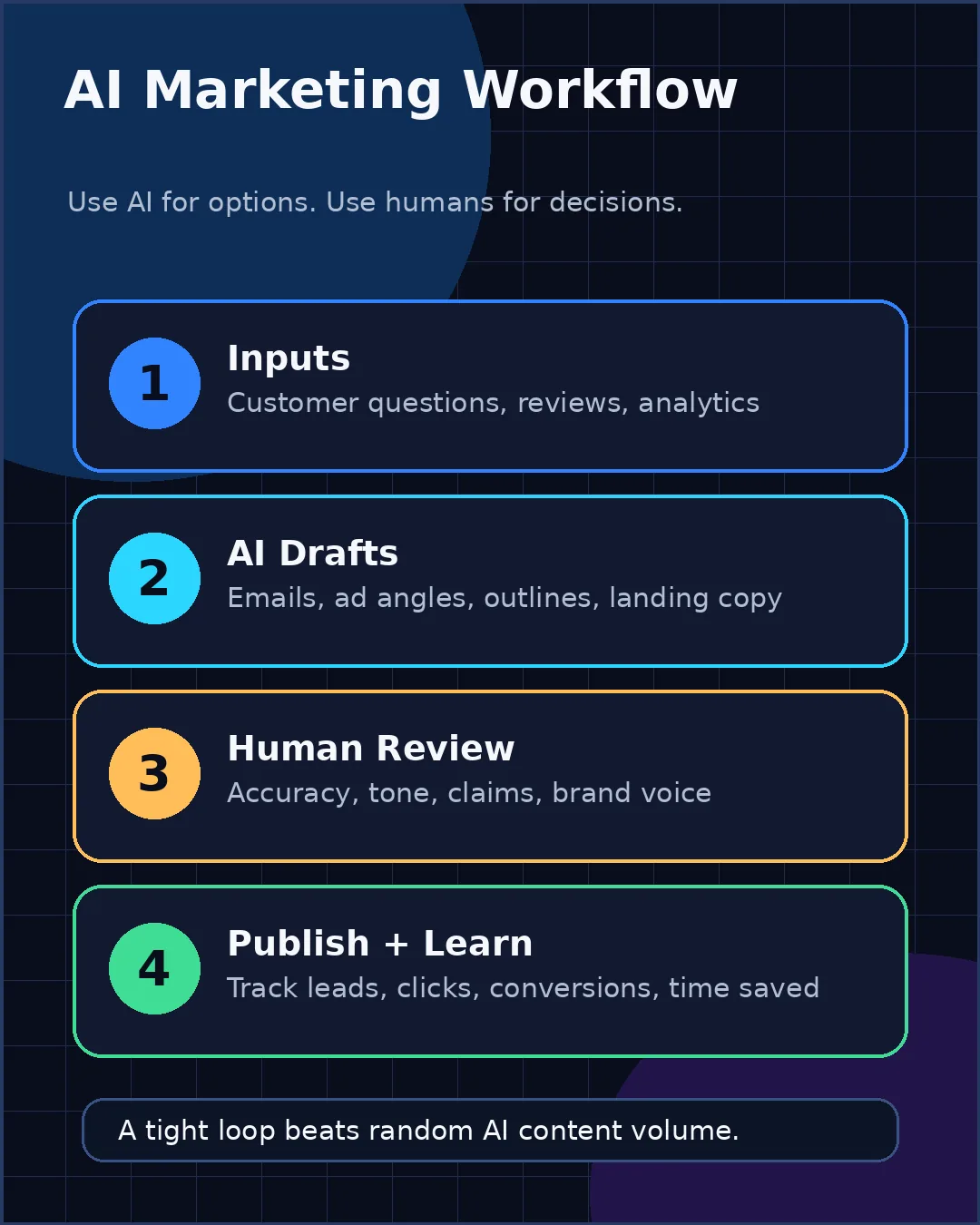
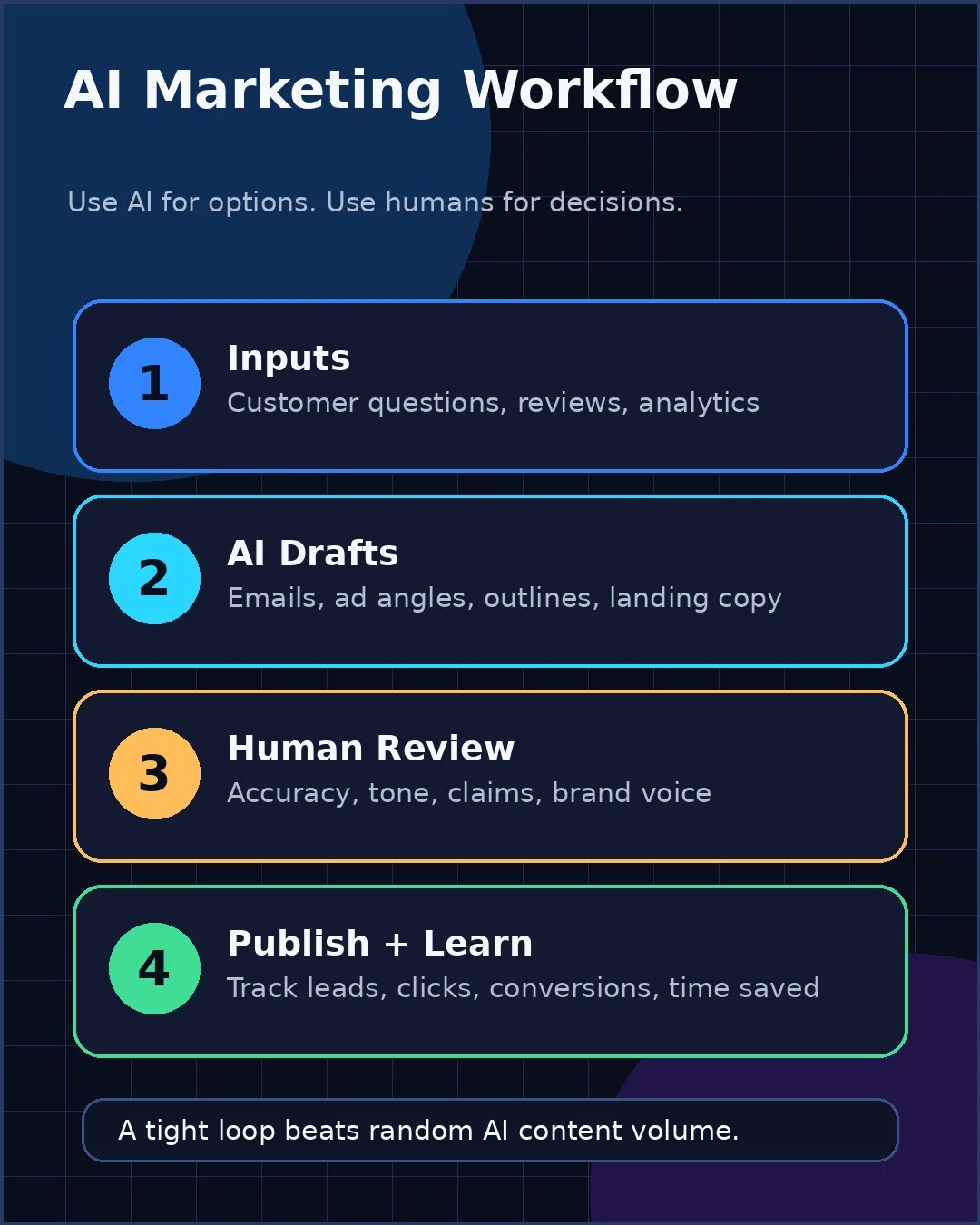
AI can draft slogan lists, hero variants, and ad angles. A person should approve claims, proof, pricing, and the final CTA. The AI marketing strategy guide covers that review loop.
What if paid traffic looks cheap but sales are weak?
The message may be attracting the wrong click. Tighten the hero audience line, match ad copy to the page, and recalculate ROI with fully loaded costs before you raise spend.